
Solution Reframing
CompletedProblem
Frames
Functional
Who
building operators and rooftop managers
From
water handling and tenant amenity management
How Badly
3
Why Now
Buildings are under pressure to justify amenities and improve retention
Workaround
Catering, vending, or standard common-area amenities
Hidden Pain
The building asset is idle value that cannot be easily monetized
Opens
A new amenity category tied to the building itself
Closes
Food safety, maintenance, and reliability gaps
Total
16
StatementPeople like building operators struggle to create a repeatable tenant-facing food benefit because rooftops and water systems are not designed for food delivery, which causes operational failure and inconsistent output.
Emotional
Who
tenants, visitors, and property teams
From
ordinary building amenities
How Badly
2
Why Now
Buildings compete harder for attention and retention
Workaround
Decor, events, or generic food perks
Hidden Pain
The building does not feel distinct or worth talking about
Opens
A memorable story around the building experience
Closes
Trust, taste, and novelty fatigue
Total
18
StatementPeople like tenants and visitors struggle to feel excited about a building because most amenities are forgettable, which causes indifference and weak attachment.
Solution
Zwicky
Inverted
Charge the building owner for the installation and upkeep, while tenants receive the soup as a free perk.
Analogy
Theme parks and stadium concessions: the mechanism is turning location-specific foot traffic into a memorable paid food experience.
Rows
| Frame | Customer | Solution | Revenue |
|---|---|---|---|
| Building amenity | residential building owners | A rooftop soup dispenser tied to tenant subscriptions | subscription |
| Commercial roof experience | office roof operators | Seasonal soup drops for visitors and staff | transaction fee |
Non Obvious
- Sell the building a branded food amenity instead of selling soup to individuals.
- Bundle maintenance, water handling, and food delivery into one rooftop service contract.
- Use local weather and neighborhood identity to shape limited-edition menu drops.
Extreme
Silly
A rooftop cannon that launches soup coupons during storms.
Serious
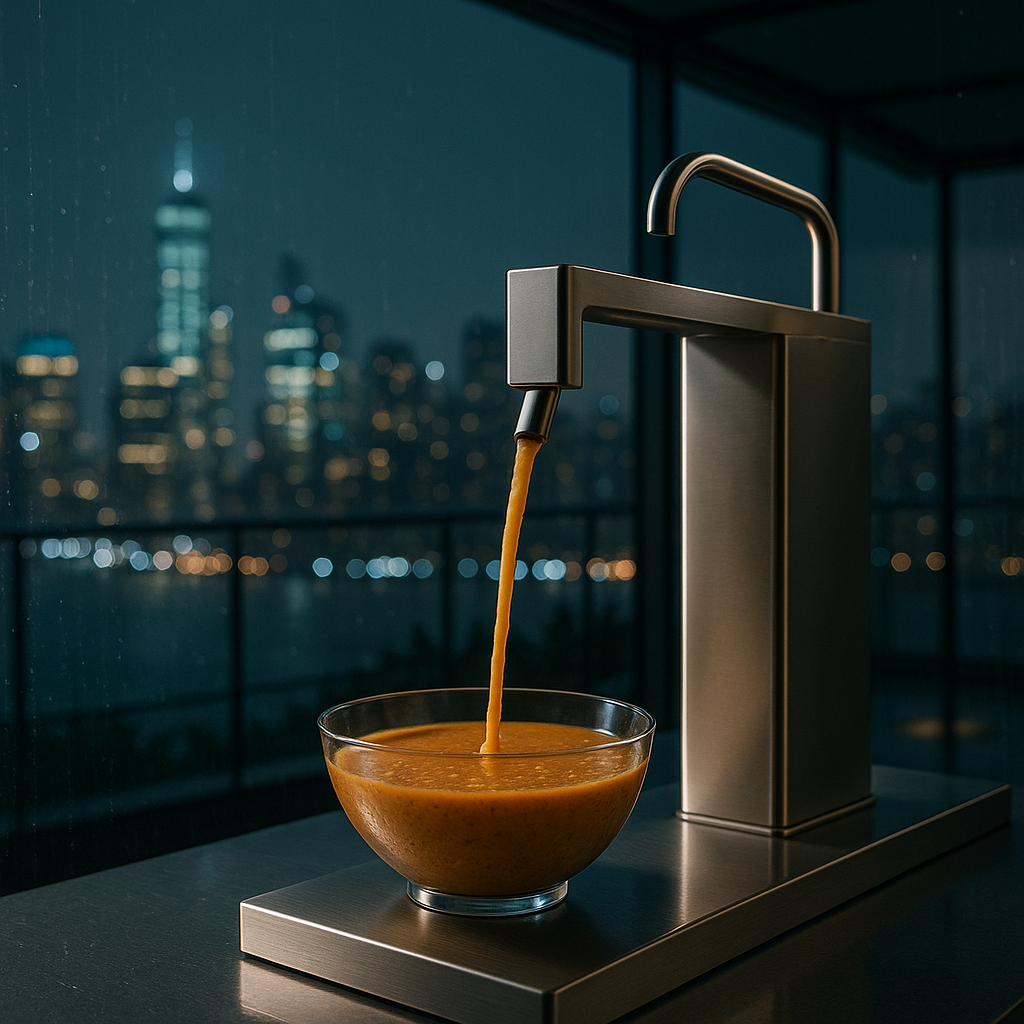
A storm-triggered tenant perk system that turns rooftop rainwater into a recurring food amenity.