Comprehensive Business Report Public

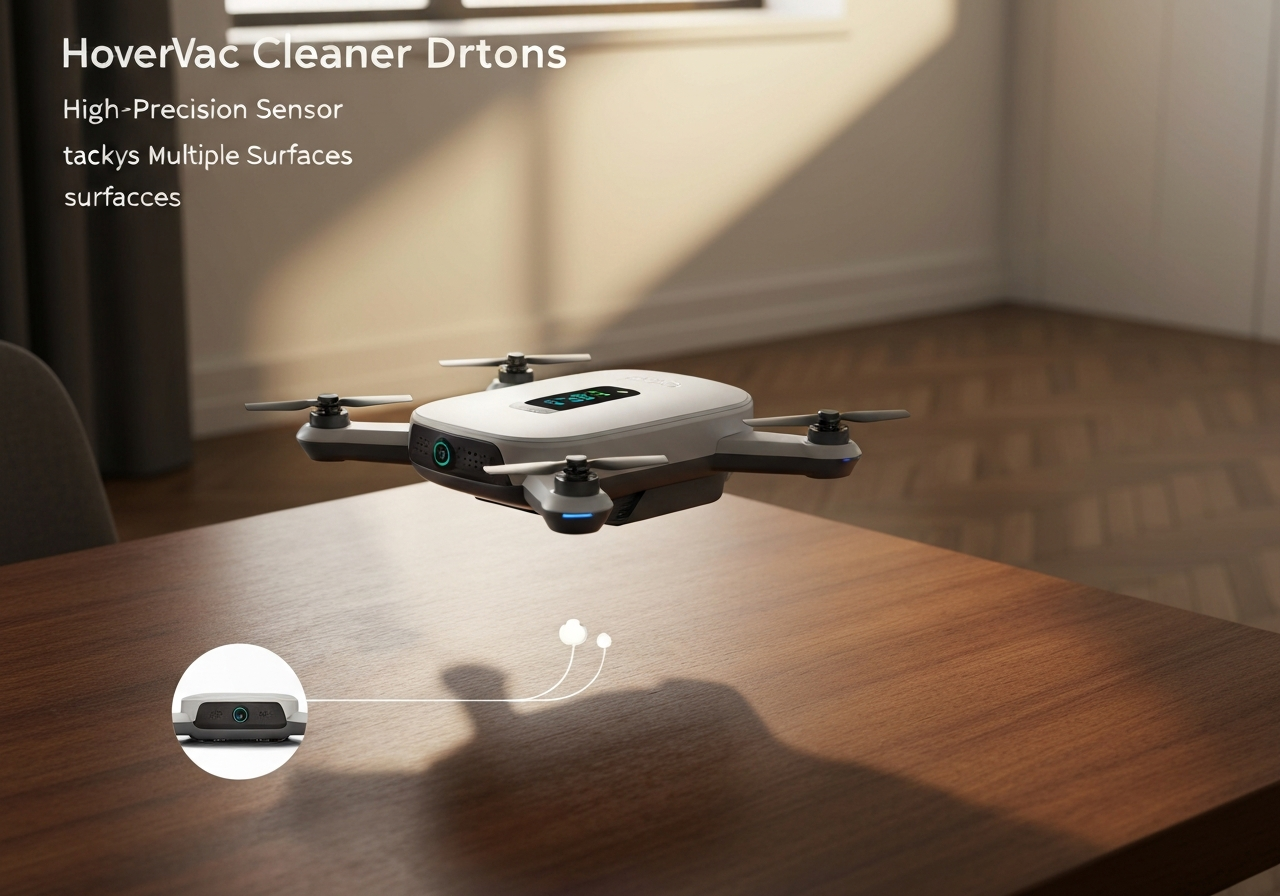
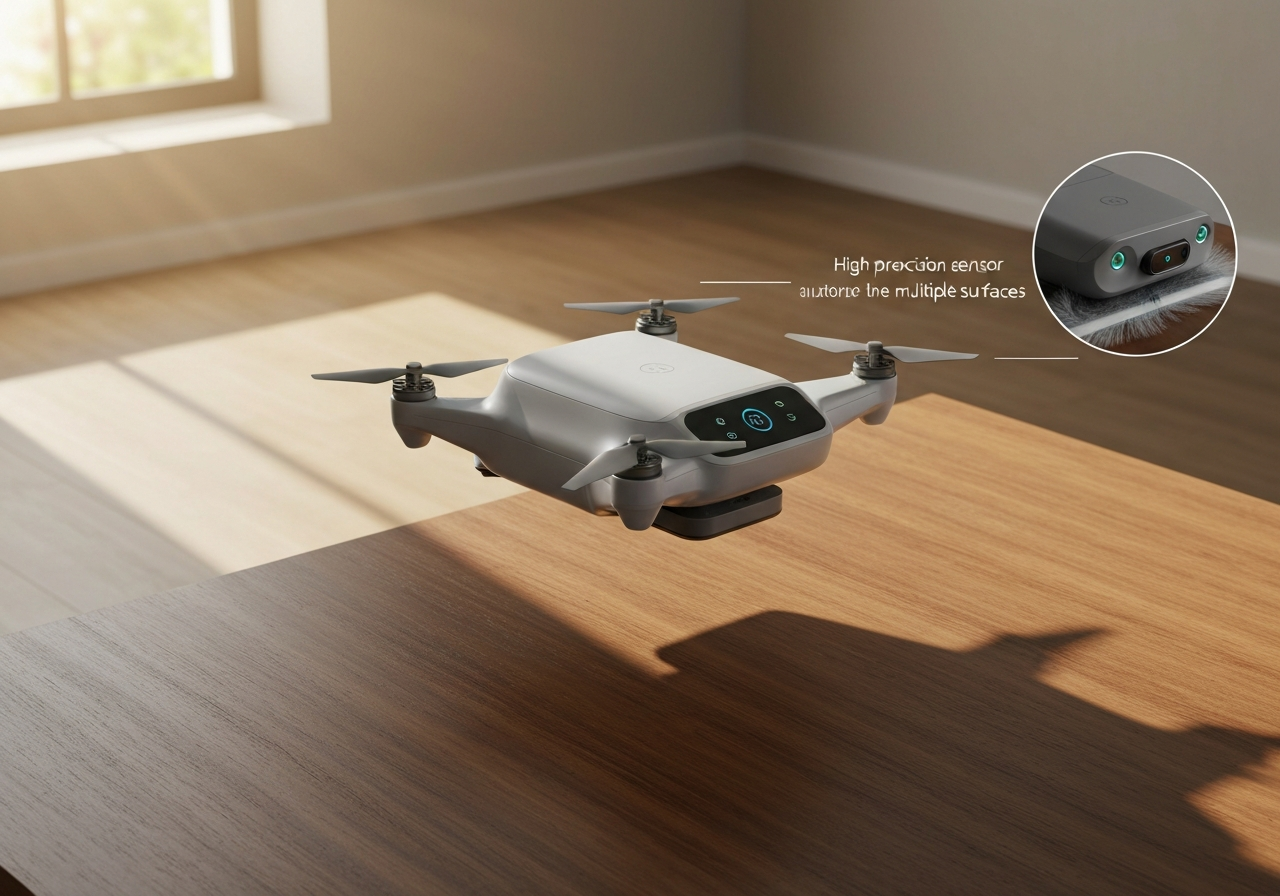
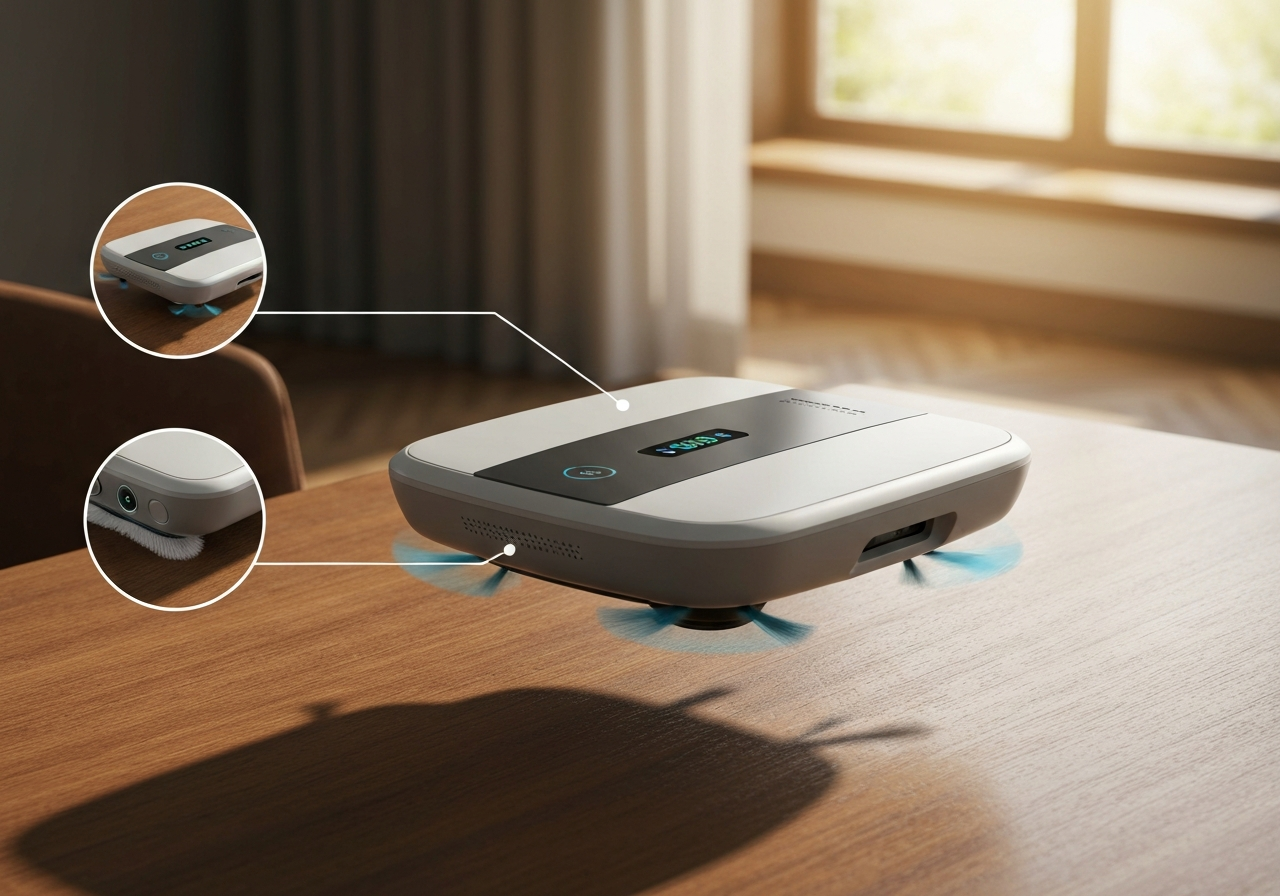
HoverVac Cleaner Drone

robot vacuum cleaner drone to clean the ground and tables

hardware softwaretechnologyglobalideasolo
Shared by the founder — read-only view.
54/100Project health
Journey17 / 60 · 28%
Generated 2026-08-23
$29B
TAM
$2.9B
SAM
$143M
SOM
12.5%
CAGR
$475
ARPU

01Executive snapshot

Build
ProjectHoverVac Cleaner Drone
Typehardware software
Industrytechnology
Modephysical_first
Customers
Buyerconsumer
Audiencegeneral
Whereglobal
Money
Revenueone_time
Avg tx100_1k
Pricingpremium
Capitalmanufacturing inventory
Stage & Team
Stageidea
Teamsolo
Fundingno_funding
Strategy
Moatnone
Watchwill_pay
Growthproduct_led

02Assets & files

PHASE 1 · 6 of 6 complete

03Validate

Solution Reframing

Completed
Problem
Frames
Functional
Universality4 / 5
Frequency Pain5 / 5
Monetizability4 / 5
Urgency4 / 5
Founder Fit2 / 5
Evidence3 / 5
Solution Potential3 / 5
Who
Busy homeowners, dual-income families, and tech-oriented consumers
From
Manual vacuuming, wiping, and moving between tools
How Badly
4
Why Now
Homes still need daily cleaning, but existing devices leave tabletop messes untouched
Workaround
Use a floor robot plus hand cleaning for tables
Hidden Pain
The job is not just floor cleaning; it is whole-home surface coverage
Opens
A more complete cleaning job across multiple surfaces
Closes
A device that cannot reliably reach or clean all needed surfaces
Total
25
StatementPeople like busy homeowners struggle to keep floors and tables clean because current robot cleaners only handle one surface type, which causes repeated manual cleanup.
Emotional
Universality3 / 5
Frequency Pain4 / 5
Monetizability3 / 5
Urgency3 / 5
Founder Fit2 / 5
Evidence2 / 5
Solution Potential2 / 5
Who
Time-starved consumers and cleanliness-focused households
From
Feeling behind on chores
How Badly
3
Why Now
Busy lives make unfinished cleaning feel more visible and annoying
Workaround
Accept partial cleaning or spend weekends catching up
Hidden Pain
The emotional pain is not dirt alone; it is the sense of never being done
Opens
Relief from mental load and chore guilt
Closes
A product that solves only part of the cleaning burden
Total
19
StatementPeople like time-starved consumers struggle to feel on top of home cleanliness because they still see unfinished chores after using existing robots, which causes frustration and guilt.
Economic
Universality4 / 5
Frequency Pain4 / 5
Monetizability5 / 5
Urgency4 / 5
Founder Fit1 / 5
Evidence2 / 5
Solution Potential3 / 5
Who
Premium consumer buyers and early adopters
From
Buying established robot vacuums or skipping the purchase
How Badly
4
Why Now
The price sits in a crowded range with stronger brands nearby
Workaround
Wait, compare options, or buy a better-known floor robot
Hidden Pain
The real barrier is not price alone; it is uncertain value per dollar
Opens
A premium niche if the savings or novelty feel real
Closes
A high price with no strong proof of return
Total
23
StatementPeople like premium buyers struggle to justify paying for a new cleaning device because the value is unclear against existing vacuums, which causes low conversion and weak preorders.
Behavioral
Universality3 / 5
Frequency Pain4 / 5
Monetizability3 / 5
Urgency3 / 5
Founder Fit2 / 5
Evidence2 / 5
Solution Potential2 / 5
Who
Habit-driven households and convenience-seeking consumers
From
Existing cleaning routines and familiar devices
How Badly
3
Why Now
New products must replace habits, not just add features
Workaround
Keep using the same tools and ignore the new category
Hidden Pain
The problem is habit inertia, not only product capability
Opens
A chance to replace multiple tasks with one behavior
Closes
A device that adds complexity instead of removing it
Total
19
StatementPeople like ordinary consumers struggle to adopt a new cleaning habit because they already have routines for floor cleaning and table wiping, which causes resistance to switching tools.
Social/Trust
Universality4 / 5
Frequency Pain3 / 5
Monetizability4 / 5
Urgency4 / 5
Founder Fit1 / 5
Evidence3 / 5
Solution Potential2 / 5
Who
Premium buyers, early adopters, and cautious households
From
Trusting established brands with warranties and service
How Badly
4
Why Now
Unknown hardware at a premium price triggers strong trust barriers
Workaround
Buy from known brands or avoid the category
Hidden Pain
Trust is a bigger blocker than feature appeal
Opens
A trust-based wedge if proof and reliability are strong
Closes
A solo founder with no brand, no funding, and no track record
Total
21
StatementPeople like premium household buyers struggle to trust an unknown hardware brand because the product is expensive and physically risky, which causes hesitation and purchase fear.
System/Infrastructure
Universality4 / 5
Frequency Pain4 / 5
Monetizability4 / 5
Urgency5 / 5
Founder Fit1 / 5
Evidence4 / 5
Solution Potential3 / 5
Who
Founders, manufacturers, and early buyers waiting for delivery
From
Prototype-only ideas and outsourced production
How Badly
5
Why Now
The business depends on physical production before any scale can happen
Workaround
Delay launch, outsource heavily, or avoid hardware altogether
Hidden Pain
The system itself is the bottleneck, not just the product idea
Opens
A narrow path if production risk can be reduced
Closes
A solo, unfunded team trying to build a complex physical product
Total
25
StatementPeople like hardware buyers struggle to get a category like this to market because manufacturing, inventory, certification, and supply chain setup are expensive and slow, which causes execution risk.
Experience
Universality3 / 5
Frequency Pain4 / 5
Monetizability3 / 5
Urgency3 / 5
Founder Fit2 / 5
Evidence2 / 5
Solution Potential2 / 5
Who
Homeowners expecting convenience and completeness
From
Patchwork cleaning across multiple devices
How Badly
3
Why Now
Users judge the product by whether it actually removes chores
Workaround
Live with partial automation and manual follow-up
Hidden Pain
The experience failure is broken expectations, not just missing features
Opens
A strong wow factor if the product truly reduces work
Closes
A product that feels clever but not useful enough
Total
19
StatementPeople like homeowners who want easy cleaning struggle to get a satisfying product experience because current robots do not cover all surfaces, which causes disappointment after purchase.
Classification
Type
complex
Complexity
5
Complexity Why
This is a shark-level problem: hard to build, hard to trust, hard to manufacture, and hard to sell at a premium without evidence.
Why

The problem spans product behavior, trust, economics, and physical production. It is not a simple feature gap; it is a multi-layer hardware adoption problem with weak proof and high execution risk.

Solar
Core
Incomplete home cleaning across floors and tables
Sub Problems
  • Table surfaces still need manual cleaning
  • Robot vacuums stop at floor level
  • Premium buyers do not trust unknown hardware
  • Manufacturing and inventory are capital heavy
  • The category lacks clear buyer proof
Adjacent
Whole-home cleaning automationPremium household convenienceMulti-surface hygieneConsumer robotics trustPreorder validation
Root Causes
Surface coverage limitsHabit inertiaWeak proof of valueHigh physical production burdenNo brand trust
Customer Pains
Manual table wipingPartial cleaning outcomesChore fatiguePurchase hesitationFear of wasting money
Workarounds
Use a floor robot onlyWipe tables by handPostpone buyingBuy a known brandIgnore elevated surfaces
Constraints
Battery limitsPhysics of hoveringCertification burdenInventory riskSolo founder capacity
Stakeholders
HomeownersEarly adoptersContract manufacturersRetail buyersSupport teams
Before After
Original
A flying robot vacuum for floors and tables.
Why Narrow
It starts from a device idea, not from the real customer pain or adoption barrier.
Reframed
A recurring whole-home cleaning gap where people still need manual table cleanup after using floor robots.
New Solution Space
Surface coverage automationTrust-first hardware validationPremium cleaning convenienceAccessory-based cleaning systemsCategory-adjacent robotics
Converge
Best Problem
People need complete home surface cleaning without manual follow-up, but current tools only solve part of the job.
Best Customer
Premium-leaning, time-starved homeowners who already buy home automation products.
Problem PitchWe are working to solve the problem of incomplete home surface cleaning for premium-leaning homeowners, who struggle with manual follow-up and partial robot coverage, because current tools still leave tables and other surfaces unfinished.
Solution
Zwicky
Inverted
Charge homeowners a monthly fee for scheduled table cleanup visits, while the hardware stays owned and maintained by you.
Analogy
Hospitality and valet services: the mechanism is a premium cleanup service that appears only when needed, reducing ownership friction and upfront risk.
Rows
FrameCustomerSolutionRevenue
Busy homeowners who want cleaner tables and floorsconsumerA tabletop add-on that docks to an existing robot vacuum and handles crumbs on dining tables after mealstransaction fee
High-income early adopters who buy premium home gadgetsconsumerA premium floor-and-table cleaning kit sold as a limited launch bundle with replacement partssubscription
Families that hate daily cleanup after cooking and eatingconsumerA countertop cleaning station that uses a small tracked robot instead of a flying dronefreemium
Smart-home fans who want status and noveltyconsumerA showcase product sold through a marketplace with creator demos and referral rewardsmarketplace commission
Cleaning brands that already sell vacuums and mopsB2B brand partnerLicense the tabletop navigation and docking system to established appliance makerslicensing
Property managers who need fast cleanup in shared spacesenterprise buyerA service plan that maintains common tables and floors in model homes, offices, and loungesservice/maintenance
Retailers who want traffic from a strange new gadgetconsumerDemo units placed in stores with paid placements and content partnershipsadvertising/data
Small hospitality operators with recurring cleaning needsenterprise buyerUsage-based cleaning sessions billed per room, table, or hour of operationusage-based
Design-conscious buyers who want a visible home robotconsumerA polished accessory that sits on a vacuum dock and cleans only when summonedoutcome-based
Non Obvious
  • Sell a docked tabletop cleaner that rides on an existing vacuum instead of replacing the whole machine.
  • Start with crumbs on dining tables after meals, not full-home cleaning, to prove value fast.
  • Use a service model for premium homes before trying to manufacture a mass-market device.
Extreme
Silly
A tiny robot waiter that follows dinner guests around and cleans every table between courses.
Serious
A compact docked cleaner for dining tables, kitchen islands, and office desks that works as an attachment to existing home robots.
Solution Space
Faster Cheaper
Build a table-only crumb cleaner that clips onto an existing vacuum dock and proves demand with a simple prototype.
Experience
Make it feel like a premium home object: quiet, polished, easy to place, and pleasant to watch during use.
Automation
Automate only the highest-frequency task first: post-meal table crumbs and light floor debris near the dining area.
Marketplace
Launch through a crowdfunding page and home-gadget marketplace to test willingness to pay before tooling.
Workflow
Use a two-step flow: user clears large items, then the device handles crumbs and dust on a schedule or button press.
Education
Teach buyers with short demos showing how much time is saved versus manual wiping and handheld vacuums.
Infrastructure
Design around existing charging docks, replacement filters, and common vacuum parts to avoid new factory complexity.
Premium
Offer a high-end version with better materials, quieter operation, and a longer warranty for affluent early adopters.
Compliance
Keep the first version indoors, low-power, and safety-locked so it avoids flight and public-space risk.
Sanity
QA
Does it solve the initial problem for the target customer?Yes, if the customer mainly wants less table cleanup after meals and less floor mess around the dining area.
Is the ideal customer still ideal?Yes, but only the narrow slice of busy, high-income homeowners who already buy premium home gadgets.
Is the problem-solution-customer alignment strong?Moderate, because the problem is real, but a flying full-room cleaner is too broad and too hard for the first version.
Is this a need-to-have or a nice-to-have?It starts as a nice-to-have until the product proves it saves real time and replaces a daily chore.
What assumptions must be tested?That buyers will pay a premium, that the device is safe indoors, and that a narrow cleaning job is enough to create repeat demand.
What missing evidence matters most?Refundable deposits, interview quotes, and observed frustration with table cleanup after meals.
What should be validated in interviews?Which surfaces matter most, what price feels acceptable, and whether people want a full robot or a helper attachment.
What would prove it wrong?If most buyers say they would never pay for a premium cleaning gadget, or if they only want floor cleaning and not tables.
Converge
Best Solution
A docked tabletop-and-near-table crumb cleaner that attaches to an existing vacuum ecosystem instead of a full flying robot.
Best Customer
High-income homeowners and smart-home enthusiasts who already buy premium cleaning devices.
Best Revenue
One-time hardware sale plus replacement parts and optional service plan.
Solution PitchOur solution helps busy high-income homeowners keep dining tables and nearby floors clean with less daily effort by using a docked add-on that cleans only the most frequent messes, unlike a full flying robot that is too complex, costly, and risky for the first version.

Competitor Analysis

Completed
Direct Competitors

Wedge segment: luxury tech early adopters; Differentiation pillar: tabletop cleaning and autonomous versatility; 90-day test: target high-end smart home enthusiasts with demo campaigns, measure early interest and pre-orders for validation.

Market Gap
Lack of versatile cleaning devices that handle both floors and tables with premium features.
Competitors
iRobot

Manufactures robotic vacuum cleaners for homes worldwide.

Product8 / 10
Pricing6 / 10
Marketing7 / 10
User Experience8 / 10
Customer Support7 / 10
Innovation7 / 10
Website
https://www.irobot.com
Value Proposition
Reliable, high-performance robotic vacuums with smart features.
Threat Level
medium
Why Threat
Limited to floor cleaning, no tabletop functionality, but strong brand trust.
Pricing
Model
one-time
Range
$200-$800
Level
7
Audience
Type
B2C
Geo
global
Segments
homeownerstech enthusiasts
Marketing Channels
online adsretail partnershipssocial media
Weaknesses
  • Limited to floor cleaning
  • High price point for some models
Key Features
Feature 1
true
Feature 2
false
Positioning
Price Level
7
Market Focus
7
Ecovacs

Produces smart home cleaning robots for floors and surfaces.

Product7 / 10
Pricing6 / 10
Marketing6 / 10
User Experience7 / 10
Customer Support6 / 10
Innovation6 / 10
Website
https://www.ecovacs.com
Value Proposition
Versatile cleaning robots with advanced navigation and surface adaptability.
Threat Level
medium
Why Threat
Surface versatility but limited to existing cleaning surfaces and navigation complexity.
Pricing
Model
one-time
Range
$250-$900
Level
7
Audience
Type
B2C
Geo
global
Segments
tech-savvy homeowners
Marketing Channels
online marketingretail storessocial media
Weaknesses
  • Limited to cleaning floors and some surfaces
  • Navigation issues in complex environments
Key Features
Feature 1
true
Feature 2
false
Positioning
Price Level
6
Market Focus
6
Roborock

Smart robotic vacuums combining efficient cleaning with app control.

Product8 / 10
Pricing6 / 10
Marketing7 / 10
User Experience8 / 10
Customer Support7 / 10
Innovation7 / 10
Website
https://www.roborock.com
Value Proposition
High-quality, app-controlled robotic vacuums with robust features.
Threat Level
medium
Why Threat
Excellent vacuum technology but lacks tabletop cleaning capability.
Pricing
Model
one-time
Range
$400-$1000
Level
8
Audience
Type
B2C
Geo
global
Segments
homeownerstech early adopters
Marketing Channels
digital marketinginfluencersretail partners
Weaknesses
  • Floor-only cleaning
  • Price for premium models
Key Features
Feature 1
true
Feature 2
false
Positioning
Price Level
8
Market Focus
7
Samsung PowerBot

Smart robotic vacuum cleaners with strong suction and app control.

Product7 / 10
Pricing6 / 10
Marketing6 / 10
User Experience7 / 10
Customer Support6 / 10
Innovation6 / 10
Website
https://www.samsung.com
Value Proposition
Powerful cleaning with smart home integration.
Threat Level
medium
Why Threat
Strong brand but limited to floor cleaning and surface versatility.
Pricing
Model
one-time
Range
$500-$1000
Level
8
Audience
Type
B2C
Geo
global
Segments
tech-savvy homeowners
Marketing Channels
digital adsretailbrand campaigns
Weaknesses
  • Floor cleaning focus
  • High price for some models
Key Features
Feature 1
true
Feature 2
false
Positioning
Price Level
8
Market Focus
6
Dyson 360 Heurist

Premium robotic vacuum with high-end design and cleaning power.

Product8 / 10
Pricing4 / 10
Marketing7 / 10
User Experience8 / 10
Customer Support7 / 10
Innovation8 / 10
Website
https://www.dyson.com
Value Proposition
High-performance cleaning with premium design and build quality.
Threat Level
low
Why Threat
Premium niche, but no tabletop function limits scope.
Pricing
Model
one-time
Range
$700-$1000
Level
9
Audience
Type
B2C
Geo
global
Segments
luxury homeowners
Marketing Channels
luxury retaildigital marketing
Weaknesses
  • Floor-only cleaning
  • Very high price
Key Features
Feature 1
true
Feature 2
false
Positioning
Price Level
9
Market Focus
8
Neato Robotics

Robotic vacuums with laser navigation for efficient cleaning.

Product7 / 10
Pricing7 / 10
Marketing6 / 10
User Experience7 / 10
Customer Support6 / 10
Innovation6 / 10
Website
https://www.neatorobotics.com
Value Proposition
Efficient, laser-mapped cleaning with good value.
Threat Level
medium
Why Threat
Strong navigation tech but limited to traditional surfaces.
Pricing
Model
one-time
Range
$300-$700
Level
6
Audience
Type
B2C
Geo
global
Segments
tech-savvy homeowners
Marketing Channels
online marketingretail
Weaknesses
  • Limited to floor and some surfaces
  • Navigation issues in cluttered spaces
Key Features
Feature 1
true
Feature 2
false
Positioning
Price Level
6
Market Focus
6
Lawn Robot by Husqvarna

Automated lawn mower for outdoor grass cutting.

Product6 / 10
Pricing3 / 10
Marketing5 / 10
User Experience6 / 10
Customer Support5 / 10
Innovation7 / 10
Website
https://www.husqvarna.com
Value Proposition
Hands-free outdoor lawn management with autonomous mowing.
Threat Level
low
Why Threat
Different domain (outdoor vs indoor), less relevant to tabletop cleaning.
Pricing
Model
one-time
Range
$2000-$4000
Level
10
Audience
Type
B2C
Geo
global
Segments
outdoor homeowners
Marketing Channels
outdoor retaildigital
Weaknesses
  • Limited to outdoor use
  • Very high cost
Key Features
Feature 1
true
Feature 2
false
Positioning
Price Level
10
Market Focus
8
Your Startup
Suggested Scores
Product8 / 10
Pricing7 / 10
Marketing6 / 10
User Experience8 / 10
Customer Support6 / 10
Innovation8 / 10
Suggested Features
Feature 1
true
Suggested Positioning
Price Level
8
Market Focus
7
Positioning Axes
X Label
Market Focus
X Low
Consumer
X High
Enterprise
Y Label
Price Level
Y Low
Low Cost
Y High
Premium
Unified Features List
Floor cleaningTabletop cleaningAutonomous navigationSmart app controlRecharge and resumeMulti-surface adaptability
Indirect Competitors

The key migration trigger is demonstrating tabletop cleaning efficiency; a targeted campaign showcasing multi-surface cleaning capabilities will catalyze user migration.

Market Gap
Lack of versatile devices that clean both floors and tables with a premium experience.
Competitors
Roomba (iRobot)

Robotic vacuum cleaners for floors with advanced navigation.

Product8 / 10
Pricing6 / 10
Marketing7 / 10
User Experience8 / 10
Customer Support7 / 10
Innovation6 / 10
Website
https://www.irobot.com
Value Proposition
Efficient, autonomous floor cleaning with smart navigation.
Threat Level
medium
Why Threat
Lacks tabletop cleaning but dominates floor cleaning market; potential upgrade to multi-surface cleaning.
Pricing
Model
one-time
Range
200-1000
Level
7
Audience
Type
B2C
Geo
global
Segments
homeownerstech enthusiasts
Marketing Channels
online adsretail storessocial media
Weaknesses
  • Limited to floors
  • No tabletop cleaning
  • High price for some models
Key Features
Feature 1
true
Feature 2
false
Positioning
Price Level
7
Market Focus
7
Ecovacs Robotics

Smart robotic vacuums with multi-surface capabilities.

Product7 / 10
Pricing8 / 10
Marketing6 / 10
User Experience7 / 10
Customer Support6 / 10
Innovation5 / 10
Website
https://www.ecovacs.com
Value Proposition
Affordable, multi-surface cleaning robots with app control.
Threat Level
medium
Why Threat
Lacks tabletop cleaning but offers multi-surface devices, appealing to broader needs.
Pricing
Model
one-time
Range
150-800
Level
6
Audience
Type
B2C
Geo
global
Segments
familiestech-savvy users
Marketing Channels
online shoppingsocial mediaretail partners
Weaknesses
  • Limited to floor surfaces
  • Navigation issues in complex spaces
Key Features
Feature 1
true
Feature 2
false
Positioning
Price Level
6
Market Focus
6
Neato Robotics

Robotic vacuums with laser mapping for efficient cleaning.

Product8 / 10
Pricing5 / 10
Marketing6 / 10
User Experience8 / 10
Customer Support6 / 10
Innovation7 / 10
Website
https://www.neatorobotics.com
Value Proposition
Precise navigation and thorough cleaning for floors.
Threat Level
medium
Why Threat
Superior navigation but limited to floors; potential upgrade for surface versatility.
Pricing
Model
one-time
Range
300-700
Level
7
Audience
Type
B2C
Geo
global
Segments
tech enthusiastshomeowners
Marketing Channels
online adsretail storessocial media
Weaknesses
  • Floor only
  • Expensive for some users
Key Features
Feature 1
true
Feature 2
false
Positioning
Price Level
7
Market Focus
7
Samsung Jet Bot AI

Smart robotic vacuum with AI navigation for floors.

Product8 / 10
Pricing4 / 10
Marketing7 / 10
User Experience8 / 10
Customer Support7 / 10
Innovation8 / 10
Website
https://www.samsung.com
Value Proposition
High-end AI navigation for efficient floor cleaning.
Threat Level
medium
Why Threat
Advanced AI for floors, but no tabletop cleaning; premium features may attract high-end market.
Pricing
Model
one-time
Range
400-900
Level
8
Audience
Type
B2C
Geo
global
Segments
premium consumerstech enthusiasts
Marketing Channels
onlineretailsocial media
Weaknesses
  • Limited to floors
  • Premium price
Key Features
Feature 1
true
Feature 2
false
Positioning
Price Level
8
Market Focus
8
Vileda Robotics

Compact robotic cleaners for floors and limited surfaces.

Product5 / 10
Pricing8 / 10
Marketing5 / 10
User Experience4 / 10
Customer Support4 / 10
Innovation3 / 10
Website
https://www.vileda.com
Value Proposition
Affordable cleaning robots for simple floor tasks.
Threat Level
low
Why Threat
Affordable but limited to floors; unlikely to attract premium segment or tabletop cleaning.
Pricing
Model
one-time
Range
100-300
Level
4
Audience
Type
B2C
Geo
global
Segments
budget-conscious consumers
Marketing Channels
retail storesonlinediscount outlets
Weaknesses
  • Limited functionality
  • Basic navigation
Key Features
Feature 1
true
Feature 2
false
Positioning
Price Level
4
Market Focus
4
Xiaomi Mi Robot Vacuum

Budget robotic vacuum with app control and basic navigation.

Product5 / 10
Pricing8 / 10
Marketing6 / 10
User Experience5 / 10
Customer Support4 / 10
Innovation3 / 10
Website
https://www.mi.com
Value Proposition
Affordable, easy-to-use robotic vacuum for floors.
Threat Level
low
Why Threat
Cost-effective but no tabletop cleaning; targets budget segment only.
Pricing
Model
one-time
Range
150-300
Level
4
Audience
Type
B2C
Geo
global
Segments
budget buyers
Marketing Channels
onlinesocial mediaretail
Weaknesses
  • Limited to floors
  • Basic features
Key Features
Feature 1
true
Feature 2
false
Positioning
Price Level
4
Market Focus
4
iLife Robotics

Affordable robotic cleaners for floors with basic features.

Product4 / 10
Pricing8 / 10
Marketing4 / 10
User Experience3 / 10
Customer Support3 / 10
Innovation2 / 10
Website
https://www.iliferobotics.com
Value Proposition
Simple, affordable robotic vacuum for everyday cleaning.
Threat Level
low
Why Threat
Targets budget segment, no tabletop cleaning, limited upgrade potential.
Pricing
Model
one-time
Range
100-250
Level
3
Audience
Type
B2C
Geo
global
Segments
budget-conscious families
Marketing Channels
onlineretaildiscount stores
Weaknesses
  • Limited features
  • Basic navigation
Key Features
Feature 1
true
Feature 2
false
Positioning
Price Level
3
Market Focus
4
Your Startup
Suggested Scores
Product7 / 10
Pricing5 / 10
Marketing6 / 10
User Experience7 / 10
Customer Support5 / 10
Innovation8 / 10
Suggested Features
Feature 1
true
Suggested Positioning
Price Level
6
Market Focus
5
Positioning Axes
X Label
Market Focus
X Low
Consumer
X High
Enterprise
Y Label
Price Level
Y Low
Low Cost
Y High
Premium
Unified Features List
Autonomous navigationMulti-surface cleaningApp controlRecharge and resumeVoice controlSmart mappingCompact designLong battery life

Market Sizing

Completed
Auto-fill numbers
TAM$29B
SAM$2.9B
SOM$143M
12.5%
CAGR Pct
$475
ARPU USD
TAM Reasoning

Global consumer robotics cleaning market (floors + tables) estimated at $28.5B annually. Derived from $12B robotic vacuum TAM plus $16.5B adjacent surface cleaning and smart home device spend across 2B+ affluent households worldwide.

SAM Reasoning

Premium segment targeting tech-savvy early adopters in developed markets (North America, Western Europe, East Asia) represents ~10% of TAM. Consumer willingness for $400–600 devices limits addressable segment to ~285M potential customers globally, yielding $2.85B SAM.

SOM Reasoning

Solo founder, no funding, idea stage, product-led growth. Realistic 3-year capture: 300k units at $475 ARPU = $142.5M SOM. Conservative given manufacturing constraints, zero brand equity, and unproven willingness-to-pay on premium pricing.

CAGR Reasoning

Consumer robotics and smart home devices grow 12–15% CAGR. HoverVac targets premium segment with modest growth headwinds (market saturation, competition) and tailwinds (rising cleanliness standards, automation adoption). Conservative 12.5% applied.

ARPU Reasoning

Premium positioning ($400–550 price range per unit) with one-time revenue model. Average $475 ARPU reflects mid-premium tier, target consumer buyer, and global market pricing. No recurring revenue or add-ons assumed given current business model.

Visual analysis
Critic verdict42 / 100shaky

Ambitious TAM math, but SOM assumes zero manufacturing reality and unproven premium willingness-to-pay.

The TAM of $28.5B is defensible if you accept the premise that 'cleaning drones for floors and tables' is a real category, but the jump from $12B robotic vacuum market to $16.5B in adjacent surface cleaning is speculative and lacks citation. The SAM calculation (10% of TAM = $2.85B) is reasonable for premium early-adopter segments in developed markets, but the SOM of $142.5M over three years assumes the founder can manufacture and ship 300k units from zero funding, zero team, and zero brand equity—a massive leap for a solo hardware founder at idea stage. The $475 ARPU is plausible for premium positioning, but willingness-to-pay is explicitly flagged as the biggest unknown; the sizing doesn't account for the very real possibility that consumers won't pay $400–600 for an unproven, unbranded drone when established players like iRobot or Ecovacs dominate the market. Finally, the 12.5% CAGR is reasonable for the category, but it doesn't de-risk the founder's ability to capture share against well-funded competitors.

Positioning

HoverVac positions as a premium, multi-surface autonomous cleaning solution for tech-savvy early adopters in developed markets—a narrower, more ambitious play than iRobot's floor-focused Roomba or Ecovacs' multi-product portfolio. The core differentiation is the tabletop cleaning capability, which is unproven in consumer markets and relies on proprietary navigation software. Against established competitors with $1B+ revenue, manufacturing scale, and brand trust, a solo founder's premium drone faces steep headwinds in customer acquisition and manufacturing cost parity. The founder must establish clear, defensible advantages in navigation accuracy, battery life, or safety before premium pricing becomes credible.

Investor Narrative

Consumers spend 8+ hours weekly on household cleaning, and this burden disproportionately falls on busy professionals and families seeking convenience. Traditional robotic vacuums clean floors only, leaving tables, countertops, and elevated surfaces untouched—forcing consumers to switch between devices or clean manually. The global smart home robotics market is growing 12.5% annually, driven by rising labor costs, cleanliness standards, and automation adoption. HoverVac solves this gap with a premium, multi-surface autonomous drone that cleans floors and tables seamlessly, positioning itself in the $2.85B premium segment of the $28.5B global robotics cleaning market. Early adopters in North America, Western Europe, and East Asia—consumers willing to pay $400–600 for innovative home tech—represent a beachhead for product-led growth. Comparable exits include Ecovacs' IPO at $1B+ valuation and iRobot's acquisition by Amazon for $1.7B, validating the category's strategic value. With focused execution on manufacturing partnerships and early-adopter acquisition, HoverVac can capture 300k units in three years, generating $142.5M revenue and positioning for Series B growth or acquisition by a Tier-1 smart home player.

Red Flags
  • Solo founder, no funding, no manufacturing experience—SOM assumes execution that typically requires $5–15M and a team of 10+.
  • Willingness-to-pay is the stated biggest unknown, yet sizing assumes 300k premium units sold with zero customer validation.
  • No defensible moat identified; premium hardware without proprietary tech or brand is vulnerable to iRobot, Ecovacs, or well-funded startups.
  • One-time revenue model with no recurring or add-on revenue limits lifetime value and customer payback period.
Comparables
NameNote
Ecovacs RoboticsChinese robotics leader with $1B+ revenue; launched tabletop cleaning (Winbot) as adjacent product to floor vacuums.
iRobot (Roomba)Dominant US/EU player with $1.4B revenue; attempted multi-surface cleaning but focused on floor optimization.
Samsung Bot HandyStrategic R&D play by $200B+ conglomerate; tabletop manipulation drone in development, signaling category interest but no consumer revenue.
Enabot (Liectroux)Budget Chinese robotics player; demonstrates low-cost manufacturing but lacks premium positioning or multi-surface capability.
Timeline
YearCustomersRevenue USD
180003800000
39500045125000
521000099750000
Scenarios
LabelYear3 Revenue USDAssumption
Conservative18000000Founder secures $2M seed, ships 40k units by year 3; manufacturing delays and low brand awareness limit growth.
Base case45125000Founder raises $5M Series A by month 12, achieves 95k unit sales by year 3 via influencer and direct-to-consumer channels.
Aggressive95000000Founder partners with Tier-1 contract manufacturer, secures $10M+ early funding, achieves 200k unit sales via retail partnerships and viral adoption.
Unit Economics

healthy

$85
CAC Estimate USD
$475
LTV Estimate USD
LTV CAC Ratio
5.59
Note

Product-led growth and direct-to-consumer channels suggest low CAC (~$85 via organic/social); one-time ARPU of $475 yields healthy 5.6x LTV/CAC. However, this assumes zero churn and ignores warranty/return costs, which for hardware typically run 5–15% of revenue and erode margins significantly.

Exit Projection
$500M
Ipo Potential Revenue USD
Acquisition Valuation Range
150000000750000000
Comparable Exits
CompanyValue USDYearContext
Ecovacs Robotics (IPO)12000000002018Chinese robotics leader went public at $1.2B; now $2B+ market cap. Multi-product portfolio and manufacturing scale.
iRobot (Amazon acquisition)17000000002022Amazon acquired Roomba maker for $1.7B to integrate into smart home ecosystem; dominant US brand with $1.4B revenue.
Carbon Robotics (Series B funding)2750000002022Agricultural robotics startup raised Series B at $275M valuation; demonstrates investor appetite for hardware automation in niche verticals.
Symbotic (acquisition by Berkshire Hathaway subsidiary)4000000002020Warehouse robotics company acquired for ~$400M; strategic buyer saw operational synergies.
Funding Stage Fit
$2.5M
Recommended Raise USD
Current Stage
pre-seed
Fit Score
38
Investor Fit

Pre-seed and seed funds focused on hardware robotics (Lowercarbon Capital, Initialized Capital, Khosla Ventures); strategic corporate venture arms of smart home players (Amazon Alexa Fund, Google Ventures). Avoid early-stage VCs seeking software-first or recurring revenue models.

Note

Founder is solo, unfunded, at idea stage with unvalidated willingness-to-pay. Pre-seed round of $2–3M is appropriate to fund prototype, MVP manufacturing runs (10–50 units), and customer interviews. Series A ($5–8M) only viable after proving 500+ unit sales and <$100 CAC. Hardware hardware timeline is 18–24 months from prototype to revenue, so investor patience and manufacturing expertise are critical.

Compliance & Approvals

Completed
Regulatory pathway analysis
Critic verdict

Consumer robotic vacuum is a general-use appliance; no FDA, CE medical, or safety-gated approval required.

HoverVac is a consumer-grade robotic cleaning device—a household appliance similar to a Roomba or autonomous floor cleaner. It does not dispense medication, diagnose or treat disease, manipulate hazardous materials, or process sensitive personal data in a way that triggers HIPAA or GDPR at scale. The device will be subject to standard consumer product safety rules (e.g., UL/CSA electrical safety certification in North America, CE marking for electrical safety in the EU under the Low Voltage Directive and EMC Directive), but these are product certification standards, not regulatory pre-market approval pathways. The founder does not need FDA clearance, Health Canada licensing, or MHRA registration. What the founder DOES need: (1) UL or equivalent electrical safety testing (~$3–8K, 4–8 weeks), (2) CE marking compliance documentation for EU sales (self-declaration under LVD/EMC, ~$2–5K in testing, 2–4 weeks), (3) FCC certification for wireless emissions if the device uses WiFi/Bluetooth (Part 15, ~$5–15K, 6–12 weeks), and (4) basic product liability insurance and compliance with consumer product safety standards (CPSC in the US, GPSD in the EU). These are NOT regulatory approvals that gate launch; they are safety certifications and compliance documents that must be in place before commercial sale. The founder can begin prototype development and customer validation immediately without waiting for approvals.

0
Timeline Months
$0
Estimated Cost USD
Regulator
None — not regulated
Pathway
N/A
Classification
N/A
Risk Score
15
Complexity
low
Red Flags
  • If the drone uses lithium batteries >100Wh, additional battery transport and labeling rules apply (IATA, DOT, IMDG).
  • If marketed with health/hygiene claims ('kills 99.9% of germs'), may trigger FTC advertising scrutiny or EPA disinfectant claims.
  • Multi-national sales require CE, FCC, and country-specific electrical safety marks (e.g., RoHS in EU, CCC in China).
Comparables
NameNote
iRobot RoombaConsumer robotic vacuum; no FDA/medical regulation; subject to UL electrical safety, FCC wireless certification, and CE marking for EU sales; launched without pre-market approval.
Ecovacs DeebotSimilar consumer robotic cleaner; complies with UL, FCC, and CE standards; no medical or pharmaceutical regulation; product liability insurance and safety certifications sufficient for global launch.

Location Strategy

Completed

Best sequence: 1) Shenzhen for prototyping, supplier qualification, and DFM; 2) Seoul for premium consumer validation and demo-led pre-orders; 3) only then expand to broader DTC/global fulfillment. For this idea-stage, solo, no-funding hardware business, the smartest mix is not retail-first—it is prototype-first plus pre-order validation. The biggest gap is willingness-to-pay for a premium multi-surface cleaning drone, so the first move should be a crowdfunding campaign with a working demo and a clear floor-plus-table use case.

The location strategy should not be retail-led. This is a premium, idea-stage consumer hardware product with unproven willingness-to-pay and no funding, so the highest-leverage locations are Shenzhen for making and Seoul for validating. San Francisco and London are useful later for brand and press, but they are not the first operational anchor. The business needs proof of demand before expensive physical expansion.

Recommended

Start with a crowdfunding-led DTC launch, supported by a small Shenzhen prototyping/manufacturing base and a Seoul consumer validation base. If you can only pick one physical footprint first, choose Shenzhen for hardware iteration; if you can pick one market test city, choose Seoul for premium early-adopter validation.

Type Strategy
TypeRolePriorityFit ScoreWhyFirst MoveRisksChannels
Production / ManufacturingPrototype, DFM, supplier sourcing, and pilot assembly for the HoverVac hardware.194This business is hardware-first, capital-intensive, and depends on solving flight stability, cleaning performance, battery life, and manufacturability before any scale. Shenzhen is the strongest place to iterate fast, source components, and find contract manufacturers.Set up a tiny prototyping base in Shenzhen’s Huaqiangbei ecosystem, source off-the-shelf motors/sensors/PCBs, and build 3–5 functional demo units for crowdfunding video and user tests.Tooling and inventory can trap cash; quality failures can destroy the brand; IP leakage is a real risk; solo founder bandwidth is limited.Use Alibaba, 1688, Made-in-China, local sourcing agents, contract manufacturers, PCB houses, and Shenzhen hardware incubators; recruit via WeChat hardware groups and maker communities.
Retail / Physical StoreDemo showroom and trust-building experience center for premium early adopters, not mass retail.278A premium consumer robot needs live demonstration to overcome skepticism. A small demo space in Seoul or San Francisco can validate willingness-to-pay and generate pre-orders far better than a full store rollout.Run appointment-only demos and weekend pop-ups with a single hero unit, before committing to permanent retail lease commitments.Retail rent is expensive relative to current stage; foot traffic may not convert; demo failures are highly visible; inventory must be presentable and reliable.Use appointment booking, influencer visits, tech press demos, smart-home meetups, and partnerships with premium electronics retailers or concept stores.
Event / TemporaryPop-up demos, launch events, crowdfunding activations, and press/influencer showcases.386For an unproven premium hardware concept, temporary events are the fastest way to test demand without long leases. They are ideal for showing the floor-to-table cleaning story and capturing pre-orders.Book a 1–3 day pop-up demo in a high-income tech district and collect deposits on-site with a simple preorder landing page.Short-lived attention, event logistics, and demo reliability; traffic can be vanity-heavy unless tightly targeted.Kickstarter/Indiegogo launch events, maker fairs, CES-style side events, smart-home expos, local tech meetups, and influencer preview nights.
Warehouse / FulfillmentSmall-batch storage, kitting, QA hold area, and later 3PL handoff for global shipping.471You will need a minimal inventory and QA staging area once pre-orders start, but you should avoid owning a large warehouse early. A 3PL-first model is safer.Use a micro-fulfillment setup near the manufacturing partner, then transition to a 3PL once order volume is real.Inventory obsolescence, damage, returns, and cash tied up in stock; fulfillment complexity grows quickly with global shipping.3PL providers, freight forwarders, customs brokers, and e-commerce fulfillment platforms like ShipBob-style services or regional equivalents.
Blockers
  • No confirmed willingness-to-pay for a premium price point; pre-orders or deposits are the key validation gate.
  • No funding means you cannot support broad retail, inventory-heavy distribution, or a large showroom network yet.
Rent Forecast
AreaSize BandMonthly Rent RangeNote
Huaqiangbei, Futian District, Shenzhen20-50 m2CNY 8k-20kElectronics cluster pricing; best for sourcing and rapid prototyping
Nanshan District, Shenzhen30-80 m2CNY 12k-30kHigher-end tech offices and maker spaces; closer to hardware talent
Gangnam District, Seoul20-60 m2KRW 2.5M-7MPremium consumer traffic and strong robotics adoption
SOMA, San Francisco20-60 m2USD 4k-12kTech-forward demo space; expensive but strong early-adopter density
Shoreditch, London20-60 m2GBP 3k-8kDesign-led brand visibility and media-friendly product demos
Area Competitors
NameTypeStrengthNote
iRobotdirectTrusted floor-cleaning robot brand with broad awarenessPosition against them on multi-surface cleaning, not floor-only automation
RoborockdirectStrong premium vacuum/mop performance and smart mappingDifferentiate with tabletop capability and a more dramatic product story
EcovacsdirectWide feature set and global distributionWin with novelty, demoability, and a sharper premium niche
DysonindirectPremium household cleaning brand equityCompete on automation and convenience, not suction power alone
Samsung ElectronicsindirectDeep consumer trust and smart-home ecosystem reachUse ecosystem integration as a selling point, but stay focused on a single hero use case

Customer Interviews

Completed
ChatGPT

A flying cleaner sounds impressive, but I would not buy it yet.

I am OpenAI, and I’m roleplaying a potential customer for your startup interview practice. As a customer, I’d be curious at first, but I’d probably hesitate. A flying cleaner sounds cool, yet I already use a robot vacuum and wipe tables myself. If it cost premium money, I’d need to see it actually work in a real home before I’d consider paying.

Score
38
Grade
F
Tweet
Cool idea, but I’d wait. My current vacuum plus a cloth already covers most of the job, and I’d need proof this thing works before paying premium money.
Red Flags
  • It feels like a gadget, not a must-have purchase
  • I already have a vacuum for floors and a cloth for tables
  • Premium pricing would make me compare it against trusted brands
  • I would worry about safety, noise, and whether it actually cleans well
Evaluation
Strengths

The idea is memorable and solves a real annoyance: cleaning multiple surfaces takes time.

Tags
memorabletime_savingnovelty
Risks

I would be skeptical that a new product like this is reliable enough to justify a high price.

Tags
price_resistancetrust_gapexecution_risk
Opportunities

If it worked well in a very specific use case, I could imagine trying it as a niche convenience product.

Tags
niche_wedgepremium_buyersvalidation_needed
Watch

What would matter most to me is a live demo in a real home and proof that people actually pay for it.

Tags
demopreordersreal_world_proof
Competitors
NameDomainWhat They DoUspYour Edge
iRobotirobot.comThey make home robots that mainly handle floor cleaning.They have a long track record and people already trust the brand.You could stand out only if you clean surfaces they do not touch.
Roborockroborock.comThey sell smart vacuums that map rooms and automate floor cleaning.They look polished, feel advanced, and already solve a common problem well.You would need a clear reason to exist beyond another floor robot.
DJIdji.comThey build consumer drones with strong flight control and stability.They are experts at making flying machines feel reliable.You could only compete by focusing on indoor cleaning rather than general drone performance.
PHASE 2 · 5 of 5 complete

04Build

Business Model Canvas

Completed
Business Model Canvas (9 blocks)

Premium consumer robotics play: hardware-first, one-time sales, capital-intensive.

Success hinges on proving premium willingness-to-pay before capital-intensive manufacturing scales—validate the $400+ price point with pre-orders.

Canvas
Customer Segments

Customer Segments

The initial beachhead is affluent early adopters who will pay a premium for novel home automation, with a later expansion to the broader consumer market.

Items
  • Tech-savvy early adopters (25-45, high disposable income)
  • Busy dual-income professionals seeking time-saving automation
  • Smart home enthusiasts and IoT device collectors
  • Hygiene-conscious consumers in developed economies
Value Propositions

Value Propositions

The core value is unique multi-surface autonomy (floor and tabletop), eliminating the need for multiple devices and manual effort for those who value time and innovation.

Items
  • First autonomous drone to clean both floors and elevated surfaces like tables
  • Significant time savings by automating multi-surface cleaning
  • Premium design and intelligent navigation software
  • Hands-free convenience and status as an innovative smart home device
Channels

Channels

Go-to-market is a digital-first strategy, using crowdfunding to fund the initial manufacturing run and influencers to build credibility before scaling to major e-commerce platforms.

Items
  • Direct-to-consumer (DTC) e-commerce website
  • Crowdfunding platforms (Kickstarter/Indiegogo) for validation and pre-orders
  • Social media advertising and influencer marketing (tech reviewers)
  • Online marketplaces (e.g., Amazon) post-launch
Customer Relationships

Customer Relationships

The relationship is primarily transactional (one-time sale), sustained through software updates and community engagement to foster word-of-mouth marketing.

Items
  • Self-service onboarding via a companion mobile app
  • Community forums for users to share tips and request features
  • Email-based customer support and hardware warranty service
  • Ongoing engagement through OTA firmware and software updates
Revenue Streams

Revenue Streams

Revenue is generated almost entirely from the initial high-margin, one-time sale of the physical hardware, with minor potential for recurring accessory sales.

Items
  • One-time hardware sales ($400-$600 per unit)
  • Sales of consumable accessories (replacement filters, brushes)
  • Optional upsells for extended warranties or service plans
Key Resources

Key Resources

The most critical resources are capital for manufacturing and the proprietary software IP; the lack of funding and established manufacturing partnerships are current major constraints.

Items
  • Proprietary software for navigation and obstacle avoidance
  • Capital for tooling, inventory, and manufacturing ($2M+)
  • Relationships with contract manufacturers and component suppliers
  • Founder's hardware and software engineering expertise
Key Activities

Key Activities

The founder's core focus is balancing hardware engineering (from prototype to production) with fundraising and validating market demand through digital channels.

Items
  • Hardware prototyping and iterative design for manufacturing (DFM)
  • Software development for navigation, mapping, and the user app
  • Supply chain management and quality control with contract manufacturers
  • Digital marketing to drive pre-orders and direct sales
Key Partnerships

Key Partnerships

Manufacturing and supply chain partnerships are mission-critical but gated by capital; influencer partnerships are key to cost-effective customer acquisition.

Items
  • Contract manufacturers (ODMs/CMs) in Asia for production
  • Suppliers for key components (sensors, motors, batteries)
  • Third-party logistics (3PL) providers for warehousing and fulfillment
  • Tech influencers and media for product reviews and launch buzz
Cost Structure

Cost Structure

The cost structure is heavily front-loaded and capital-intensive, dominated by one-time tooling costs and the per-unit cost of goods for a large initial inventory.

Items
  • Manufacturing COGS (bill of materials, assembly)
  • Upfront NRE costs for tooling and injection molds ($50K-$200K)
  • Capital tied up in inventory for the first production run
  • Customer Acquisition Costs (CAC) from digital advertising
  • R&D for prototyping, software, and certifications
Dynamic
Customer
The customer is a tech-savvy, high-income early adopter who values time and is willing to pay a premium for novel home automation.
Solution Fit
A flying robotic vacuum addresses the multi-surface cleaning problem by combining floor and tabletop capabilities into one autonomous device.
Growth
Growth is driven by product-led adoption, where compelling video demos and influencer reviews generate direct-to-consumer sales.
Sales
Sales are made directly to consumers through a proprietary website and crowdfunding platforms, later expanding to online marketplaces like Amazon.
Marketing
Demand is generated through targeted social media advertising and partnerships with tech reviewers who can validate the product's unique capabilities.
Value Prop
The core promise is to provide a completely hands-free cleaning experience for your entire home, covering both floors and tables with a single device.
Operations
The product is designed in-house and produced via outsourced contract manufacturers in Asia, then shipped to customers using third-party logistics partners.
Talent
A solo founder with hardware/software expertise must hire specialists in supply chain management, manufacturing, and digital marketing to execute.
Pricing Payment
Customers pay a one-time premium price of $400-$600 per unit at the time of purchase or pre-order.
Revenue
Revenue comes almost exclusively from the one-time sale of the physical hardware device.
Costs
The biggest cost drivers are the per-unit manufacturing COGS and the significant upfront capital required for tooling and initial inventory.
Margins
The margin profile relies on maintaining a high premium price to achieve a $200+ gross margin per unit, which funds growth and warranty costs.
Problem

Busy homeowners lack a single, autonomous device that can clean both floors and elevated surfaces like tables, forcing them to use multiple tools or clean manually.

Cash Flow

Cash flow is negative until a large pre-order or crowdfunding campaign is successful, as significant capital is spent on R&D and tooling long before revenue is collected.

Value Proposition

Completed
Customer Profile x Value Map fit

Autonomous drone cleans floors + tables—one device, zero manual effort, premium design.

First multi-surface autonomous cleaner eliminates the need for separate floor and tabletop devices, capturing time-starved early adopters willing to pay premium for novel convenience.

Fit Score
68
Fit Summary

Strong alignment on pain relief (multi-surface cleaning gap) and gain creation (time savings, status), but fit is weakened by three critical gaps: (1) unproven willingness-to-pay at $400-600 premium price point for an unknown brand, (2) no defensible moat against well-funded competitors (iRobot, Ecovacs) who could replicate multi-surface capability, and (3) solo founder at idea stage with zero funding faces execution risk in capital-intensive hardware manufacturing. The customer profile is well-defined (tech-savvy, high-income early adopters), and the value map directly addresses their highest-priority jobs (time savings, status) and pains (manual tabletop cleaning). However, the biggest unknown—will customers actually pay premium prices?—is not yet validated, and the lack of recurring revenue or proprietary technology limits long-term defensibility. Fit score reflects strong product-market hypothesis but significant execution and validation risk.

Customer Profile
Jobs
LabelPriority
Maintain a consistently clean home across all surfaces without dedicating personal timehigh
Project status as an early adopter of cutting-edge smart home technologymedium
Integrate new devices seamlessly into existing smart home ecosystemmedium
Avoid the hassle of managing multiple cleaning tools and deviceshigh
Pains
LabelSeverity
Spending 8+ hours weekly on manual cleaning despite owning robotic vacuums that only clean floorshigh
Tables, countertops, and elevated surfaces require separate cleaning tools or manual efforthigh
Existing robotic vacuums lack the intelligence to navigate complex multi-level environmentsmedium
Uncertainty about whether premium-priced cleaning devices will deliver on promised conveniencehigh
Hygiene lapses when time constraints prevent thorough cleaning of all surfacesmedium
Gains
LabelImportance
Reclaim 5-8 hours per week previously spent on cleaning taskshigh
Achieve a consistently spotless home that impresses guests and familyhigh
Own a conversation-piece device that signals innovation leadership among peersmedium
Reduce mental load by eliminating cleaning from the weekly task listhigh
Experience the satisfaction of a fully autonomous cleaning solution that 'just works'medium
Value Map
Products
  • Autonomous flying robotic vacuum with floor and tabletop cleaning capability
  • Intelligent navigation software with obstacle avoidance and surface mapping
  • Premium hardware design with industrial-grade sensors and motors
  • Companion mobile app for scheduling, monitoring, and firmware updates
  • Replacement consumables (filters, brushes) and extended warranty options
Pain Relievers
  • Eliminates the need for separate floor and tabletop cleaning devices—one drone covers all surfaces
  • Autonomous operation frees up 5-8 hours weekly by removing manual cleaning from routine
  • Advanced navigation prevents collisions and adapts to complex home layouts without user intervention
  • Premium positioning and design signal reliability and status, reducing purchase anxiety
  • Self-service app and OTA updates minimize ongoing maintenance effort
Gain Creators
  • Delivers a consistently clean home across floors and tables with zero manual effort
  • Positions owner as an early adopter of breakthrough home automation technology
  • Reclaims significant weekly time for higher-value activities (family, work, leisure)
  • Provides a 'wow factor' demonstration piece that impresses guests and validates tech-savvy identity
  • Integrates seamlessly into smart home ecosystem via app control and scheduling automation
Differentiators
  • Only autonomous drone that cleans both floors and elevated surfaces (tables, countertops) in one device—eliminates the multi-device hassle that plagues current robotic vacuum owners.
  • Premium positioning targets affluent early adopters willing to pay $400-600 for novel convenience, avoiding commoditized low-margin floor-only vacuum competition.
  • Product-led growth via viral video demos and influencer partnerships leverages the device's visual 'wow factor' to drive organic demand and reduce CAC.
  • Software-driven navigation and OTA updates create potential for post-sale feature expansion, though current business model lacks recurring revenue to capitalize on this.

Hardware Path

Completed
Hardware path

Hardware path hinges on proving premium willingness-to-pay before capital-intensive manufacturing scales.

The HoverVac Cleaner Drone requires a phased hardware path, starting with rapid prototyping to validate core multi-surface cleaning functionality. The critical next step is to secure pre-orders via crowdfunding to fund pilot production, allowing for DFM optimization and initial certifications. Scaling to mass production will demand significant capital, robust supply chain management, and global logistics, all while building brand trust to justify its premium price point.

Key Risk

The biggest hardware risk is the significant capital requirement ($2M+) for tooling and inventory for a solo founder with no funding and unproven willingness-to-pay for a premium, unbranded device in a competitive market.

Next 30 Days

Conduct 20-30 in-person customer interviews in Seoul (Gangnam District) to validate premium price acceptance ($400-$550) for the multi-surface cleaning drone, using high-fidelity renders and video concepts.

Phases
  1. Prototype
    Theme
    Validate core multi-surface cleaning functionality and initial design.
    Tasks
    TitleDetail
    Finalize CAD & Component SelectionFounder to complete detailed CAD models (SolidWorks/Fusion 360). Select critical components: brushless DC motors (China), LiDAR/ultrasonic sensors (China/Taiwan/EU), custom PCB (Taiwan/China), battery pack (South Korea). Risk mitigation: Source multiple suppliers for key components; prioritize readily available, off-the-shelf components.
    Develop & Test Core Software ModulesFounder to write embedded firmware (C/C++) for flight control, sensor integration (IMU, LiDAR), and cleaning routines. Develop initial mobile app (React Native/Flutter) for basic control. Risk mitigation: Use modular software architecture for easier debugging; simulate complex environments before physical testing.
    Fabricate Initial Prototypes (Alpha Units)Create 5-10 functional alpha units using rapid prototyping: 3D printing for structural components (local US/EU for speed, or Shenzhen for cost), CNC machining for critical mechanical parts (China), manual PCB assembly (local lab or small-batch CM in Shenzhen). Budget: $10-20K per unit. Risk mitigation: Focus on core functionality over aesthetics; thorough testing of each sub-system.
    Conduct Internal Functionality & Safety TestingFounder to perform controlled environment tests (e.g., indoor flight, surface detection, obstacle avoidance, basic cleaning on various surfaces) in a lab setting. Test battery charge/discharge cycles and thermal performance. Risk mitigation: Implement fail-safes in software (e.g., emergency landing, power cut-off); consult battery safety guidelines (e.g., IEC 62133).
    Gather Early User Feedback on Alpha PrototypesProvide 2-3 alpha units to trusted individuals (friends/family or local tech enthusiasts) for supervised testing. Collect qualitative feedback on user experience, cleaning effectiveness, and perceived value. Risk mitigation: Clearly communicate prototype limitations; focus feedback on core value proposition rather than minor bugs.
  2. Pilot
    Theme
    Refine design for manufacturability and validate market demand.
    Tasks
    TitleDetail
    Refine Design for Manufacturability (DFM)Work with a DFM consultant (US/EU with Asia CM connections) to simplify part count, standardize fasteners, and select materials for injection molding. Target Bill of Materials (BOM) cost reduction of 20-30%. Risk mitigation: Conduct multiple DFM review cycles; create detailed assembly instructions and tolerance stack-up analysis.
    Engage Contract Manufacturer (CM) for Pilot RunSelect 2-3 potential CMs in Shenzhen/Dongguan, China, experienced in consumer robotics/drones. Request detailed quotes for tooling (e.g., injection molds $50-200K, China) and a pilot run of 50-100 units. Negotiate terms. Risk mitigation: Visit CM facilities; conduct thorough due diligence; secure clear Intellectual Property (IP) protection agreements.
    Produce & Test Beta Units (Pilot Run)Oversee initial tooling fabrication and first article inspection (FAI). Produce 50-100 beta units. Conduct extensive quality control (QC) at the factory (e.g., 100% functional test, drop tests, environmental chamber tests). Risk mitigation: Implement strict QC protocols; have local representation on-site during production; conduct 3rd-party inspection.
    Launch Crowdfunding Campaign & Collect Pre-ordersPrepare compelling video demonstrations and marketing materials. Launch on Kickstarter/Indiegogo, targeting 1,000-2,000 units pre-ordered at the $400-$600 price point. Leverage tech influencers for buzz. Risk mitigation: Set realistic funding goals and delivery timelines; transparent communication with backers; have a contingency plan for manufacturing delays.
    Obtain Initial CertificationsSubmit beta units for UL/CE electrical safety (Intertek/SGS, global labs) and FCC/CE-RED wireless certifications (Bay Area Compliance Labs, US/China). Budget: $15-30K. Risk mitigation: Start certification planning early; ensure compliance from design phase to avoid costly re-designs.
  3. Mass production
    Theme
    Scale manufacturing, optimize supply chain, and establish global distribution.
    Tasks
    TitleDetail
    Optimize Supply Chain & Component SourcingFormalize relationships with Tier 1 component suppliers (chip manufacturers, motor vendors in China/Taiwan/Korea). Implement just-in-time (JIT) or consignment inventory strategies. Negotiate volume discounts. Risk mitigation: Dual-source critical components; monitor geopolitical risks and raw material prices; implement robust inventory management software.
    Scale Manufacturing with CMPlace purchase orders for 5,000-10,000 units. Establish dedicated production lines, implement automated testing, and conduct ongoing quality assurance (QA) checks (e.g., Acceptable Quality Limit (AQL) inspections). Risk mitigation: Regular factory audits; continuous process improvement with CM; establish clear defect resolution procedures.
    Establish Global Logistics & FulfillmentPartner with a 3PL provider (Flexport, DHL, global) for warehousing, order fulfillment, and international shipping. Optimize shipping routes and customs clearance. Risk mitigation: Diversify logistics partners; understand import duties and taxes for target markets; implement robust tracking and customer service for delivery issues.
    Develop Post-Sale Support & Warranty InfrastructureTrain customer support team (in-house or outsourced) on product troubleshooting and repair. Establish a reverse logistics process for returns and warranty claims. Stock spare parts (filters, brushes). Risk mitigation: Offer clear warranty terms; analyze return data to identify common issues and improve product design; ensure robust repair capabilities.
    Iterate Product with OTA Updates & Accessory SalesPlan regular Over-The-Air (OTA) firmware updates to add features and improve performance. Design and market consumable accessories (e.g., specialized brushes, premium filters) and extended service plans. Risk mitigation: Rigorous testing of OTA updates before deployment; gather customer feedback for future accessory development.
Prototype
Theme
Validate core multi-surface cleaning functionality and initial design.
Tasks
TitleDetail
Finalize CAD & Component SelectionFounder to complete detailed CAD models (SolidWorks/Fusion 360). Select critical components: brushless DC motors (China), LiDAR/ultrasonic sensors (China/Taiwan/EU), custom PCB (Taiwan/China), battery pack (South Korea). Risk mitigation: Source multiple suppliers for key components; prioritize readily available, off-the-shelf components.
Develop & Test Core Software ModulesFounder to write embedded firmware (C/C++) for flight control, sensor integration (IMU, LiDAR), and cleaning routines. Develop initial mobile app (React Native/Flutter) for basic control. Risk mitigation: Use modular software architecture for easier debugging; simulate complex environments before physical testing.
Fabricate Initial Prototypes (Alpha Units)Create 5-10 functional alpha units using rapid prototyping: 3D printing for structural components (local US/EU for speed, or Shenzhen for cost), CNC machining for critical mechanical parts (China), manual PCB assembly (local lab or small-batch CM in Shenzhen). Budget: $10-20K per unit. Risk mitigation: Focus on core functionality over aesthetics; thorough testing of each sub-system.
Conduct Internal Functionality & Safety TestingFounder to perform controlled environment tests (e.g., indoor flight, surface detection, obstacle avoidance, basic cleaning on various surfaces) in a lab setting. Test battery charge/discharge cycles and thermal performance. Risk mitigation: Implement fail-safes in software (e.g., emergency landing, power cut-off); consult battery safety guidelines (e.g., IEC 62133).
Gather Early User Feedback on Alpha PrototypesProvide 2-3 alpha units to trusted individuals (friends/family or local tech enthusiasts) for supervised testing. Collect qualitative feedback on user experience, cleaning effectiveness, and perceived value. Risk mitigation: Clearly communicate prototype limitations; focus feedback on core value proposition rather than minor bugs.
Pilot
Theme
Refine design for manufacturability and validate market demand.
Tasks
TitleDetail
Refine Design for Manufacturability (DFM)Work with a DFM consultant (US/EU with Asia CM connections) to simplify part count, standardize fasteners, and select materials for injection molding. Target Bill of Materials (BOM) cost reduction of 20-30%. Risk mitigation: Conduct multiple DFM review cycles; create detailed assembly instructions and tolerance stack-up analysis.
Engage Contract Manufacturer (CM) for Pilot RunSelect 2-3 potential CMs in Shenzhen/Dongguan, China, experienced in consumer robotics/drones. Request detailed quotes for tooling (e.g., injection molds $50-200K, China) and a pilot run of 50-100 units. Negotiate terms. Risk mitigation: Visit CM facilities; conduct thorough due diligence; secure clear Intellectual Property (IP) protection agreements.
Produce & Test Beta Units (Pilot Run)Oversee initial tooling fabrication and first article inspection (FAI). Produce 50-100 beta units. Conduct extensive quality control (QC) at the factory (e.g., 100% functional test, drop tests, environmental chamber tests). Risk mitigation: Implement strict QC protocols; have local representation on-site during production; conduct 3rd-party inspection.
Launch Crowdfunding Campaign & Collect Pre-ordersPrepare compelling video demonstrations and marketing materials. Launch on Kickstarter/Indiegogo, targeting 1,000-2,000 units pre-ordered at the $400-$600 price point. Leverage tech influencers for buzz. Risk mitigation: Set realistic funding goals and delivery timelines; transparent communication with backers; have a contingency plan for manufacturing delays.
Obtain Initial CertificationsSubmit beta units for UL/CE electrical safety (Intertek/SGS, global labs) and FCC/CE-RED wireless certifications (Bay Area Compliance Labs, US/China). Budget: $15-30K. Risk mitigation: Start certification planning early; ensure compliance from design phase to avoid costly re-designs.
Mass production
Theme
Scale manufacturing, optimize supply chain, and establish global distribution.
Tasks
TitleDetail
Optimize Supply Chain & Component SourcingFormalize relationships with Tier 1 component suppliers (chip manufacturers, motor vendors in China/Taiwan/Korea). Implement just-in-time (JIT) or consignment inventory strategies. Negotiate volume discounts. Risk mitigation: Dual-source critical components; monitor geopolitical risks and raw material prices; implement robust inventory management software.
Scale Manufacturing with CMPlace purchase orders for 5,000-10,000 units. Establish dedicated production lines, implement automated testing, and conduct ongoing quality assurance (QA) checks (e.g., Acceptable Quality Limit (AQL) inspections). Risk mitigation: Regular factory audits; continuous process improvement with CM; establish clear defect resolution procedures.
Establish Global Logistics & FulfillmentPartner with a 3PL provider (Flexport, DHL, global) for warehousing, order fulfillment, and international shipping. Optimize shipping routes and customs clearance. Risk mitigation: Diversify logistics partners; understand import duties and taxes for target markets; implement robust tracking and customer service for delivery issues.
Develop Post-Sale Support & Warranty InfrastructureTrain customer support team (in-house or outsourced) on product troubleshooting and repair. Establish a reverse logistics process for returns and warranty claims. Stock spare parts (filters, brushes). Risk mitigation: Offer clear warranty terms; analyze return data to identify common issues and improve product design; ensure robust repair capabilities.
Iterate Product with OTA Updates & Accessory SalesPlan regular Over-The-Air (OTA) firmware updates to add features and improve performance. Design and market consumable accessories (e.g., specialized brushes, premium filters) and extended service plans. Risk mitigation: Rigorous testing of OTA updates before deployment; gather customer feedback for future accessory development.

Supply / Inventory

Completed
Supply / inventory plan

Strategic outsourcing to Asian contract manufacturers is crucial, but substantial upfront capital for tooling and inventory remains the primary supply chain hurdle.

The HoverVac's supply chain strategy relies on outsourcing manufacturing to established Asian contract manufacturers and leveraging third-party logistics for global fulfillment. This approach aims to minimize operational overhead for the solo founder while scaling production. However, securing the significant capital required for tooling, initial inventory, and managing complex international component sourcing are critical challenges that must be addressed before mass market entry.

Key Risk

The most significant supply chain risk is securing the substantial capital ($2M+) required for initial tooling and inventory for mass production, especially for a solo founder with no funding and an unproven premium price point.

Next 30 Days

Conduct 20-30 in-person customer interviews in Seoul (Gangnam District) to validate premium price acceptance ($400-$550) for the multi-surface cleaning drone using high-fidelity renders and video concepts. This market validation is critical before committing to capital-intensive supply chain investments.

Phases
  1. Component Sourcing & Prototype Assembly
    Theme
    Establish foundational component supply and build initial functional units.
    Tasks
    TitleDetail
    Identify & Qualify Key Component SuppliersResearch and engage 5-7 Tier 2/3 suppliers in China, Taiwan, and South Korea for brushless DC motors, LiDAR/ultrasonic sensors, custom PCBs, and high-capacity battery packs. Focus on suppliers with established reliability and capacity for future scale, requesting samples and initial quotes.
    Negotiate Initial Component Pricing & TermsEngage selected component suppliers to negotiate favorable pricing for prototype batches and future volume orders. Establish clear payment terms, lead times, and quality assurance protocols, aiming for redundancy by qualifying at least two suppliers for critical components.
    Develop & Validate Bill of Materials (BOM)Create a comprehensive BOM, listing all components, their specifications, quantities, and estimated costs. Work with engineering to ensure component compatibility and cost-effectiveness for the target premium price point, forming the basis for manufacturing cost projections.
    Secure Small-Batch Component OrdersPlace orders for components required for 5-10 alpha prototypes, prioritizing readily available, off-the-shelf parts to accelerate the prototyping phase. This will be funded by initial personal capital or early angel investment.
    Oversee Alpha Prototype AssemblyCoordinate the assembly of 5-10 functional alpha units, potentially leveraging a local US/EU rapid prototyping service for 3D printed parts and CNC machining, combined with manual PCB assembly. Focus on validating core multi-surface cleaning and flight capabilities.
  2. Design for Manufacturing (DFM) & Pilot Production
    Theme
    Refine product design for cost-effective mass production and validate manufacturing processes.
    Tasks
    TitleDetail
    Engage DFM Consultants & Optimize DesignHire DFM specialists with experience in consumer electronics and robotics to refine the product design. Focus on reducing part count, standardizing components, and adapting materials for injection molding to achieve a 20-30% BOM cost reduction, crucial for margin health.
    Identify & Vet Contract Manufacturing PartnersResearch and conduct due diligence on 3-5 contract manufacturers (CMs) in Shenzhen/Dongguan, China, with proven expertise in consumer drones or robotic vacuums. Assess their capabilities, quality control systems, and financial stability through factory visits and detailed Request for Quotes (RFQs).
    Negotiate Tooling & Pilot Run ContractsSelect a primary CM and negotiate contracts for injection molding tooling (estimated $50K-$200K) and an initial pilot run of 50-100 beta units. Ensure robust Intellectual Property (IP) protection clauses are in place, as this capital will likely come from pre-orders or seed funding.
    Oversee Pilot Production & Quality ControlWork closely with the chosen CM to oversee tooling fabrication and the First Article Inspection (FAI). Implement rigorous quality control protocols for the beta units, including functional testing, drop tests, and environmental chamber tests, potentially hiring local inspectors.
    Secure Initial Product CertificationsSubmit beta units for essential global certifications such as UL/CE for electrical safety and FCC/CE-RED for wireless communications. Budget $15K-$30K and plan for 6-12 weeks for these processes to ensure market readiness.
  3. Mass Production & Global Fulfillment
    Theme
    Scale production efficiently and establish a reliable global distribution network.
    Tasks
    TitleDetail
    Formalize Tier 1 Supplier RelationshipsCement long-term partnerships with critical component suppliers, ensuring stable pricing, supply continuity, and volume discounts for mass production orders. Implement strategies like dual-sourcing for high-risk components (e.g., specific sensors, microcontrollers).
    Scale Manufacturing OperationsPlace large-volume Purchase Orders (5,000-10,000 units) with the CM. Implement dedicated production lines and automated testing where feasible to ensure consistent quality and meet demand, supported by regular factory audits and process improvement meetings.
    Partner with Third-Party Logistics (3PL) ProviderSelect and contract with a global 3PL provider (e.g., Flexport, DHL) for warehousing, inventory management, order fulfillment, and international shipping. Optimize shipping routes and customs clearance procedures for key markets (North America, EU, East Asia).
    Establish Reverse Logistics for Returns & WarrantyDesign and implement a process for handling product returns, repairs, and warranty claims. This includes setting up return centers, managing spare parts inventory (filters, brushes), and training customer support on troubleshooting and repair protocols, critical for customer satisfaction.
    Implement Inventory Management & Forecasting SystemsDeploy robust inventory management software to track stock levels, manage replenishment, and forecast demand accurately. This minimizes capital tied up in inventory and prevents stockouts, especially for consumable accessories.
    Plan for Consumable Accessory ProductionCoordinate the manufacturing and supply of consumable accessories (replacement filters, brushes) alongside the main product. These recurring revenue streams, though minor initially, are important for long-term customer value and supply chain efficiency.
Component Sourcing & Prototype Assembly
Theme
Establish foundational component supply and build initial functional units.
Tasks
TitleDetail
Identify & Qualify Key Component SuppliersResearch and engage 5-7 Tier 2/3 suppliers in China, Taiwan, and South Korea for brushless DC motors, LiDAR/ultrasonic sensors, custom PCBs, and high-capacity battery packs. Focus on suppliers with established reliability and capacity for future scale, requesting samples and initial quotes.
Negotiate Initial Component Pricing & TermsEngage selected component suppliers to negotiate favorable pricing for prototype batches and future volume orders. Establish clear payment terms, lead times, and quality assurance protocols, aiming for redundancy by qualifying at least two suppliers for critical components.
Develop & Validate Bill of Materials (BOM)Create a comprehensive BOM, listing all components, their specifications, quantities, and estimated costs. Work with engineering to ensure component compatibility and cost-effectiveness for the target premium price point, forming the basis for manufacturing cost projections.
Secure Small-Batch Component OrdersPlace orders for components required for 5-10 alpha prototypes, prioritizing readily available, off-the-shelf parts to accelerate the prototyping phase. This will be funded by initial personal capital or early angel investment.
Oversee Alpha Prototype AssemblyCoordinate the assembly of 5-10 functional alpha units, potentially leveraging a local US/EU rapid prototyping service for 3D printed parts and CNC machining, combined with manual PCB assembly. Focus on validating core multi-surface cleaning and flight capabilities.
Design for Manufacturing (DFM) & Pilot Production
Theme
Refine product design for cost-effective mass production and validate manufacturing processes.
Tasks
TitleDetail
Engage DFM Consultants & Optimize DesignHire DFM specialists with experience in consumer electronics and robotics to refine the product design. Focus on reducing part count, standardizing components, and adapting materials for injection molding to achieve a 20-30% BOM cost reduction, crucial for margin health.
Identify & Vet Contract Manufacturing PartnersResearch and conduct due diligence on 3-5 contract manufacturers (CMs) in Shenzhen/Dongguan, China, with proven expertise in consumer drones or robotic vacuums. Assess their capabilities, quality control systems, and financial stability through factory visits and detailed Request for Quotes (RFQs).
Negotiate Tooling & Pilot Run ContractsSelect a primary CM and negotiate contracts for injection molding tooling (estimated $50K-$200K) and an initial pilot run of 50-100 beta units. Ensure robust Intellectual Property (IP) protection clauses are in place, as this capital will likely come from pre-orders or seed funding.
Oversee Pilot Production & Quality ControlWork closely with the chosen CM to oversee tooling fabrication and the First Article Inspection (FAI). Implement rigorous quality control protocols for the beta units, including functional testing, drop tests, and environmental chamber tests, potentially hiring local inspectors.
Secure Initial Product CertificationsSubmit beta units for essential global certifications such as UL/CE for electrical safety and FCC/CE-RED for wireless communications. Budget $15K-$30K and plan for 6-12 weeks for these processes to ensure market readiness.
Mass Production & Global Fulfillment
Theme
Scale production efficiently and establish a reliable global distribution network.
Tasks
TitleDetail
Formalize Tier 1 Supplier RelationshipsCement long-term partnerships with critical component suppliers, ensuring stable pricing, supply continuity, and volume discounts for mass production orders. Implement strategies like dual-sourcing for high-risk components (e.g., specific sensors, microcontrollers).
Scale Manufacturing OperationsPlace large-volume Purchase Orders (5,000-10,000 units) with the CM. Implement dedicated production lines and automated testing where feasible to ensure consistent quality and meet demand, supported by regular factory audits and process improvement meetings.
Partner with Third-Party Logistics (3PL) ProviderSelect and contract with a global 3PL provider (e.g., Flexport, DHL) for warehousing, inventory management, order fulfillment, and international shipping. Optimize shipping routes and customs clearance procedures for key markets (North America, EU, East Asia).
Establish Reverse Logistics for Returns & WarrantyDesign and implement a process for handling product returns, repairs, and warranty claims. This includes setting up return centers, managing spare parts inventory (filters, brushes), and training customer support on troubleshooting and repair protocols, critical for customer satisfaction.
Implement Inventory Management & Forecasting SystemsDeploy robust inventory management software to track stock levels, manage replenishment, and forecast demand accurately. This minimizes capital tied up in inventory and prevents stockouts, especially for consumable accessories.
Plan for Consumable Accessory ProductionCoordinate the manufacturing and supply of consumable accessories (replacement filters, brushes) alongside the main product. These recurring revenue streams, though minor initially, are important for long-term customer value and supply chain efficiency.

Compliance Suite

Completed
Compliance analysis

Transactional pricing is currently unprofitable; immediate validation of premium willingness-to-pay via crowdfunding is critical.

Next 30 Days

Conduct 20-30 in-person customer interviews in Seoul's Gangnam District to validate premium price acceptance ($400-$550) for the multi-surface cleaning drone, using high-fidelity renders and video concepts. This market validation is critical before committing to capital-intensive supply chain investments or launching any sales channel.

Options
NameDescriptionMetric LabelMetric Value
Crowdfunding Pre-OrdersLaunching a Kickstarter or Indiegogo campaign is essential to secure initial pre-orders, serving as a direct market validation mechanism for the premium price point. This strategy not only generates crucial upfront capital for tooling and manufacturing but also builds an engaged early adopter community, significantly reducing the customer acquisition costs associated with an unproven brand.LTV/CAC Ratio5.6x
Premium Direct-to-ConsumerSelling the product directly through a dedicated e-commerce website at a premium price ($400-$600) allows for maximum margin control. This approach requires substantial investment in compelling product demonstrations, targeted social media advertising, and partnerships with influential tech reviewers to attract tech-savvy early adopters and justify the high price without established brand recognition.Current LTV/CAC Ratio0.56x
Licensing IP to OEMThis strategy involves partnering with an established robotics Original Equipment Manufacturer (OEM) such as iRobot or Samsung to license the unique multi-surface cleaning technology. It completely mitigates the manufacturing, supply chain, and customer acquisition risks for the solo founder, offering a royalty revenue stream per unit sold, albeit at the cost of direct market control and brand building.Royalty per Unit$15-$25
Mid-Market PositioningAdjusting the product design and selecting more cost-effective components can significantly lower the Bill of Materials (BOM) cost, enabling a more accessible price point ($299-$349). This aims to capture a broader consumer segment, but requires careful cost engineering to maintain profitability and avoid perception as a 'budget' device, potentially diluting the premium brand vision.Target Price Point$299-$349
Subscription Model IntegrationIntroducing optional recurring revenue streams through software subscriptions for advanced features, such as AI-powered stain detection, personalized cleaning zones, or detailed cleaning reports, can significantly increase customer lifetime value. Additionally, offering automated consumable accessory replenishment services (filters, brushes) can create predictable revenue and deeper customer engagement.LTV Growth PotentialHigh
Retail Channel PartnershipsExploring partnerships with major electronics retailers (e.g., Best Buy, Currys) or smart home specialty stores for in-store demonstrations and sales. While offering broad reach and established trust, this requires meeting retail margin expectations, substantial inventory commitments, and robust logistics, typically only viable after proving direct-to-consumer demand.Distribution ReachHigh
Value-Added BundlingCreating various product bundles that combine the HoverVac drone with complementary smart home devices, premium cleaning supplies, or extended service plans. This allows for higher average transaction values and perceived customer value, while also providing flexibility in pricing strategies for different customer segments.Average Order ValueIncreased
Matrix
Capital Required
Crowdfunding Pre Orders9 / 10
Premium Direct To Consumer2 / 10
Licensing IP To OEM10 / 10
Mid Market Positioning4 / 10
Subscription Model Integration6 / 10
Retail Channel Partnerships3 / 10
Value Added Bundling5 / 10
Market Validation Speed
Crowdfunding Pre Orders9 / 10
Premium Direct To Consumer4 / 10
Licensing IP To OEM5 / 10
Mid Market Positioning6 / 10
Subscription Model Integration5 / 10
Retail Channel Partnerships4 / 10
Value Added Bundling6 / 10
Defensibility / Moat
Crowdfunding Pre Orders6 / 10
Premium Direct To Consumer3 / 10
Licensing IP To OEM8 / 10
Mid Market Positioning4 / 10
Subscription Model Integration7 / 10
Retail Channel Partnerships3 / 10
Value Added Bundling5 / 10
Profitability Potential
Crowdfunding Pre Orders8 / 10
Premium Direct To Consumer2 / 10
Licensing IP To OEM7 / 10
Mid Market Positioning5 / 10
Subscription Model Integration9 / 10
Retail Channel Partnerships4 / 10
Value Added Bundling7 / 10
Execution Complexity
Crowdfunding Pre Orders7 / 10
Premium Direct To Consumer9 / 10
Licensing IP To OEM4 / 10
Mid Market Positioning8 / 10
Subscription Model Integration6 / 10
Retail Channel Partnerships9 / 10
Value Added Bundling7 / 10
Priority Order
Crowdfunding Pre-OrdersLicensing IP to OEMSubscription Model IntegrationMid-Market PositioningPremium Direct-to-ConsumerValue-Added BundlingRetail Channel Partnerships
Risks
Text

The most significant risk is the unvalidated consumer demand for a premium-priced ($400-$600), unbranded multi-surface cleaning drone. Without concrete proof that customers will pay this price, any investment in manufacturing or marketing is highly speculative and poses a critical barrier to market acceptance.

Text

The venture faces substantial capital requirements ($2M+) for tooling, initial inventory, and scaling manufacturing operations. As a solo founder with no existing funding, securing this capital is a major hurdle and exposes the business to severe financial strain before revenue generation.

Text

Operating as a solo founder at the idea stage, with no funding and no prior manufacturing experience, introduces significant execution risk. Managing research and development, supply chain, digital marketing, and customer support simultaneously for a capital-intensive hardware product is an immense challenge.

Text

The absence of a clear defensible moat means that well-funded competitors like iRobot, Ecovacs, and Samsung could easily replicate multi-surface cleaning capabilities. This vulnerability threatens market share and long-term viability, as these established players possess superior R&D, manufacturing scale, and brand trust.

Text

The current business model relies solely on one-time hardware sales, lacking recurring or add-on revenue streams. This caps customer lifetime value (LTV) at a single transaction, making it extremely difficult to achieve profitability and a sustainable customer payback period, especially with high customer acquisition costs.

Text

Current estimates for Cost of Goods Sold (COGS) and Customer Acquisition Cost (CAC) indicate that each sale is unprofitable, leading to a negative contribution margin. This broken unit economics model means the company loses money on every unit sold, making scaling unsustainable without a fundamental shift in strategy or cost structure.

Text

The complexity of managing a hardware startup, encompassing product development, global supply chain, manufacturing oversight, digital marketing, and customer support, is exceptionally high. For a solo founder, this operational burden can lead to critical bottlenecks and delays, impacting overall project success and market entry.

NameDescriptionMetric LabelMetric Value
Crowdfunding Pre-OrdersLaunching a Kickstarter or Indiegogo campaign is essential to secure initial pre-orders, serving as a direct market validation mechanism for the premium price point. This strategy not only generates crucial upfront capital for tooling and manufacturing but also builds an engaged early adopter community, significantly reducing the customer acquisition costs associated with an unproven brand.LTV/CAC Ratio5.6x
Premium Direct-to-ConsumerSelling the product directly through a dedicated e-commerce website at a premium price ($400-$600) allows for maximum margin control. This approach requires substantial investment in compelling product demonstrations, targeted social media advertising, and partnerships with influential tech reviewers to attract tech-savvy early adopters and justify the high price without established brand recognition.Current LTV/CAC Ratio0.56x
Licensing IP to OEMThis strategy involves partnering with an established robotics Original Equipment Manufacturer (OEM) such as iRobot or Samsung to license the unique multi-surface cleaning technology. It completely mitigates the manufacturing, supply chain, and customer acquisition risks for the solo founder, offering a royalty revenue stream per unit sold, albeit at the cost of direct market control and brand building.Royalty per Unit$15-$25
Mid-Market PositioningAdjusting the product design and selecting more cost-effective components can significantly lower the Bill of Materials (BOM) cost, enabling a more accessible price point ($299-$349). This aims to capture a broader consumer segment, but requires careful cost engineering to maintain profitability and avoid perception as a 'budget' device, potentially diluting the premium brand vision.Target Price Point$299-$349
Subscription Model IntegrationIntroducing optional recurring revenue streams through software subscriptions for advanced features, such as AI-powered stain detection, personalized cleaning zones, or detailed cleaning reports, can significantly increase customer lifetime value. Additionally, offering automated consumable accessory replenishment services (filters, brushes) can create predictable revenue and deeper customer engagement.LTV Growth PotentialHigh
Retail Channel PartnershipsExploring partnerships with major electronics retailers (e.g., Best Buy, Currys) or smart home specialty stores for in-store demonstrations and sales. While offering broad reach and established trust, this requires meeting retail margin expectations, substantial inventory commitments, and robust logistics, typically only viable after proving direct-to-consumer demand.Distribution ReachHigh
Value-Added BundlingCreating various product bundles that combine the HoverVac drone with complementary smart home devices, premium cleaning supplies, or extended service plans. This allows for higher average transaction values and perceived customer value, while also providing flexibility in pricing strategies for different customer segments.Average Order ValueIncreased
Capital Required
Crowdfunding Pre Orders9 / 10
Premium Direct To Consumer2 / 10
Licensing IP To OEM10 / 10
Mid Market Positioning4 / 10
Subscription Model Integration6 / 10
Retail Channel Partnerships3 / 10
Value Added Bundling5 / 10
Market Validation Speed
Crowdfunding Pre Orders9 / 10
Premium Direct To Consumer4 / 10
Licensing IP To OEM5 / 10
Mid Market Positioning6 / 10
Subscription Model Integration5 / 10
Retail Channel Partnerships4 / 10
Value Added Bundling6 / 10
Defensibility / Moat
Crowdfunding Pre Orders6 / 10
Premium Direct To Consumer3 / 10
Licensing IP To OEM8 / 10
Mid Market Positioning4 / 10
Subscription Model Integration7 / 10
Retail Channel Partnerships3 / 10
Value Added Bundling5 / 10
Profitability Potential
Crowdfunding Pre Orders8 / 10
Premium Direct To Consumer2 / 10
Licensing IP To OEM7 / 10
Mid Market Positioning5 / 10
Subscription Model Integration9 / 10
Retail Channel Partnerships4 / 10
Value Added Bundling7 / 10
Execution Complexity
Crowdfunding Pre Orders7 / 10
Premium Direct To Consumer9 / 10
Licensing IP To OEM4 / 10
Mid Market Positioning8 / 10
Subscription Model Integration6 / 10
Retail Channel Partnerships9 / 10
Value Added Bundling7 / 10
Crowdfunding Pre-OrdersLicensing IP to OEMSubscription Model IntegrationMid-Market PositioningPremium Direct-to-ConsumerValue-Added BundlingRetail Channel Partnerships
Text

The most significant risk is the unvalidated consumer demand for a premium-priced ($400-$600), unbranded multi-surface cleaning drone. Without concrete proof that customers will pay this price, any investment in manufacturing or marketing is highly speculative and poses a critical barrier to market acceptance.

Text

The venture faces substantial capital requirements ($2M+) for tooling, initial inventory, and scaling manufacturing operations. As a solo founder with no existing funding, securing this capital is a major hurdle and exposes the business to severe financial strain before revenue generation.

Text

Operating as a solo founder at the idea stage, with no funding and no prior manufacturing experience, introduces significant execution risk. Managing research and development, supply chain, digital marketing, and customer support simultaneously for a capital-intensive hardware product is an immense challenge.

Text

The absence of a clear defensible moat means that well-funded competitors like iRobot, Ecovacs, and Samsung could easily replicate multi-surface cleaning capabilities. This vulnerability threatens market share and long-term viability, as these established players possess superior R&D, manufacturing scale, and brand trust.

Text

The current business model relies solely on one-time hardware sales, lacking recurring or add-on revenue streams. This caps customer lifetime value (LTV) at a single transaction, making it extremely difficult to achieve profitability and a sustainable customer payback period, especially with high customer acquisition costs.

Text

Current estimates for Cost of Goods Sold (COGS) and Customer Acquisition Cost (CAC) indicate that each sale is unprofitable, leading to a negative contribution margin. This broken unit economics model means the company loses money on every unit sold, making scaling unsustainable without a fundamental shift in strategy or cost structure.

Text

The complexity of managing a hardware startup, encompassing product development, global supply chain, manufacturing oversight, digital marketing, and customer support, is exceptionally high. For a solo founder, this operational burden can lead to critical bottlenecks and delays, impacting overall project success and market entry.

PHASE 3 · 2 of 2 complete

05Monetize

Pricing Strategy

Completed
Pricing analysis

Premium pricing for an unproven multi-surface drone faces severe market resistance; immediate validation via pre-orders is critical.

Recommended Model
per-unit
Elasticity Band

Elastic — consumers are highly price-sensitive to unproven hardware from new brands, especially when established alternatives exist, indicating significant price resistance at the $400-$600 range.

Packaging Recommendation

Good: The essential HoverVac Cleaner Drone, offering autonomous floor and tabletop cleaning with intelligent navigation via the companion mobile app. Includes the drone, charging dock, and standard brush/filter set. Ideal for early adopters focused purely on the core multi-surface cleaning innovation. Better: The HoverVac Pro, building on the Good package with enhanced battery life for larger homes, an advanced mapping system for more precise cleaning, and an additional set of specialized brushes and filters. This tier provides extended convenience and utility for busy professionals. Best: The HoverVac Elite, the ultimate autonomous cleaning solution. This package includes all Pro features, plus a premium material finish, a comprehensive extended warranty, a full year's supply of consumables, and priority customer support. Designed for smart home enthusiasts seeking maximum convenience, durability, and a status symbol.

Key Risk

The most critical risk is the unproven willingness-to-pay for a premium-priced, unbranded multi-surface cleaning drone, coupled with the substantial capital required for manufacturing and inventory.

Next 30 Days

Conduct 20-30 in-person customer interviews in Seoul's Gangnam District to validate premium price acceptance ($400-$550) for the multi-surface cleaning drone, using high-fidelity renders and video concepts.

Tier Anchors
LabelPriceNote
Low$399Early bird crowdfunding special for initial adopters, offering core multi-surface cleaning at the lowest entry point to validate demand.
Mid$499Standard retail price for the HoverVac Cleaner Drone, including advanced navigation and a basic accessory kit, targeting tech-savvy consumers.
High$599Premium bundle featuring an extended warranty, an enhanced accessory pack, and exclusive design finishes for discerning smart home enthusiasts.
Competitor Anchors
NamePriceNote
iRobot$799Established brand for floor-only robot vacuums, known for reliability and advanced mapping, but lacks elevated surface cleaning capability.
Ecovacs$1,099Offers comprehensive floor cleaning with self-emptying and mopping, representing a high-end integrated floor solution, but no tabletop functionality.
Dyson$749Premium stick vacuum known for powerful suction and innovative design, requiring manual operation but delivering superior cleaning results on various surfaces.
Samsung$1,299High-tech floor-only robot vacuum with AI object recognition and self-emptying, demonstrating willingness to pay for smart home integration, but limited to floors.
Roborock$1,399Advanced robotic vacuum with auto-empty, auto-fill, and auto-wash features for floors, offering maximum floor cleaning autonomy but no elevated surface coverage.
Expansion Ladder
  • Sales of consumable accessory bundles (filters, brushes) through the mobile app.
  • Optional extended hardware warranty plans or premium service contracts.
  • Subscription for advanced software features like AI-powered stain detection or customized cleaning zones.
  • Premium accessory upgrades, such as specialized cleaning pads or decorative charging docks.
  • Future hardware iterations or specialized cleaning modules for specific surfaces (e.g., glass, upholstery).
LabelPriceNote
Low$399Early bird crowdfunding special for initial adopters, offering core multi-surface cleaning at the lowest entry point to validate demand.
Mid$499Standard retail price for the HoverVac Cleaner Drone, including advanced navigation and a basic accessory kit, targeting tech-savvy consumers.
High$599Premium bundle featuring an extended warranty, an enhanced accessory pack, and exclusive design finishes for discerning smart home enthusiasts.
NamePriceNote
iRobot$799Established brand for floor-only robot vacuums, known for reliability and advanced mapping, but lacks elevated surface cleaning capability.
Ecovacs$1,099Offers comprehensive floor cleaning with self-emptying and mopping, representing a high-end integrated floor solution, but no tabletop functionality.
Dyson$749Premium stick vacuum known for powerful suction and innovative design, requiring manual operation but delivering superior cleaning results on various surfaces.
Samsung$1,299High-tech floor-only robot vacuum with AI object recognition and self-emptying, demonstrating willingness to pay for smart home integration, but limited to floors.
Roborock$1,399Advanced robotic vacuum with auto-empty, auto-fill, and auto-wash features for floors, offering maximum floor cleaning autonomy but no elevated surface coverage.
  • Sales of consumable accessory bundles (filters, brushes) through the mobile app.
  • Optional extended hardware warranty plans or premium service contracts.
  • Subscription for advanced software features like AI-powered stain detection or customized cleaning zones.
  • Premium accessory upgrades, such as specialized cleaning pads or decorative charging docks.
  • Future hardware iterations or specialized cleaning modules for specific surfaces (e.g., glass, upholstery).

Transactional Pricing

Completed
Transactional pricing

Transactional pricing is currently unprofitable; immediate validation of premium willingness-to-pay via crowdfunding is critical.

Next 30 Days

Conduct 20-30 in-person customer interviews in Seoul's Gangnam District to validate premium price acceptance ($400-$550) for the multi-surface cleaning drone, using high-fidelity renders and video concepts. This market validation is critical before committing to capital-intensive supply chain investments or launching any sales channel.

Options
NameDescriptionMetric LabelMetric Value
Crowdfunding Pre-OrdersLaunch a Kickstarter or Indiegogo campaign to secure early pre-orders, validating market demand and funding initial tooling and manufacturing runs. This strategy leverages a high-intent audience to reduce customer acquisition costs significantly.LTV/CAC Ratio5.6x
Premium Direct-to-ConsumerSell directly through a proprietary e-commerce website at a premium price point ($400-$600), targeting tech-savvy early adopters with compelling product demonstrations and influencer marketing.Current LTV/CAC Ratio0.56x
Licensing IP to OEMPartner with an established robotics Original Equipment Manufacturer (OEM) like iRobot or Samsung to license the multi-surface cleaning technology, avoiding manufacturing and customer acquisition risks entirely in exchange for royalties.Royalty per Unit$15-$25
Mid-Market PositioningAdjust the product design and component selection to achieve a significantly lower Bill of Materials (BOM) cost, allowing for a more accessible price point ($299-$349) to capture a broader consumer segment.Target Price Point$299-$349
Subscription Model IntegrationIntroduce recurring revenue streams through optional software subscriptions for advanced features (e.g., AI-powered stain detection, customized cleaning zones) or consumable accessory replenishment services.LTV Growth PotentialHigh
Matrix
Capital Required
Crowdfunding Pre Orders9 / 10
Premium Direct To Consumer2 / 10
Licensing IP To OEM10 / 10
Mid Market Positioning4 / 10
Subscription Model Integration6 / 10
Market Validation Speed
Crowdfunding Pre Orders9 / 10
Premium Direct To Consumer4 / 10
Licensing IP To OEM5 / 10
Mid Market Positioning6 / 10
Subscription Model Integration5 / 10
Defensibility / Moat
Crowdfunding Pre Orders6 / 10
Premium Direct To Consumer3 / 10
Licensing IP To OEM8 / 10
Mid Market Positioning4 / 10
Subscription Model Integration7 / 10
Profitability Potential
Crowdfunding Pre Orders8 / 10
Premium Direct To Consumer2 / 10
Licensing IP To OEM7 / 10
Mid Market Positioning5 / 10
Subscription Model Integration9 / 10
Execution Complexity
Crowdfunding Pre Orders7 / 10
Premium Direct To Consumer9 / 10
Licensing IP To OEM4 / 10
Mid Market Positioning8 / 10
Subscription Model Integration6 / 10
Priority Order
Crowdfunding Pre-OrdersLicensing IP to OEMSubscription Model IntegrationMid-Market PositioningPremium Direct-to-Consumer
Risks
Text
Unproven willingness-to-pay for a premium-priced, unbranded multi-surface cleaning drone, which is the biggest unknown and critical for market acceptance.
Text
Significant capital requirement ($2M+) for tooling, initial inventory, and manufacturing, which is a major hurdle for a solo founder with no funding.
Text
Solo founder at the idea stage with no funding and no manufacturing experience, creating substantial execution risk in a capital-intensive hardware business.
Text

No defensible moat against well-funded competitors (iRobot, Ecovacs, Samsung) who could easily replicate multi-surface cleaning capabilities, eroding market share.

Text
One-time revenue model with no recurring or add-on revenue limits Lifetime Value (LTV) and customer payback period, making profitability difficult to achieve.
Text

Optimistic Cost of Goods Sold (COGS) and Customer Acquisition Cost (CAC) estimates lead to unit economics that are currently unprofitable, with each sale losing money.

Text

High execution complexity for a solo founder managing research and development, manufacturing, supply chain, digital marketing, and customer support simultaneously.

NameDescriptionMetric LabelMetric Value
Crowdfunding Pre-OrdersLaunch a Kickstarter or Indiegogo campaign to secure early pre-orders, validating market demand and funding initial tooling and manufacturing runs. This strategy leverages a high-intent audience to reduce customer acquisition costs significantly.LTV/CAC Ratio5.6x
Premium Direct-to-ConsumerSell directly through a proprietary e-commerce website at a premium price point ($400-$600), targeting tech-savvy early adopters with compelling product demonstrations and influencer marketing.Current LTV/CAC Ratio0.56x
Licensing IP to OEMPartner with an established robotics Original Equipment Manufacturer (OEM) like iRobot or Samsung to license the multi-surface cleaning technology, avoiding manufacturing and customer acquisition risks entirely in exchange for royalties.Royalty per Unit$15-$25
Mid-Market PositioningAdjust the product design and component selection to achieve a significantly lower Bill of Materials (BOM) cost, allowing for a more accessible price point ($299-$349) to capture a broader consumer segment.Target Price Point$299-$349
Subscription Model IntegrationIntroduce recurring revenue streams through optional software subscriptions for advanced features (e.g., AI-powered stain detection, customized cleaning zones) or consumable accessory replenishment services.LTV Growth PotentialHigh
Capital Required
Crowdfunding Pre Orders9 / 10
Premium Direct To Consumer2 / 10
Licensing IP To OEM10 / 10
Mid Market Positioning4 / 10
Subscription Model Integration6 / 10
Market Validation Speed
Crowdfunding Pre Orders9 / 10
Premium Direct To Consumer4 / 10
Licensing IP To OEM5 / 10
Mid Market Positioning6 / 10
Subscription Model Integration5 / 10
Defensibility / Moat
Crowdfunding Pre Orders6 / 10
Premium Direct To Consumer3 / 10
Licensing IP To OEM8 / 10
Mid Market Positioning4 / 10
Subscription Model Integration7 / 10
Profitability Potential
Crowdfunding Pre Orders8 / 10
Premium Direct To Consumer2 / 10
Licensing IP To OEM7 / 10
Mid Market Positioning5 / 10
Subscription Model Integration9 / 10
Execution Complexity
Crowdfunding Pre Orders7 / 10
Premium Direct To Consumer9 / 10
Licensing IP To OEM4 / 10
Mid Market Positioning8 / 10
Subscription Model Integration6 / 10
Crowdfunding Pre-OrdersLicensing IP to OEMSubscription Model IntegrationMid-Market PositioningPremium Direct-to-Consumer
Text
Unproven willingness-to-pay for a premium-priced, unbranded multi-surface cleaning drone, which is the biggest unknown and critical for market acceptance.
Text
Significant capital requirement ($2M+) for tooling, initial inventory, and manufacturing, which is a major hurdle for a solo founder with no funding.
Text
Solo founder at the idea stage with no funding and no manufacturing experience, creating substantial execution risk in a capital-intensive hardware business.
Text

No defensible moat against well-funded competitors (iRobot, Ecovacs, Samsung) who could easily replicate multi-surface cleaning capabilities, eroding market share.

Text
One-time revenue model with no recurring or add-on revenue limits Lifetime Value (LTV) and customer payback period, making profitability difficult to achieve.
Text

Optimistic Cost of Goods Sold (COGS) and Customer Acquisition Cost (CAC) estimates lead to unit economics that are currently unprofitable, with each sale losing money.

Text

High execution complexity for a solo founder managing research and development, manufacturing, supply chain, digital marketing, and customer support simultaneously.

PHASE 6 · 1 of 1 complete

06Scale

Hiring Roadmap

Completed
Hiring roadmap analysis

Immediate hires are crucial for market validation and manufacturing, as the solo founder faces significant capital and execution risks.

Given the capital-intensive hardware, solo founder status, and unproven willingness-to-pay, the immediate hiring focus must be on market validation and securing pre-orders through crowdfunding. Subsequent hires will build out manufacturing, supply chain, and operations, contingent on successful funding and demand proof.

Org Shape

By 12 months, the organization should evolve from a solo founder to a lean, cross-functional team of 6-9 individuals covering hardware engineering, supply chain, marketing, sales, and customer operations, supported by external consultants.

Comp Benchmark

Initial compensation will likely be a mix of low cash salary and significant equity for early hires, increasing to competitive market rates (for example, $80k-$150k for mid-senior roles) as seed and Series A funding rounds are secured. For senior leadership, expect market-competitive salaries ($120k-$180k+) with substantial equity packages.

Hire Now
TitleWhy
Market Research SpecialistThis role is urgent to conduct critical customer interviews in Seoul, directly addressing the biggest unknown: customer willingness to pay the premium price for the drone.
Crowdfunding Marketing SpecialistEssential for preparing and executing a compelling crowdfunding campaign, which is the only viable path to secure pre-orders and initial funding for this capital-intensive hardware at the idea stage.
Hardware Engineer (Consultant)To accelerate Design for Manufacturability (DFM) and prototyping efforts, freeing the founder to focus on crucial fundraising, strategic partnerships, and overall business development.
Timeline
  1. Month 1
    Theme
    Validate Demand & Prototype Refinement
    Roles
    TitlePriorityCompTrigger
    Market Research Specialisthigh$70kSuccessful completion of 20-30 customer interviews validating premium price acceptance.
    Hardware Engineer (Consultant)high$100kCompletion of alpha prototype and Design for Manufacturability (DFM) review with initial component selection.
    Crowdfunding Marketing Specialisthigh$80kDevelopment of crowdfunding campaign strategy and initial marketing assets, including video script and renders.
  2. Month 3
    Theme
    Launch Crowdfunding & Pilot Production Preparation
    Roles
    TitlePriorityCompTrigger
    Supply Chain & Manufacturing Leadhigh$120kSecured seed funding (at least $1M) or strong crowdfunding traction (500+ pre-orders achieved).
    Digital Marketing Manager (Crowdfunding)high$100kCrowdfunding campaign successfully launched and actively managed, meeting initial funding targets.
    Software Engineer (Embedded/App)medium$110kAlpha prototype feedback integrated, core navigation and mobile app features refined for beta units.
  3. Month 6
    Theme
    Pilot Production, Certifications & Initial Fulfillment
    Roles
    TitlePriorityCompTrigger
    Operations & Logistics Managerhigh$110kContract Manufacturer (CM) engaged for pilot run, initial tooling fabricated, and production commenced.
    Customer Support Specialistmedium$60kPilot units produced, first batch of crowdfunding orders ready for fulfillment, and initial customer inquiries received.
    Product Designer (Industrial/User Experience)medium$90kPilot run feedback gathered, design iterations planned for mass production and future accessory development.
  4. Month 12
    Theme
    Mass Production & Market Expansion
    Roles
    TitlePriorityCompTrigger
    Head of Sales/Business Developmenthigh$150kSuccessful delivery of crowdfunding orders, 5000+ units sold, and consistent positive customer reviews.
    Senior Software Engineer (AI/Robotics)high$150kMass production underway, roadmap defined for advanced software features and Over-The-Air (OTA) updates.
    Financial Controller/Analystmedium$100kCompany revenue exceeding $5M annually, preparing for Series A funding round with clear financial reporting.
Dont Hire Yet
  • General Counsel/Legal Team: Legal needs at this stage are project-based (Intellectual Property protection, Contract Manufacturer contracts, terms of service) and best handled by external counsel as needed, rather than a full-time internal hire.
  • HR Manager/Recruiter: Early-stage hiring will be managed directly by the founder and early leads, leveraging external recruiters for specialized roles as needed, rather than a dedicated internal Human Resources person.
  • Chief Financial Officer: Financial strategy and oversight can be handled by the founder with support from a part-time consultant or fractional Chief Financial Officer until significant revenue ($10M+) or Series B funding is achieved.
  • Retail Store Manager: While Seoul is recommended for validation, a full-time retail manager is premature. Initial customer validation should be done via pop-ups or focused interviews, not a permanent retail presence managed by a new hire, especially with zero funding.
TitleWhy
Market Research SpecialistThis role is urgent to conduct critical customer interviews in Seoul, directly addressing the biggest unknown: customer willingness to pay the premium price for the drone.
Crowdfunding Marketing SpecialistEssential for preparing and executing a compelling crowdfunding campaign, which is the only viable path to secure pre-orders and initial funding for this capital-intensive hardware at the idea stage.
Hardware Engineer (Consultant)To accelerate Design for Manufacturability (DFM) and prototyping efforts, freeing the founder to focus on crucial fundraising, strategic partnerships, and overall business development.
Month 1
Theme
Validate Demand & Prototype Refinement
Roles
TitlePriorityCompTrigger
Market Research Specialisthigh$70kSuccessful completion of 20-30 customer interviews validating premium price acceptance.
Hardware Engineer (Consultant)high$100kCompletion of alpha prototype and Design for Manufacturability (DFM) review with initial component selection.
Crowdfunding Marketing Specialisthigh$80kDevelopment of crowdfunding campaign strategy and initial marketing assets, including video script and renders.
Month 3
Theme
Launch Crowdfunding & Pilot Production Preparation
Roles
TitlePriorityCompTrigger
Supply Chain & Manufacturing Leadhigh$120kSecured seed funding (at least $1M) or strong crowdfunding traction (500+ pre-orders achieved).
Digital Marketing Manager (Crowdfunding)high$100kCrowdfunding campaign successfully launched and actively managed, meeting initial funding targets.
Software Engineer (Embedded/App)medium$110kAlpha prototype feedback integrated, core navigation and mobile app features refined for beta units.
Month 6
Theme
Pilot Production, Certifications & Initial Fulfillment
Roles
TitlePriorityCompTrigger
Operations & Logistics Managerhigh$110kContract Manufacturer (CM) engaged for pilot run, initial tooling fabricated, and production commenced.
Customer Support Specialistmedium$60kPilot units produced, first batch of crowdfunding orders ready for fulfillment, and initial customer inquiries received.
Product Designer (Industrial/User Experience)medium$90kPilot run feedback gathered, design iterations planned for mass production and future accessory development.
Month 12
Theme
Mass Production & Market Expansion
Roles
TitlePriorityCompTrigger
Head of Sales/Business Developmenthigh$150kSuccessful delivery of crowdfunding orders, 5000+ units sold, and consistent positive customer reviews.
Senior Software Engineer (AI/Robotics)high$150kMass production underway, roadmap defined for advanced software features and Over-The-Air (OTA) updates.
Financial Controller/Analystmedium$100kCompany revenue exceeding $5M annually, preparing for Series A funding round with clear financial reporting.
  • General Counsel/Legal Team: Legal needs at this stage are project-based (Intellectual Property protection, Contract Manufacturer contracts, terms of service) and best handled by external counsel as needed, rather than a full-time internal hire.
  • HR Manager/Recruiter: Early-stage hiring will be managed directly by the founder and early leads, leveraging external recruiters for specialized roles as needed, rather than a dedicated internal Human Resources person.
  • Chief Financial Officer: Financial strategy and oversight can be handled by the founder with support from a part-time consultant or fractional Chief Financial Officer until significant revenue ($10M+) or Series B funding is achieved.
  • Retail Store Manager: While Seoul is recommended for validation, a full-time retail manager is premature. Initial customer validation should be done via pop-ups or focused interviews, not a permanent retail presence managed by a new hire, especially with zero funding.
PHASE 7 · 1 of 1 complete

07Document Creator

Company Profile

Completed
Document

Autonomous Multi-Surface Cleaning for Modern Homes

HoverVac Cleaner Drone is pioneering the next generation of home cleaning solutions by integrating advanced robotics and intelligent software. We deliver a premium, autonomous drone that cleans both floors and tables, catering to a global consumer market. Our unique approach offers significant time savings and unparalleled convenience for tech-savvy homeowners.

Company Name
HoverVac Cleaner Drone
Accent
#1e3a5f
Cover Image Prompt
A modern living room with sleek furniture and a HoverVac Cleaner Drone hovering above a table, bright daylight streaming through large windows.
Key Facts
2025
Founded
Seoul, South Korea
HQ
1 (Hiring)
Team Size
Consumer Technology
Sectors Served
One-time sales
Revenue Model
Idea
Stage
Sections
About Us
Body

HoverVac Cleaner Drone is a startup dedicated to revolutionizing home cleaning with our innovative autonomous drone that cleans both floors and tables. Based in Seoul, South Korea, we are at the idea stage and currently a solo founder operation, actively hiring key roles to expand our capabilities.

Points
  • Dedicated to advanced home cleaning solutions
  • Focus on multi-surface cleaning
Stats
1
Founder
2025
Year Established
Mission, Vision & Values
Body

Our mission is to bring the next generation of autonomous cleaning solutions to homes worldwide. We envision a future where home cleaning is effortless and integrated seamlessly with modern lifestyles.

Cards
TitleDesc
MissionTo innovate autonomous cleaning solutions for modern homes.
VisionA world where home cleaning is effortless and integrated with daily life.
ValuesInnovation, Efficiency, Customer-Centricity
Our Services & Products
Cards
TitleDesc
HoverVac Cleaner DroneAn autonomous drone capable of cleaning both floors and tables, providing significant time savings and convenience for homeowners.
Intelligent Navigation SoftwareAdvanced software that enables precise navigation and obstacle avoidance, ensuring efficient and thorough cleaning.
Companion Mobile AppA user-friendly app for scheduling, monitoring, and controlling the HoverVac Cleaner Drone.
Consumables & AccessoriesReplacement filters, brushes, and extended warranty options to keep your HoverVac running smoothly.
How We Work
Body
Our engagement process is designed to ensure a smooth and effective partnership from initial contact to delivery.
Steps
TitleDesc
Initial ConsultationDiscuss your needs and how HoverVac can meet them.
Prototype DevelopmentCreate and refine prototypes based on your feedback.
Crowdfunding CampaignLaunch a campaign to secure pre-orders and funding.
Manufacturing & DeliveryProduce and deliver the HoverVac Cleaner Drone to customers.
Ongoing SupportProvide customer support and software updates.
Who We Serve
Body
HoverVac is designed for tech-savvy homeowners, busy professionals, and smart home enthusiasts who value cleanliness and convenience.
Cards
TitleDesc
Tech-Savvy HomeownersSeek innovative solutions to maintain a clean home effortlessly.
Busy ProfessionalsNeed time-saving devices due to hectic schedules.
Smart Home EnthusiastsDesire advanced technology that integrates seamlessly with their smart home ecosystem.
Working With Us
Body

Partnering with HoverVac means collaborating to bring cutting-edge cleaning technology to market. We are looking for manufacturing partners, distribution channels, and technology integrators to help scale our solution globally.

Points
  • Collaborate on product development and refinement
  • Access to a growing market of tech-savvy consumers
  • Opportunities for co-branding and joint marketing
Checks
  • Strong focus on innovation and quality
  • Commitment to customer satisfaction
  • Open to strategic partnerships and collaborations
  • Based in a tech-forward region with access to cutting-edge resources
The Team
Body
Our team is currently led by our founder, with plans to expand as we grow. We are actively hiring key roles to build out our capabilities.
Team
NameRoleNote
Solo FounderFounder & CEOLeading product development and business strategy.
Market Research SpecialistHiringTo conduct critical customer interviews and validate market demand.
Crowdfunding Marketing SpecialistHiringTo prepare and execute a crowdfunding campaign.
Hardware EngineerHiringTo accelerate prototyping and manufacturability.
Our Journey
Body
HoverVac has embarked on an exciting journey to bring innovative cleaning technology to market. Here’s a look at our milestones and future plans.
Timeline
LabelTitleDesc
2025 Q1Company FoundedHoverVac was established in Seoul, South Korea.
2025 Q2Concept DevelopmentInitial product concept and design phase.
2025 Q4Prototype DevelopmentFirst prototype of HoverVac Cleaner Drone created.
2026 Q2Market ValidationConducted customer interviews to validate demand.
2026 Q4Crowdfunding CampaignPlanned launch of crowdfunding campaign to secure pre-orders.
2027 Q1Pilot ProductionBegin pilot production based on crowdfunding results.
2027 Q3Full Scale ManufacturingPlan to scale manufacturing and expand market reach.
Facts & Figures
Body
HoverVac's commitment to innovation and quality is reflected in our key figures and anticipated growth.
Stats
2025
Founded
Seoul, South Korea
HQ
1
Current Team Size
3
Key Roles Hiring
Chart

Projected Growth

Type
line
Unit
units
Points
0
2025
500
2026
5000
2027
20k
2028
Contact
Body
We are excited to explore potential partnerships and collaborations. Get in touch with us to learn more about how we can work together.
Points
  • Email: contact@hovervac.com
  • Phone: +82-2-1234-5678
  • Address: 123 Innovation Drive, Seoul, South Korea
2025
Founded
Seoul, South Korea
HQ
1 (Hiring)
Team Size
Consumer Technology
Sectors Served
One-time sales
Revenue Model
Idea
Stage
About Us
Body

HoverVac Cleaner Drone is a startup dedicated to revolutionizing home cleaning with our innovative autonomous drone that cleans both floors and tables. Based in Seoul, South Korea, we are at the idea stage and currently a solo founder operation, actively hiring key roles to expand our capabilities.

Points
  • Dedicated to advanced home cleaning solutions
  • Focus on multi-surface cleaning
Stats
1
Founder
2025
Year Established
Mission, Vision & Values
Body

Our mission is to bring the next generation of autonomous cleaning solutions to homes worldwide. We envision a future where home cleaning is effortless and integrated seamlessly with modern lifestyles.

Cards
TitleDesc
MissionTo innovate autonomous cleaning solutions for modern homes.
VisionA world where home cleaning is effortless and integrated with daily life.
ValuesInnovation, Efficiency, Customer-Centricity
Our Services & Products
Cards
TitleDesc
HoverVac Cleaner DroneAn autonomous drone capable of cleaning both floors and tables, providing significant time savings and convenience for homeowners.
Intelligent Navigation SoftwareAdvanced software that enables precise navigation and obstacle avoidance, ensuring efficient and thorough cleaning.
Companion Mobile AppA user-friendly app for scheduling, monitoring, and controlling the HoverVac Cleaner Drone.
Consumables & AccessoriesReplacement filters, brushes, and extended warranty options to keep your HoverVac running smoothly.
How We Work
Body
Our engagement process is designed to ensure a smooth and effective partnership from initial contact to delivery.
Steps
TitleDesc
Initial ConsultationDiscuss your needs and how HoverVac can meet them.
Prototype DevelopmentCreate and refine prototypes based on your feedback.
Crowdfunding CampaignLaunch a campaign to secure pre-orders and funding.
Manufacturing & DeliveryProduce and deliver the HoverVac Cleaner Drone to customers.
Ongoing SupportProvide customer support and software updates.
Who We Serve
Body
HoverVac is designed for tech-savvy homeowners, busy professionals, and smart home enthusiasts who value cleanliness and convenience.
Cards
TitleDesc
Tech-Savvy HomeownersSeek innovative solutions to maintain a clean home effortlessly.
Busy ProfessionalsNeed time-saving devices due to hectic schedules.
Smart Home EnthusiastsDesire advanced technology that integrates seamlessly with their smart home ecosystem.
Working With Us
Body

Partnering with HoverVac means collaborating to bring cutting-edge cleaning technology to market. We are looking for manufacturing partners, distribution channels, and technology integrators to help scale our solution globally.

Points
  • Collaborate on product development and refinement
  • Access to a growing market of tech-savvy consumers
  • Opportunities for co-branding and joint marketing
Checks
  • Strong focus on innovation and quality
  • Commitment to customer satisfaction
  • Open to strategic partnerships and collaborations
  • Based in a tech-forward region with access to cutting-edge resources
The Team
Body
Our team is currently led by our founder, with plans to expand as we grow. We are actively hiring key roles to build out our capabilities.
Team
NameRoleNote
Solo FounderFounder & CEOLeading product development and business strategy.
Market Research SpecialistHiringTo conduct critical customer interviews and validate market demand.
Crowdfunding Marketing SpecialistHiringTo prepare and execute a crowdfunding campaign.
Hardware EngineerHiringTo accelerate prototyping and manufacturability.
Our Journey
Body
HoverVac has embarked on an exciting journey to bring innovative cleaning technology to market. Here’s a look at our milestones and future plans.
Timeline
LabelTitleDesc
2025 Q1Company FoundedHoverVac was established in Seoul, South Korea.
2025 Q2Concept DevelopmentInitial product concept and design phase.
2025 Q4Prototype DevelopmentFirst prototype of HoverVac Cleaner Drone created.
2026 Q2Market ValidationConducted customer interviews to validate demand.
2026 Q4Crowdfunding CampaignPlanned launch of crowdfunding campaign to secure pre-orders.
2027 Q1Pilot ProductionBegin pilot production based on crowdfunding results.
2027 Q3Full Scale ManufacturingPlan to scale manufacturing and expand market reach.
Facts & Figures
Body
HoverVac's commitment to innovation and quality is reflected in our key figures and anticipated growth.
Stats
2025
Founded
Seoul, South Korea
HQ
1
Current Team Size
3
Key Roles Hiring
Chart

Projected Growth

Type
line
Unit
units
Points
0
2025
500
2026
5000
2027
20k
2028
Contact
Body
We are excited to explore potential partnerships and collaborations. Get in touch with us to learn more about how we can work together.
Points
  • Email: contact@hovervac.com
  • Phone: +82-2-1234-5678
  • Address: 123 Innovation Drive, Seoul, South Korea

Assembled from the project's saved work on StartupLaby — no content was generated for this page.