Comprehensive Business Report Public

Cuff Memory Display

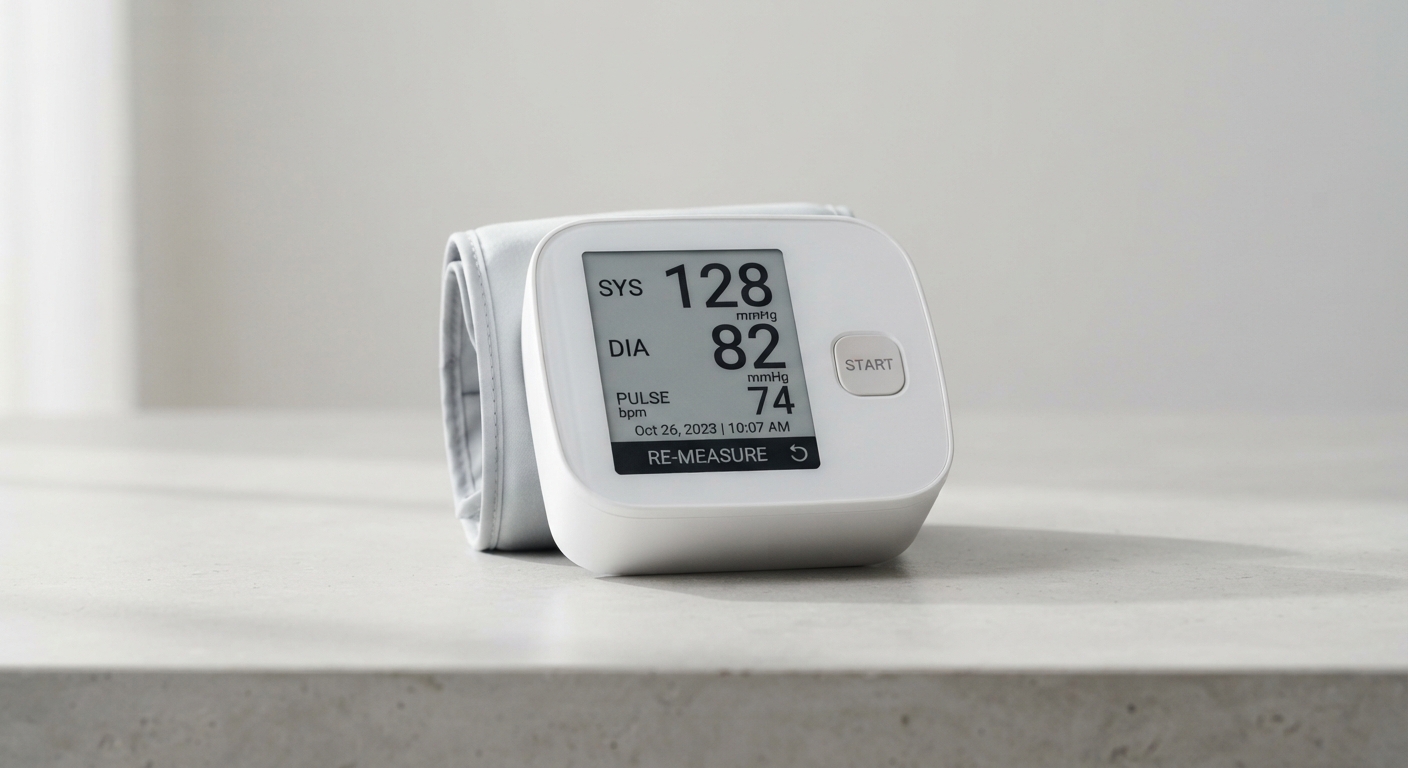
A blood pressure cuff with a small screen that shows your last reading, the date, and a simple “take again now” reminder right on the cuff. A blood pressure cuff with a small screen that shows your last reading, the date, and a simple “take again now” reminder right on the cuff. It removes the usual hunt through a phone app or notebook when you’re trying to remember whether this morning’s number was actually better. Brand Software-only (low capex) Standard / Mid-market

hardwarehealthcareglobalideasolo
Shared by the founder — read-only view.
71/100Project health
Journey40 / 60 · 67%
Generated 2026-08-28
$1.8B
TAM
$450M
SAM
$4.5M
SOM
5.8%
CAGR
$45
ARPU
$45 cuff sale
Primary Revenue

01Executive snapshot

Build
ProjectCuff Memory Display
Typehardware
Industryhealthcare
Modephysical_first
Customers
Buyerconsumer
Audiencepatients
Whereglobal
Money
Revenueone_time
Avg tx10_100
Pricingstandard
Capitalsoftware_only
Stage & Team
Stageidea
Teamsolo
Fundingno_funding
Strategy
Moatbrand
Watchcan_build
Growthproduct_led

02Assets & files

Company logo

“See your last reading instantly”

MVP concept images
PHASE 1 · 7 of 7 complete

03Validate

Solution Reframing

Completed
Problem
Frames
Functional
Universality4 / 5
Frequency Pain4 / 5
Monetizability3 / 5
Urgency3 / 5
Founder Fit4 / 5
Evidence4 / 5
Solution Potential3 / 5
Who
Home blood pressure patients
From
No immediate reading history on the device
How Badly
4
Why Now
They often measure multiple times a day and need quick comparison
Workaround
Open an app or check notes
Hidden Pain
They may skip a repeat reading or record the wrong number
Opens
Fast comparison at the moment of use
Closes
Any delay between measurement and recall
Total
25
StatementPeople like home blood pressure patients struggle to decide whether to measure again because the last reading is not visible at the point of use, which causes wasted time and inconsistent tracking.
Emotional
Universality3 / 5
Frequency Pain4 / 5
Monetizability3 / 5
Urgency3 / 5
Founder Fit4 / 5
Evidence3 / 5
Solution Potential3 / 5
Who
Home blood pressure patients
From
Uncertain memory after measurement
How Badly
3
Why Now
Blood pressure readings can trigger anxiety
Workaround
Recheck mentally or ask someone else
Hidden Pain
They lose trust in their own tracking routine
Opens
A clearer sense of control
Closes
Doubt after each reading
Total
23
StatementPeople like home blood pressure patients struggle to feel confident about their numbers because they cannot easily verify the previous reading, which causes worry and second-guessing.
Economic
Universality3 / 5
Frequency Pain3 / 5
Monetizability2 / 5
Urgency2 / 5
Founder Fit4 / 5
Evidence3 / 5
Solution Potential2 / 5
Who
Home blood pressure patients
From
No easy way to compare with the prior reading
How Badly
2
Why Now
Home monitoring is used more often for ongoing care
Workaround
Take extra readings or ignore the trend
Hidden Pain
Time and attention are wasted on low-value repeats
Opens
Better adherence to monitoring routines
Closes
Unclear read-repeat decisions
Total
19
StatementPeople like home blood pressure patients struggle to avoid wasted monitoring effort because they cannot tell if a repeat reading is needed, which causes unnecessary device use and lower adherence value.
Behavioral
Universality4 / 5
Frequency Pain4 / 5
Monetizability3 / 5
Urgency3 / 5
Founder Fit4 / 5
Evidence4 / 5
Solution Potential3 / 5
Who
Home blood pressure patients
From
No prompt tied to the device itself
How Badly
4
Why Now
Routine habits matter for long-term monitoring
Workaround
Rely on memory or a separate checklist
Hidden Pain
The habit breaks when attention is low
Opens
A clearer next step after each use
Closes
Ambiguity after measurement
Total
25
StatementPeople like home blood pressure patients struggle to build a repeatable routine because the next action is not obvious after a reading, which causes missed follow-through.
Social/Trust
Universality3 / 5
Frequency Pain3 / 5
Monetizability3 / 5
Urgency3 / 5
Founder Fit4 / 5
Evidence3 / 5
Solution Potential3 / 5
Who
Home blood pressure patients and caregivers
From
Fragmented records and memory
How Badly
3
Why Now
Family members and clinicians often need the latest number quickly
Workaround
Text a photo, read from notes, or repeat the story
Hidden Pain
Caregivers do not trust the number or the timing
Opens
A shared reference point at the cuff
Closes
Scattered proof of the last reading
Total
22
StatementPeople like home blood pressure patients struggle to share reliable readings with caregivers because the record is scattered across places, which causes doubt and repeated questions.
System/Infrastructure
Universality4 / 5
Frequency Pain3 / 5
Monetizability2 / 5
Urgency2 / 5
Founder Fit4 / 5
Evidence3 / 5
Solution Potential3 / 5
Who
Home blood pressure patients
From
No local memory that is easy to see
How Badly
3
Why Now
Many users do not want to manage another app or notebook
Workaround
Use a separate phone app or paper log
Hidden Pain
The monitoring system breaks when the external tool is forgotten
Opens
A self-contained record at the device
Closes
Dependence on other tools and log hygiene
Total
21
StatementPeople like home blood pressure patients struggle to keep a reliable monitoring record because the device does not hold the last reading in a usable way, which causes dependence on external tools and more drop-off.
Experience
Universality4 / 5
Frequency Pain4 / 5
Monetizability3 / 5
Urgency3 / 5
Founder Fit4 / 5
Evidence4 / 5
Solution Potential3 / 5
Who
Home blood pressure patients
From
No on-device cue after a reading
How Badly
4
Why Now
Daily health routines need low-friction repetition
Workaround
Guess what to do next or consult instructions
Hidden Pain
The whole experience feels heavier than it should
Opens
A clearer, calmer measurement flow
Closes
Unclear flow after the reading ends
Total
25
StatementPeople like home blood pressure patients struggle to feel that the routine is easy and reassuring because the device gives no immediate next-step cue, which causes friction every time they measure.
Solution
Zwicky
Inverted
Give the cuff away at low cost and charge for replacement screens, clinic branding, or support.
Analogy
Fitness trackers: they reduce friction by showing the next action at the moment of use, which this cuff can copy with an on-device prompt.
Rows
FrameCustomerSolutionRevenue
FunctionalHome blood pressure patientsA cuff screen that shows the last reading, date, and a repeat prompt on the devicetransaction
BehavioralOlder adultsA large-text cuff display with one-tap repeat reminder and simple historyone_time
EmotionalAnxious patientsA calm-mode cuff that shows trend direction and a reassurance prompt after each readingsubscription
Social/TrustCaregiversShared readout export from the cuff for family or nurse reviewfreemium
EconomicClinicsBulk supply of cuffs with branded reminder screens for discharge kitsenterprise SaaS
AccessLow-tech usersA no-app cuff that stores the last reading locally and needs no phonelicensing
ChannelPharmaciesShelf-ready packaging and demo units that drive impulse pickup near blood pressure medsmarketplace commission
SupportFamiliesSetup help and replacement support sold as a paid care planservice/maintenance
DataClinicsAggregated adherence and repeat-check insights sold to care teamsadvertising/data
Non Obvious
  • Sell the cuff as a discharge tool for clinics, not only as a consumer device.
  • Use the screen as a habit cue, not just a memory aid.
  • Offer caregiver sharing without a phone app by printing or showing the last reading on-device.
Extreme
Silly
A cuff that chants the last reading aloud like a coach after every measurement.
Serious
A cuff with a clear display, repeat reminder, and optional audio prompt for users with low vision or low confidence.

Competitor Analysis

Completed
Direct Competitors
Market Gap
A mid-market home blood pressure cuff that puts the last reading, date, and repeat prompt directly on the device for low-tech and older users.
Competitors
Omron

Home blood pressure monitors with memory and easy-to-read displays.

Product9 / 10
Pricing8 / 10
Marketing9 / 10
User Experience7 / 10
Customer Support8 / 10
Innovation5 / 10
Website
https://omronhealthcare.com
Value Proposition
Trusted home monitoring with simple measurement and stored readings.
Threat Level
high
Why Threat
They already own the category and can add similar features quickly.
Pricing
Model
one-time
Range
$30-$100
Level
4
Audience
Type
B2C
Geo
global
Segments
home patientsolder adultscaregivers
Marketing Channels
retail pharmaciesAmazonbrand searchhealthcare retailers
Weaknesses
  • Exploit: app and menu complexity can feel unnecessary to low-tech users.
  • Structural: strong brand trust and broad retail distribution are hard to match.
Key Features
Memory Storage
true
On Cuff Last Reading Display
false
App Sync
true
Large Display
true
Positioning
Price Level
4
Market Focus
3
iHealth

Connected blood pressure cuffs that sync readings to a mobile app.

Product8 / 10
Pricing7 / 10
Marketing7 / 10
User Experience6 / 10
Customer Support7 / 10
Innovation6 / 10
Website
https://ihealthlabs.com
Value Proposition
Digital tracking and app-based history for home health monitoring.
Threat Level
high
Why Threat
They serve the same home-monitoring need and already educate buyers to expect digital tracking.
Pricing
Model
one-time
Range
$40-$90
Level
5
Audience
Type
B2C
Geo
global
Segments
home patientstech-comfortable caregivers
Marketing Channels
Amazondirect-to-consumer siteonline adsretail marketplaces
Weaknesses
  • Exploit: app dependence is a barrier for older and low-tech users.
  • Structural: connected ecosystem and app familiarity create switching inertia.
Key Features
Memory Storage
true
On Cuff Last Reading Display
false
App Sync
true
Large Display
true
Positioning
Price Level
5
Market Focus
3
A&D Medical

Consumer blood pressure monitors with memory and straightforward displays.

Product8 / 10
Pricing8 / 10
Marketing8 / 10
User Experience7 / 10
Customer Support7 / 10
Innovation5 / 10
Website
https://andmedical.com
Value Proposition
Reliable home blood pressure hardware with simple operation and readable results.
Threat Level
high
Why Threat
They are a direct substitute with similar price points and the same buyer.
Pricing
Model
one-time
Range
$30-$80
Level
4
Audience
Type
B2C
Geo
global
Segments
home blood pressure patientsolder adultscaregivers
Marketing Channels
Amazonpharmaciesmedical supply storesbrand search
Weaknesses
  • Exploit: their products still force users to check history indirectly.
  • Structural: established manufacturing and retail presence make price competition tough.
Key Features
Memory Storage
true
On Cuff Last Reading Display
false
App Sync
false
Large Display
true
Positioning
Price Level
4
Market Focus
3
Beurer

Home health devices including blood pressure monitors with memory and large displays.

Product7 / 10
Pricing7 / 10
Marketing7 / 10
User Experience7 / 10
Customer Support7 / 10
Innovation5 / 10
Website
https://www.beurer.com
Value Proposition
Accessible home monitoring devices with user-friendly interfaces.
Threat Level
medium
Why Threat
They compete on the same shelf and can target the same low-friction buyer.
Pricing
Model
one-time
Range
$35-$90
Level
5
Audience
Type
B2C
Geo
global
Segments
home usersseniorscaregivers
Marketing Channels
Amazonretail partnersdirect sitepharmacy channels
Weaknesses
  • Exploit: feature sets can be generic and undifferentiated.
  • Structural: broad product catalog and international footprint support scale.
Key Features
Memory Storage
true
On Cuff Last Reading Display
false
App Sync
true
Large Display
true
Positioning
Price Level
5
Market Focus
3
Microlife

Blood pressure monitors with memory, large displays, and clinical credibility.

Product8 / 10
Pricing7 / 10
Marketing6 / 10
User Experience7 / 10
Customer Support7 / 10
Innovation5 / 10
Website
https://www.microlife.com
Value Proposition
Clinically oriented home monitoring with simple readouts and stored history.
Threat Level
medium
Why Threat
They sell the same device category to the same home-monitoring audience.
Pricing
Model
one-time
Range
$35-$100
Level
5
Audience
Type
B2C
Geo
global
Segments
home patientsolder adultshealth-conscious caregivers
Marketing Channels
pharmaciesAmazonretail health storessearch
Weaknesses
  • Exploit: clinical positioning can feel less friendly than a simple reminder display.
  • Structural: device credibility and validation are difficult to replicate.
Key Features
Memory Storage
true
On Cuff Last Reading Display
false
App Sync
false
Large Display
true
Positioning
Price Level
5
Market Focus
3
Withings

Premium connected health devices, including smart blood pressure monitors.

Product9 / 10
Pricing4 / 10
Marketing8 / 10
User Experience9 / 10
Customer Support8 / 10
Innovation7 / 10
Website
https://www.withings.com
Value Proposition
Elegant connected monitoring with app-based health tracking and polished design.
Threat Level
medium
Why Threat
They are an aspirational substitute for buyers willing to pay more for connected health.
Pricing
Model
one-time
Range
$80-$130
Level
8
Audience
Type
B2C
Geo
global
Segments
premium buyerstech-savvy patientscaregivers
Marketing Channels
direct-to-consumerAmazonpremium retaildigital ads
Weaknesses
  • Exploit: premium pricing can alienate mid-market buyers.
  • Structural: strong product design and ecosystem make them hard to outbrand.
Key Features
Memory Storage
true
On Cuff Last Reading Display
false
App Sync
true
Large Display
true
Positioning
Price Level
8
Market Focus
3
Qardio

Connected blood pressure monitoring focused on app syncing and digital health tracking.

Product7 / 10
Pricing5 / 10
Marketing6 / 10
User Experience7 / 10
Customer Support6 / 10
Innovation6 / 10
Website
https://www.getqardio.com
Value Proposition
App-first monitoring with easy digital record keeping and shareable data.
Threat Level
medium
Why Threat
They solve the same monitoring task, just through a phone-centered workflow.
Pricing
Model
one-time
Range
$60-$120
Level
7
Audience
Type
B2C
Geo
global
Segments
digital health userscaregivershome patients
Marketing Channels
direct siteAmazondigital adshealth-tech partnerships
Weaknesses
  • Exploit: app-first design is awkward for users avoiding phones.
  • Structural: software integration and connected workflows are a durable advantage.
Key Features
Memory Storage
true
On Cuff Last Reading Display
false
App Sync
true
Large Display
false
Positioning
Price Level
7
Market Focus
3
Welch Allyn

Professional blood pressure equipment used in clinics and some home-care settings.

Product9 / 10
Pricing3 / 10
Marketing6 / 10
User Experience6 / 10
Customer Support9 / 10
Innovation5 / 10
Website
https://www.hillrom.com/en/products/welch-allyn/
Value Proposition
Clinical-grade monitoring hardware trusted by professional buyers.
Threat Level
medium
Why Threat
They can win discharge and clinic channels if your product expands beyond pure consumer use.
Pricing
Model
enterprise
Range
$100-$500+
Level
9
Audience
Type
B2B
Geo
global
Segments
clinicshome-care programsdischarge planners
Marketing Channels
direct salesmedical distributorshospital procurementclinical partnerships
Weaknesses
  • Exploit: overkill for ordinary home users seeking simplicity.
  • Structural: clinical trust and procurement relationships are difficult to displace.
Key Features
Memory Storage
true
On Cuff Last Reading Display
false
App Sync
false
Large Display
true
Positioning
Price Level
9
Market Focus
8
Indirect Competitors
Market Gap
The gap is a low-tech, mid-market cuff that makes the last reading visible at the exact moment of use.
Competitors
Omron

Home blood-pressure monitors with memory and connected models.

Migration trigger: a caregiver or older user gets tired of opening apps; campaign: compare app friction versus instant on-device recall.

Product9 / 10
Pricing8 / 10
Marketing9 / 10
User Experience7 / 10
Customer Support8 / 10
Innovation5 / 10
Website
https://omronhealthcare.com
Value Proposition
Trusted monitoring hardware with simple memory and broad availability.
Threat Level
high
Why Threat
It already owns the category and can satisfy the same job with familiar hardware.
Pricing
Model
one-time
Range
$30-$100
Level
5
Audience
Type
B2C
Geo
global
Segments
home BP patientsolder adultscaregivers
Marketing Channels
Amazonretail pharmaciesbrand searchmedical supply stores
Weaknesses
  • Still requires users to check readings manually
  • App-connected models add friction for low-tech users
  • No built-in reminder on the cuff itself
Key Features
Blood Pressure Measurement
true
Reading Memory
true
On Cuff Last Reading Display
false
Repeat Reminder
false
Phone App Sync
true
Positioning
Price Level
5
Market Focus
3
iHealth

Connected blood-pressure monitors that sync readings to a phone app.

Migration trigger: users forget whether they already measured; campaign: show instant last-reading visibility without unlocking a phone.

Product8 / 10
Pricing8 / 10
Marketing7 / 10
User Experience6 / 10
Customer Support7 / 10
Innovation6 / 10
Website
https://ihealthlabs.com
Value Proposition
Digital tracking and app-based history for consumers who want data access.
Threat Level
medium
Why Threat
It solves the same monitoring need, but through app-connected convenience rather than cuff-based simplicity.
Pricing
Model
one-time
Range
$35-$100
Level
5
Audience
Type
B2C
Geo
global
Segments
health trackerscaregivershome monitoring patients
Marketing Channels
Amazondirect-to-consumer siteonline adsmarketplace listings
Weaknesses
  • Depends on a phone and app setup
  • Less friendly for older users
  • History is not visible at the cuff
Key Features
Blood Pressure Measurement
true
Reading Memory
true
On Cuff Last Reading Display
false
Repeat Reminder
false
Phone App Sync
true
Positioning
Price Level
5
Market Focus
3
A&D Medical

Home BP cuffs with readable displays and built-in memory.

Migration trigger: a user wants less confusion between readings; campaign: prove the display reduces repeat-check mistakes.

Product8 / 10
Pricing8 / 10
Marketing7 / 10
User Experience7 / 10
Customer Support7 / 10
Innovation4 / 10
Website
https://andmedical.com
Value Proposition
Reliable, easy-to-read blood-pressure monitoring at a mainstream price.
Threat Level
high
Why Threat
It is a direct substitute buyers may choose instead of paying extra for a display upgrade.
Pricing
Model
one-time
Range
$25-$80
Level
4
Audience
Type
B2C
Geo
global
Segments
seniorshome health patientscaregivers
Marketing Channels
Amazonpharmaciesretail shelvesmedical distributors
Weaknesses
  • Memory is not as immediate as a dedicated last-reading screen
  • Limited behavior nudges
  • Feels like standard hardware
Key Features
Blood Pressure Measurement
true
Reading Memory
true
On Cuff Last Reading Display
false
Repeat Reminder
false
Phone App Sync
false
Positioning
Price Level
4
Market Focus
3
Withings

Premium connected health devices with polished app experiences.

Migration trigger: buyers want a cheaper, simpler alternative; campaign: position as the no-app, lower-friction choice.

Product9 / 10
Pricing5 / 10
Marketing8 / 10
User Experience8 / 10
Customer Support8 / 10
Innovation8 / 10
Website
https://withings.com
Value Proposition
High-design connected monitoring with strong software experience.
Threat Level
medium
Why Threat
It can capture buyers willing to pay more for polished health hardware, even if the use case is different.
Pricing
Model
one-time
Range
$80-$180
Level
8
Audience
Type
B2C
Geo
global
Segments
premium wellness buyerstech-savvy patientscaregivers
Marketing Channels
DTC ecommercebrand marketingretail partnersonline reviews
Weaknesses
  • Higher price than mid-market buyers want
  • App-first workflow adds friction
  • Overkill for simple BP tracking
Key Features
Blood Pressure Measurement
true
Reading Memory
true
On Cuff Last Reading Display
false
Repeat Reminder
false
Phone App Sync
true
Positioning
Price Level
8
Market Focus
4
Apple Health

Phone-based health tracking that stores readings and trends.

Migration trigger: the user wants a faster check at the moment of measurement; campaign: emphasize no-app, no-hunt convenience.

Product7 / 10
Pricing10 / 10
Marketing10 / 10
User Experience8 / 10
Customer Support8 / 10
Innovation7 / 10
Website
https://www.apple.com/health/
Value Proposition
Centralizes health data inside a familiar phone ecosystem.
Threat Level
medium
Why Threat
It is the default workaround for users who already live in their phone and do not need device-level memory.
Pricing
Model
free
Range
Included with device
Level
2
Audience
Type
B2C
Geo
global
Segments
iPhone usersself-trackerscaregivers
Marketing Channels
device ecosystemapp storeOS promptspartner integrations
Weaknesses
  • No physical reminder at the cuff
  • Requires phone comfort and setup
  • Not ideal for low-tech seniors
Key Features
Blood Pressure Measurement
false
Reading Memory
true
On Cuff Last Reading Display
false
Repeat Reminder
false
Phone App Sync
true
Positioning
Price Level
2
Market Focus
2
Google Fit

Free phone-based health tracking for Android users.

Migration trigger: users want the answer on the cuff, not in an app; campaign: show the moment-of-use gap in phone tracking.

Product6 / 10
Pricing10 / 10
Marketing10 / 10
User Experience7 / 10
Customer Support7 / 10
Innovation6 / 10
Website
https://www.google.com/fit/
Value Proposition
Low-friction digital tracking inside the Android ecosystem.
Threat Level
low
Why Threat
It is a cheap status-quo workaround, but not a direct device substitute for the cuff screen.
Pricing
Model
free
Range
Free
Level
1
Audience
Type
B2C
Geo
global
Segments
Android userscasual health trackerscaregivers
Marketing Channels
Android ecosystemapp storeGoogle servicesdevice integrations
Weaknesses
  • No on-device BP reminder
  • Relies on phone habits
  • Does not solve measurement-time confusion
Key Features
Blood Pressure Measurement
false
Reading Memory
true
On Cuff Last Reading Display
false
Repeat Reminder
false
Phone App Sync
true
Positioning
Price Level
1
Market Focus
2
MediSafe

Medication and health reminder app used by patients and caregivers.

Migration trigger: users want the reminder built into the cuff; campaign: prove fewer missed repeat checks with device-native prompts.

Product7 / 10
Pricing9 / 10
Marketing7 / 10
User Experience7 / 10
Customer Support7 / 10
Innovation5 / 10
Website
https://www.medisafe.com
Value Proposition
Reminds users to follow routines and track health tasks.
Threat Level
low
Why Threat
It can replace the reminder part of the job, but not the physical memory display.
Pricing
Model
freemium
Range
Free to paid tiers
Level
2
Audience
Type
B2C
Geo
global
Segments
patientscaregiverschronic care users
Marketing Channels
app storescontent marketingcaregiver referralshealth blogs
Weaknesses
  • Separate from the cuff
  • Requires phone interaction
  • Does not show the last reading on the device
Key Features
Blood Pressure Measurement
false
Reading Memory
true
On Cuff Last Reading Display
false
Repeat Reminder
true
Phone App Sync
true
Positioning
Price Level
2
Market Focus
2
Paper logbooks

Manual BP notebooks and printed logs used to record readings.

Migration trigger: a user gets tired of handwriting or losing logs; campaign: replace notebooks with instant on-device recall and no transcription.

Product3 / 10
Pricing10 / 10
Marketing6 / 10
User Experience4 / 10
Customer Support2 / 10
Innovation1 / 10
Website
https://www.amazon.com
Value Proposition
Cheap, simple, and familiar way to track readings without technology.
Threat Level
high
Why Threat
It is the simplest status-quo alternative and the cheapest option for buyers who resist new hardware.
Pricing
Model
one-time
Range
$5-$15
Level
1
Audience
Type
B2C
Geo
global
Segments
seniorscaregiversclinic discharge patients
Marketing Channels
pharmaciesAmazonclinicsprint materials
Weaknesses
  • Easy to forget or miswrite entries
  • No instant recall at measurement time
  • No reminder behavior
Key Features
Blood Pressure Measurement
false
Reading Memory
true
On Cuff Last Reading Display
false
Repeat Reminder
false
Phone App Sync
false
Positioning
Price Level
1
Market Focus
1

Market Sizing

Completed
Auto-fill numbers
TAM$1.8B
SAM$450M
SOM$4.5M
5.8%
CAGR Pct
$45
ARPU USD
TAM Reasoning

Global consumer home blood pressure monitoring is the base market; this is a one-time hardware add-on within healthcare for patients, not a recurring enterprise sale.

Visual analysis
Critic verdict61 / 100shaky

The market is real, but the sizing is too hand-wavy for a feature-add hardware pitch.

The TAM is directionally believable because home blood pressure monitoring is a large, established category. But the sizing logic is too loose: it mixes the base device market with a feature enhancement, then jumps to a…

Compliance & Approvals

Completed
Regulatory pathway analysis

This is a blood-pressure cuff with an on-device screen that shows the last reading, date, and a reminder to measure again. Because it is a home blood-pressure monitoring product, it is not a pure lifestyle gadget: the moment you make measurement, memory, trend, or reminder claims, you are in medical-device territory in the U.S. and the EU. If you only display the cuff’s own stored measurement and avoid diagnosis or treatment claims, the burden may be lighter than a connected clinical system, but it is still regulated hardware with labeling, safety, and quality obligations. What is not regulated as a premarket medical system is the basic idea of selling a consumer cuff with a screen. What remains regulated is how you claim it works, whether it is accurate, whether the display changes user behavior safely, and whether any stored history or caregiver sharing creates data-processing obligations. If you add an app, cloud sync, or remote sharing, privacy law and security expectations rise quickly. If you market it as helping manage hypertension, that can pull you deeper into FDA/EU MDR scrutiny. MVP risk is mostly about product classification, accuracy, electrical/mechanical safety, labeling, and whether the reminder wording could be seen as a medical claim. Public-launch risk adds retail returns, complaint handling, post-market surveillance, warranty language, and advertising review. Scaling/global risk is much heavier: EU MDR technical documentation, UKCA/UK responsible person, country-specific registrations, language/localization, importer obligations, and privacy compliance if any data leaves the device. If you later add caregiver export or cloud history, GDPR/CCPA and possibly HIPAA-adjacent workflows become much more expensive. For the U.S., the smartest first move is to get a regulatory classification memo from counsel or a former FDA consultant before you cut tooling, then lock claims to simple consumer usability language and build quality documentation from day one. For the EU, assume CE/MDR work will take longer than you think and require a serious technical file. The safest path is a conservative consumer-health launch with no app, no cloud, and no diagnosis claims until you know whether the device can fit into a low-burden pathway. Bottom line: this is not a zero-regulation product. It is a real medical-device-adjacent hardware launch with meaningful compliance work, but it is still plausible if you keep the claims narrow and the software/data footprint minimal.

6
Timeline Months
$45k
Estimated Cost USD
Risk Score
72
Regulator

U.S. FDA medical device rules (likely Class I or II depending on claims and intended use), EU MDR/CE marking, UK MHRA/UKCA, Health Canada, TGA Australia, GDPR, CCPA/CPRA, HIPAA only if you sell through covered entities or handle patient data for providers, FTC advertising rules, Amazon and app-store policies if software or connectivity is added, and general product safety/consumer protection regimes

Pathway

Start with a narrow consumer-home-use product claim set, then run a regulatory classification memo to confirm whether the cuff and display are an accessory to a blood pressure monitor or a modified monitor. Build the MVP as a non-connected consumer device with conservative claims, complete design controls, risk management, labeling, IFU, and complaint handling, then prepare U.S. registration/listing and 510(k)/de novo assessment only if your claims or device modifications trigger premarket review. In parallel, prepare EU technical documentation, clinical/risk evidence, PMS/PMCF planning, and an authorized representative/importer setup for CE/UKCA/global launch.

Classification

Moderate-to-high medical device and consumer-health compliance burden; likely FDA/EU MDR regulated hardware with privacy obligations if any data is stored or shared

Location Strategy

Completed

For this cuff, the smartest sequence is: 1) production via contract manufacturing, 2) warehouse/fulfillment via a 3PL, 3) distribution through Amazon + pharmacy/medical retail partners, 4) only then a small physical retail presence if pull-through proves strong. Because the product is hardware, low-capex, and early-stage, avoid building your own factory or warehouse. Use channel partners to borrow trust from Omron-like incumbents while differentiating on the on-cuff screen and repeat reminder. The main validation gaps are regulatory classification, unit economics at low volume, and whether consumers will pay for the feature without app connectivity.

Recommended

Start with a contract manufacturer plus a 3PL warehouse, then sell through Amazon and pharmacy/medical retail channels before opening any owned retail. Treat the first geographic market as the U.S. consumer…

Customer Interviews

Completed
ChatGPT

I’m OpenAI, and I’m roleplaying a potential customer for your startup interview practice. As a patient, I’d use a cuff like that if it were dead simple. I hate opening an app just to check whether today’s reading is better than yesterday’s. But I’d only care if the screen is easy to read and the cuff still feels accurate. If it’s tiny, confusing, or drains the battery fast, I’d ignore it and keep using my notebook.

Medical Experts Interviews

Completed

La señal es débil: no hay KOLs reales en el log, solo simulaciones de cliente y análisis generados por IA. Eso no valida demanda, disposición a pagar ni credibilidad clínica; como mucho sugiere que el problema es…

Confidence Score
18
PHASE 2 · 5 of 5 complete

04Build

Business Model Canvas

Completed
Business Model Canvas (9 blocks)

Win if older home blood-pressure patients will pay for seeing the last reading on the cuff itself.

A one-time, mid-market blood-pressure cuff with an on-device screen for the last reading, date, and repeat prompt. Assumption: U.S. home-monitor buyers will pay about $45 for less app friction and fewer rechecks; biggest risk is that incumbents copy it or users do not value the display enough.

B2C one-time hardware
Model Type
Older home blood-pressure patients
Primary Segment
$45 cuff sale
Primary Revenue
Users want on-cuff history
Biggest Bet
Bmc Blocks
Key Partners
Star
ISO 13485 contract manufacturer
Items
ISO 13485 contract manufacturerNew Jersey 3PL for small devicesAmazon Seller CentralCVS or Walgreens category buyer
Key Activities
Star
Test readability with seniors
Items
Source a low-power cuff displayTest readability with seniorsWrite FDA-safe label claimsShip and track returns from 3PL
Key Resources
Star
FDA classification memo
Items
  • Blood-pressure cuff tooling budget
  • Simple screen firmware
  • FDA classification memo
  • Brand name that signals calm
Value Propositions
Star
Last reading and date on the cuff
Items
  • Last reading and date on the cuff
  • Repeat-now prompt at measurement time
  • No app hunt when memory is weak
  • Cleaner routine for daily monitors
Customer Relationships
Star
Simple warranty, no app account
Items
  • Printed setup card in the box
  • Phone support for first-week setup
  • Replacement flow through Amazon messages
  • Simple warranty, no app account
Channels
Star
Amazon search for home monitors
Items
Amazon search for home monitorsPharmacy shelf demo at CVSDirect site for caregiver buyersMedical supply distributors
Customer Segments
Star
Older adults who hate phone apps
Items
  • Older adults who hate phone apps
  • Home BP patients checking twice daily
  • Caregivers tracking a parent’s numbers
  • Clinic discharge buyers in the U.S.
Cost Structure
Star
Tooling and sample runs: $15k-$30k
Items
  • Tooling and sample runs: $15k-$30k
  • FDA/label review: about $5k-$10k
  • 3PL pick-pack: about $3-$6/unit
  • Amazon fees: about 15%-20%
Revenue Streams
Star
One-time cuff sale at $45
Items
  • One-time cuff sale at $45
  • Premium large-text version at $59
  • Clinic bundle orders at $35/unit
  • Replacement parts and straps

Value Proposition

Completed
Customer Profile x Value Map fit

Older home BP patients will pay $45 for the cuff to show the last reading right where they look

Assuming U.S. home blood-pressure buyers, this is a one-time mid-market cuff for patients who hate app hunting and want the last number on the device. The fit is strongest for older or low-tech users; the biggest risk is that they keep using memory, a notebook, or Omron instead.

older home BP patients
Target Segment
I have to check my phone or notes
Top Pain
See the last reading on the cuff
Top Gain
61%
Fit Score
Profile
Jobs
LabelWeight Pct
Check if today's reading is better than yesterday's92
Know whether to measure again now88
Keep a simple home BP routine84
Share a clear reading with a caregiver68
Pains
LabelWeight Pct
I have to hunt through an app or notebook94
I forget the last number by the next reading90
I second-guess whether I already measured82
Tiny screens and extra steps make me skip it74
Gains
LabelWeight Pct
See the last reading and date on the cuff95
Get a clear take-again-now reminder88
Use it without opening a phone app86
Feel more confident my numbers are right72
Fit Pairs
Customer SideYour SideKindStrength Pct
I have to hunt through an app or notebookSmall on-cuff screen shows last reading and date locally, no app neededpain58
I forget the last number by the next readingDevice memory surfaces the prior reading at the point of usepain56
See the last reading and date on the cuffBuilt-in low-power display on the cuff face, readable at arm's lengthgain60
Get a clear take-again-now reminderSimple on-device prompt after measurement, no phone notification requiredgain53
Share a clear reading with a caregiverPrinted setup card plus on-device display for manual sharing; no cloud workflow yetjob41
Tiny screens and extra steps make me skip itLarger-text version and one-step readout, sold through Amazon and pharmacy channelspain47

Hardware Path

Completed
Hardware path

Start with a 100-unit imported-electronics pilot, then scale into contract-manufactured cuffs once the display and reminder prove users will pay for it.

Assuming a U.S. market and USD pricing, the cheapest realistic path is off-the-shelf BP cuff hardware plus a small custom PCB/display module assembled by a contract electronics shop. No in-house engineer is listed, so budget contract design help early; the biggest cash risk is MOQ and certification spend before you validate demand.

Unit Cost Target
USD 18
Proto Budget
USD 4,800
First Batch
100 units / USD 9,500
Cert Must Have
FDA device classification memo (U.S. FDA)
Stage Flow
LabelSubIcon
Proof of conceptUSD 450 / 2 wksfa-lightbulb
PrototypeUSD 4,800 / 5 wksfa-screwdriver-wrench
Design validationUSD 2,200 / 4 wksfa-vial-circle-check
Pilot batch100 units / USD 9,500 / 6 wksfa-boxes-stacked
Mass production1,000 units / USD 18,000 / 10 wksfa-industry
BOM Receipt
USD 22
Off-the-shelf BP cuff base unit
USD 6
Low-power OLED/LCD display module
USD 4
Microcontroller + RTC battery backup
USD 5
Custom PCB and connectors
USD 3
Enclosure / cuff screen mount
USD 4
Assembly and test
USD 44
Cost per prototype unit

Supply / Inventory

Completed
Supply / inventory plan

A U.S. contract-electronics pilot with 100 units ties up about $4.4k and can be replenished in 42 days.

For this idea-stage, solo, no-funding U.S. hardware launch, start with an imported cuff base, a small display module, and a local 3PL for Amazon and direct orders. The demand assumption is a 100-unit pilot selling through Amazon plus caregiver direct sales at about 2 units/day; the biggest risk is FDA-claim creep and an MOQ that forces you to buy more than the pilot needs.

42 days
Total Lead Time
98 units
Reorder Point
$4,400
Stock Budget
4 suppliers / 2 countries
Supplier Count
Chain Flow
LabelSubIcon
Cuff OEM sample factory, Shenzhen14 days · 45% of unit costfa-industry
Display and RTC parts distributors, China and U.S.7 days · 18% of unit costfa-boxes-stacked
Contract PCB assembler, Guangdong10 days · 22% of unit costfa-industry
U.S. 3PL warehouse, New Jersey5 days · $3-$6 per order pick-packfa-warehouse
Amazon FBA and direct ship to U.S. buyers6 days · 15%-20% platform and fulfillment feesfa-truck-fast
Reorder Receipt
2 units/day
Daily demand
84 units
x lead time (42 days)
14 units
Safety stock
98 units
Reorder point

Compliance Suite

Completed
Compliance analysis

You can launch lean, but this is still a regulated medical-device-adjacent hardware product: about $45,000 and 6 months to get compliant.

Assumption: U.S.-first launch for a home blood-pressure cuff sold as consumer health hardware, with no app, no cloud, and narrow claims. The biggest legal risk is FDA/device classification and claim creep, followed by labeling, accuracy, and post-market complaint handling.

High
Risk Level
7 items
Permits Needed
$45,000
Setup Cost
FDA classification memo before tooling
First Deadline
Permit Checklist
LabelStatusNoteBadge
FDA device classification memo and intended-use reviewnowU.S. FDA or a former FDA regulatory consultant; about $3,000-$8,000; 2-4 weeks.$3k-$8k
Design controls and risk management filenowNo filing authority; build to FDA QSR/21 CFR 820 expectations; consultant setup about $5,000-$12,000; 2-6 weeks.$5k-$12k
Device establishment registration and listingtodoU.S. FDA; annual registration fee is $9,280 for FY2026; listing is typically filed online in 1-3 days after readiness.$9,280
510(k) or de novo determination, if claims require itwarnU.S. FDA; user-fee review is about $24,335 for small business 510(k) in FY2026, with 3-6 months review.$24,335
California Proposition 65 and FTC ad-claim reviewwarnCalifornia OEHHA for Prop 65 notices; FTC for advertising; costs vary, usually $500-$3,000 for review and labels; 1-3 weeks.$500-$3k
State sales tax permit and business registrationtodoState Secretary of State and state tax authority in your formation/sales state; usually $0-$300; 1-10 business days.$0-$300
UL/IEC electrical safety testing for the display moduletodoThird-party NRTL such as UL; testing often costs $8,000-$20,000; 4-8 weeks depending on scope.$8k-$20k
Exposure Quad
Licensing & permits

Nothing is locked yet; FDA classification is the first gate.

82%
Score Pct
Icon
fa-id-card
Bullets
  • Rule: FDA intended-use and accessory classification determine the pathway.
  • First move: get a written classification memo before you cut tooling.
Tax & accounting

You still need formation, tax setup, and sales tax handling.

65%
Score Pct
Icon
fa-file-invoice-dollar
Bullets
  • Rule: state registration and sales tax obligations apply once you sell.
  • First move: form the entity and register in your launch state.
Labor & contracts

Solo founder reduces labor risk, but vendor contracts are not in place.

58%
Score Pct
Icon
fa-user-tie
Bullets
  • Rule: manufacturer, 3PL, and reseller agreements need liability terms.
  • First move: paper the OEM, 3PL, and marketplace contracts now.
Data & consumer protection

No app lowers privacy burden, but claims and complaint handling still matter.

74%
Score Pct
Icon
fa-shield-halved
Bullets
  • Rule: FTC advertising and state consumer laws still apply to health claims.
  • First move: lock copy to usability claims and create a complaint log.
PHASE 3 · 2 of 2 complete

05Monetize

Pricing Strategy

Completed
Pricing analysis

Charge $45 one-time for the cuff, because older home BP buyers pay for less app friction and clearer repeat checks.

Assuming U.S. home blood-pressure buyers with mid-market income, the best launch move is a simple one-time hardware price, not a subscription. The biggest pricing risk is that shoppers compare you to $30-$40 incumbents and do not see enough value in the on-cuff screen to pay the premium.

One-time hardware
Recommended Model
$45
Launch Price
Cuff sold
Value Metric
35%
Gross Margin Target
Pricing Page
ClearRead Cuff

A lower entry price for first-time buyers.

Price
$39
Period
one-time
Highlight
false
Note
Funnel tier to reduce first-purchase friction.
Features
  • Last reading and date on the cuff
  • Repeat-now reminder on-device
  • No app or notebook needed
Memory Display Cuff

The main model for most home users.

Price
$45
Period
one-time
Highlight
true
Note
Core cash tier that should sell most units.
Features
  • Last reading and date on the cuff
  • Repeat-now reminder on-device
  • Large, easy-to-read screen
  • Simple setup card in the box
Caregiver View Cuff

Best for families who want easier reading.

Price
$59
Period
one-time
Highlight
false
Note
Anchor tier to lift perceived value and margin.
Features
  • Extra-large text display
  • Last reading and date on the cuff
  • Repeat-now reminder on-device
  • Priority support for setup
Market Position
0
DIY notebook or phone notes
35
Omron home BP monitor
40
A&D Medical cuff
45
Cuff Memory Display
80
Withings entry monitor

Transactional Pricing

Completed
Transactional pricing

A flat $45 cuff sale leaves about $42.37 after Stripe and basic fulfillment costs.

Assuming a U.S. consumer hardware sale at a $45 ticket and Stripe at 2.9% + $0.30, the cleanest transaction fee design is a one-time flat fee on the cuff sale, not a percentage or subscription. The biggest risk is that this product is not naturally transactional beyond the initial device purchase, so fee simplicity matters more than clever monetization.

Flat fee
Fee Model
$42.37
Rev Per Tx
100
Effective Take
~2,371/mo
Tx For Goal
Fee Receipt
$45
Typical cuff sale
$45.00
Platform fee
$1.61
Payment processing
$0.75
Fulfillment reserve
$42.64
Net to you per transaction
Model Quad
Flat fee

Best fit because the product sells as a single device purchase.

92%
Score Pct
Icon
fa-coins
Bullets
  • Works well at $39-$59, where buyers expect a simple one-time hardware price.
  • Keeps checkout easy for older patients who do not want recurring charges.
Percentage

Weak fit because the product is not a marketplace or usage-based service.

28%
Score Pct
Icon
fa-percent
Bullets
  • A percentage fee adds no value to a one-off cuff sale.
  • It would feel odd on a $45 medical device and complicate trust.
Tiered

Useful only if you later add clinic bundles or caregiver versions.

61%
Score Pct
Icon
fa-layer-group
Bullets
  • Can separate a $39 basic cuff from a $59 large-text version.
  • Hurts if you overcomplicate a product that should stay simple at launch.
Hybrid

Possible later, but too complex for the current idea-stage hardware sale.

47%
Score Pct
Icon
fa-code-merge
Bullets
  • Could combine a flat device price with paid accessories or replacement straps.
  • Hurts now because the founder has no clear recurring transaction to monetize.
PHASE 4 · 4 of 4 complete

06Go-To-Market

Sales Motion

Completed
Sales motion design

Founder-led product-led motion can close 4 of 100 leads into $180 in gross profit if you sell direct to caregivers and older patients.

This is a solo, no-funding hardware idea, so the only realistic motion is founder-led product-led selling through Amazon, a simple site, and pharmacy-adjacent outreach. I assumed U.S. consumer health buyers researching on Amazon or via caregiver referrals; the biggest risk is that the category is crowded and the display benefit feels optional.

Founder-led product-led
Motion
$8
CAC Target
2-6 weeks
Sales Cycle
0 deals/mo
Deals For Goal
Pipeline Funnel
LabelPctDisplayNote
Leads100100 — scraped from Amazon reviews, BP patient forums, and caregiver groupsAmazon review profiles, Reddit r/hypertension, Facebook caregiver groups, and pharmacy buyer lists
Conversations2828 — 28% replyShort founder DMs and email to people already discussing BP tracking pain
Demos booked1212 — 43% of repliesOffer a 10-minute live phone demo or 1-page product video, booked immediately after reply
Proposals77 — 58% of demosSend a simple checkout link, Amazon listing, or bulk quote within 24 hours
Closed44 — 57% closeBuyer signs by adding to cart or accepting a small caregiver bundle order
Motion Quad
Founder-led outbound

Best early motion because the founder can directly explain the pain and collect proof fast.

78%
Score Pct
Icon
fa-user-tie
Bullets
  • Works for caregiver buyers, forum users, and small clinic contacts.
  • Costs mostly founder time plus manual follow-up, not ad spend or SDRs.
Inbound content

Useful, but too slow alone for an idea-stage hardware launch.

55%
Score Pct
Icon
fa-magnet
Bullets
  • BP education content can attract search traffic and caregiver trust.
  • Costs time to write, rank, and maintain before it reliably converts.
Product-led

Best fit because the product itself is the pitch and the benefit is visible on-device.

84%
Score Pct
Icon
fa-rocket
Bullets
  • The cuff demo shows the value instantly without a sales team.
  • Costs prototype polish, packaging, and a clean checkout flow.
Partner-led

Good second motion through pharmacies, DME shops, and discharge planners.

66%
Score Pct
Icon
fa-handshake
Bullets
  • Approach CVS category buyers, Walgreens local managers, and durable medical equipment distributors.
  • Costs samples, margin sharing, and slower relationship building.

Industry Channels

Completed
Industry channels

Amazon search is the #1 channel: it can deliver the first paying BP cuff sale in 2-3 weeks at about $8-$18 CAC.

For a U.S. consumer blood-pressure cuff at a $45 price point, the fastest real path is Amazon search plus a simple direct site for caregiver buyers. The biggest distribution risk is that incumbents like Omron already dominate search and reviews, so the product must win on clarity and low-tech simplicity.

Amazon search
Top Channel
$8-$120/customer
CAC Range
2-3 weeks
First Customer Eta
2 channels
Run Now
Channel Ranking
LabelPctDisplay
Amazon search (home blood pressure monitors)92$8-$18/customer plus 15%-20% fees
Direct site to caregiver buyers84$20-$45/customer from paid traffic plus card fees
CVS Marketplace / pharmacy category buyer7130%-35% retail margin plus $5,000-$15,000 launch spend
Walgreens local pharmacy buyer6630%-35% margin plus 60-90 day payment terms
Medical supply distributors5925%-35% distributor margin plus $250-$1,000 setup cost
Clinic discharge kits via hospital supply buyers51$35-$60/customer equivalent plus 60-120 day terms
Withings/Omron-style retail chain expansion38$10,000-$50,000 per SKU plus 30%-35% margin
Channel Cards
Amazon search (home blood pressure monitors)
Badge
takes 15%-20% fees
Icon
fa-amazon
Lines
KV
Monday moveList Cuff Memory Display on Amazon Seller Central and seed 20 keyword terms around home BP cuff, senior BP monitor, and no app blood pressure cuff.
Expect1-3 orders/day by week 3 if the listing is live and priced at $45.
It breaks whenCAC rises above $20/customer or review count stays below 10 after 30 days.
Direct site to caregiver buyers
Badge
takes 2.9% + card fees
Icon
fa-user-group
Lines
KV
Monday moveLaunch a one-page Shopify site and DM 25 caregiver admins in Facebook groups and Reddit r/hypertension with a demo link.
Expect3-8 inquiries/week by week 4, with 1-2 purchases if the offer is clear.
It breaks whenPaid traffic costs more than $45/customer or conversion stays under 2%.
CVS Marketplace / pharmacy category buyer
Badge
30%-35% retail margin
Icon
fa-store
Lines
KV
Monday movePrepare a 1-page buyer sheet for the CVS pharmacy category buyer and request a regional test in 20-30 stores.
ExpectA pilot decision in 6-10 weeks if the proof-of-demand and packaging are strong.
It breaks whenYou cannot support 30%-35% margin plus chargebacks and 60-day terms.
Walgreens local pharmacy buyer
Badge
30%-35% margin
Icon
fa-prescription-bottle-medical
Lines
KV
Monday moveCall 10 Walgreens district pharmacy managers and ask which local health categories they can trial in 10 stores.
Expect1 small pilot conversation per 10-15 outreaches, usually over 4-8 weeks.
It breaks whenThe shelf price must fall below $40 and the margin floor drops under 28%.
Medical supply distributors
Badge
25%-35% distributor margin
Icon
fa-truck
Lines
KV
Monday moveEmail 15 durable medical equipment distributors and offer a 50-unit starter carton with a $35 wholesale price.
Expect1-2 distributor trials in 4-6 weeks if FDA-safe claims and packaging are ready.
It breaks whenYour wholesale price cannot leave at least 35% gross margin after freight and returns.
Clinic discharge kits via hospital supply buyers
Badge
$35-$60/customer equivalent
Icon
fa-hospital
Lines
KV
Monday moveAsk 5 hospital discharge planners and 5 clinic supply buyers whether they would include 25-cuff starter kits for hypertensive patients.
ExpectSlow but real interest in 6-12 weeks, with tiny initial orders of 25-100 units.
It breaks whenYou cannot sell a bundle below $35/unit while meeting hospital procurement requirements.

Reputation Engine

Completed
Reputation playbook analyst

You have no public reputation yet, so the job is to earn the first 10 trust signals.

This is a pre-launch, solo, no-funding hardware project, so the honest verdict is no public reputation yet. I worked from the assumption of an idea-stage U.S. consumer device with zero reviews and a $10-$100 price band.…

Health Score
8
Readiness Band
no_presence
Targets
10+
Review floor
4.7+
Rating to hold
Platforms
NameWeightTargetWhy
Amazon5510 reviewsThis is where U.S. buyers search first for home blood pressure cuffs and compare trust fast.
Google Business Profile305 reviewsIt matters for brand search, support trust, and local proof if you sell direct or through a clinic.

Market Penetration

Completed
Market penetration strategist

Win older home BP buyers with a no-app cuff and reach 0.5% of your reachable niche in 12 months

Assume a U.S. home blood-pressure buyer niche that values low-tech simplicity and is reachable through Amazon plus caregiver direct outreach. The best wedge is older adults who hate apps, because the on-cuff last-reading display is easiest to explain and demo; biggest risk is weak willingness to pay versus incumbent $30-$40 cuffs.

Older app-hating patients
Beachhead
0.5% of reachable niche
Target Share
12 months
Time To Target
$12k
Entry Budget
Wedge Quad
Older app-hating patients

Best fit: the device removes app hunting at the exact moment of use.

91%
Score Pct
Icon
fa-user-clock
Bullets
  • They already monitor at home and forget prior readings.
  • Simple on-device history is easy to demo and understand.
Caregiver buyers

Strong secondary wedge because caregivers care about clarity and repeat checks.

78%
Score Pct
Icon
fa-users
Bullets
  • They buy for parents and want fewer measurement mistakes.
  • Manual sharing is enough for a first sale without an app.
Amazon search buyers

Fastest channel wedge, but search is crowded and review-dependent.

69%
Score Pct
Icon
fa-amazon
Bullets
  • Can get first orders in weeks if listing copy is sharp.
  • CAC can rise fast if reviews stay low.
Clinic discharge kits

Useful later, but slower to win without proof and compliance polish.

54%
Score Pct
Icon
fa-hospital
Bullets
  • Clinics like simple take-home routines and no-app devices.
  • Sales cycles are longer than consumer channels.
Beachhead Path
LabelSubIcon
PrototypeShow last reading and date on a real cufffa-screwdriver-wrench
User tests10 seniors can read it without helpfa-users
Amazon launchFirst 20 sales and 10 reviewsfa-shopping-cart
Caregiver DM5 direct purchases from family buyersfa-envelope
Retail proofOne small pharmacy pilot requestfa-store
Expand SKUsLarge-text version and replacement strapsfa-box
Share Ladder
LabelPctDisplayNote
Month 3200.05% — 20 customersPrototype works and early buyers understand the value
Month 6500.15% — 60 customersAmazon listing converts and caregiver DMs add repeat sales
Month 9800.3% — 120 customersReviews and clearer positioning reduce purchase friction
Month 121000.5% — 200 customersA small but real niche share with repeatable direct demand
Beachhead
Older app-hating patients
Target Share
0.5% of reachable niche
Time To Target
12 months
Entry Budget
$12k
Older app-hating patients

Best fit: the device removes app hunting at the exact moment of use.

91%
Score Pct
Icon
fa-user-clock
Bullets
  • They already monitor at home and forget prior readings.
  • Simple on-device history is easy to demo and understand.
Caregiver buyers

Strong secondary wedge because caregivers care about clarity and repeat checks.

78%
Score Pct
Icon
fa-users
Bullets
  • They buy for parents and want fewer measurement mistakes.
  • Manual sharing is enough for a first sale without an app.
Amazon search buyers

Fastest channel wedge, but search is crowded and review-dependent.

69%
Score Pct
Icon
fa-amazon
Bullets
  • Can get first orders in weeks if listing copy is sharp.
  • CAC can rise fast if reviews stay low.
Clinic discharge kits

Useful later, but slower to win without proof and compliance polish.

54%
Score Pct
Icon
fa-hospital
Bullets
  • Clinics like simple take-home routines and no-app devices.
  • Sales cycles are longer than consumer channels.
LabelSubIcon
PrototypeShow last reading and date on a real cufffa-screwdriver-wrench
User tests10 seniors can read it without helpfa-users
Amazon launchFirst 20 sales and 10 reviewsfa-shopping-cart
Caregiver DM5 direct purchases from family buyersfa-envelope
Retail proofOne small pharmacy pilot requestfa-store
Expand SKUsLarge-text version and replacement strapsfa-box
LabelPctDisplayNote
Month 3200.05% — 20 customersPrototype works and early buyers understand the value
Month 6500.15% — 60 customersAmazon listing converts and caregiver DMs add repeat sales
Month 9800.3% — 120 customersReviews and clearer positioning reduce purchase friction
Month 121000.5% — 200 customersA small but real niche share with repeatable direct demand
PHASE 5 · 4 of 4 complete

07Fund

Pitch & Cap Table

Completed
Pitch + cap table

Raise a small pre-seed SAFE to prove people will pay for a no-app blood pressure cuff screen.

For a U.S. consumer health hardware idea, the realistic plan is a small pre-seed round to fund prototype validation, FDA-safe labeling, and a pilot batch. The biggest risk is that users do not value the on-cuff display enough to justify the premium, so the raise should be sized to test demand fast.

$500k
Raise Target
SAFE
Instrument
$2.5M
Pre Money
17%
Dilution
Cap Table After
HolderPct
Founders73
This round17
ESOP10
Dilution Path
RoundFounders PctInvestors PctEsop PctNote
Today10000before the raise
This raise731710$500k SAFE at $2.5M pre
Next round (proj.)553510projected seed round
Use Of Funds
LabelPctNote
Product engineering30Display integration and firmware
Prototype and pilot builds25Small batch samples and testing
Compliance and FDA review15Labeling and classification support
Manufacturing setup15Tooling, sourcing, and QA prep
Go-to-market10Amazon listing, packaging, and launch assets
Operations runway5Founder overhead and contingency
The display feels like a nice-to-have, not a must-have
Certification or manufacturing complexity pushes costs above the target price band

Financial Simulator

Completed
Financial simulation

A simple on-cuff memory display can work, but only if buyers see it as more than a nice-to-have and the final unit cost stays near the mid-market price.

Recommendation
Base scenario: it is the most realistic path because the product has a clear user benefit, but demand still needs proof before retail expansion.
Key Risk
Buyers may treat the display as a convenience feature rather than a must-have, which would make the premium price hard to defend.
Next 30 Days

Interview 20 to 30 target users, test a clickable mockup or prototype with seniors and caregivers, and validate whether they would pay $45 for the on-cuff last-reading display.

Scenarios
Conservative

The product launches as a niche add-on for older or low-tech users, with modest conversion and limited repeat purchase impact.

$45
Launch Price
Low-to-moderate
Unit Margin
Small pilot sales only
First Year Outcome
Base

The cuff finds a clear fit with caregivers and seniors who value not opening a phone app, supporting steady direct and Amazon sales.

Launch Price
$45
Unit Margin
About 35% gross margin target
First Year Outcome
Early traction through 100-unit pilot and online orders
Aggressive

Retail and pharmacy buyers adopt the product as a simple differentiation item, creating broader chain distribution and stronger brand pull.

Launch Price
$45
Unit Margin
Improving with scale
First Year Outcome
Pharmacy and retail expansion beyond direct sales
Options
NameWhy
Direct-to-consumer firstFastest way to validate whether the on-cuff display changes buying behavior without waiting on retail buyers.
Amazon launchBest near-term channel for search-driven demand and quick proof of willingness to pay.
Pharmacy pilotUseful if you can show the product helps older patients and caregivers in a retail setting.
Conservative

The product launches as a niche add-on for older or low-tech users, with modest conversion and limited repeat purchase impact.

$45
Launch Price
Low-to-moderate
Unit Margin
Small pilot sales only
First Year Outcome
Base

The cuff finds a clear fit with caregivers and seniors who value not opening a phone app, supporting steady direct and Amazon sales.

Launch Price
$45
Unit Margin
About 35% gross margin target
First Year Outcome
Early traction through 100-unit pilot and online orders
Aggressive

Retail and pharmacy buyers adopt the product as a simple differentiation item, creating broader chain distribution and stronger brand pull.

Launch Price
$45
Unit Margin
Improving with scale
First Year Outcome
Pharmacy and retail expansion beyond direct sales
NameWhy
Direct-to-consumer firstFastest way to validate whether the on-cuff display changes buying behavior without waiting on retail buyers.
Amazon launchBest near-term channel for search-driven demand and quick proof of willingness to pay.
Pharmacy pilotUseful if you can show the product helps older patients and caregivers in a retail setting.

Grants Engine

Completed
Grants identification

A realistic non-dilutive path is about US$ 25k-100k in total, starting with local health-tech incubation and one regional challenge.

This is a prototype-stage, solo, no-funding health hardware idea, so the best grant path is incubation, innovation challenges, and small commercialization support rather than large research awards. I am assuming a MENA/Africa/Europe-style grant market with a USD-anchored hardware budget; the biggest risk is chasing complex programs that require an incorporated local entity, clinical data, or prior revenue.

Best Fit
TIEC incubation
Total Pool
US$ 25k-100k
First Deadline
Apply to the next local incubator intake or challenge cycle now
Real Odds
~10-15%
Grant Cards
TIEC incubation
Badge
EGP 250k-500k
Icon
fa-rocket
Lines
KV
FundsSupports Egyptian tech startups with incubation support and small non-dilutive funding around EGP 250k-500k.
FitBest fit if you can incorporate or operate through an Egyptian entity; weaker if you have no local registration.
CadenceIntake is usually periodic, often in waves through the year; decision time is commonly several weeks to a few months.
StringsMilestone reporting, mentor check-ins, and program participation are usually required.
ITIDA ITAC
Badge
EGP 100k-500k
Icon
fa-microchip
Lines
KV
FundsFunds Egyptian ICT and product-development work, often in the EGP 100k-500k range for eligible projects.
FitGood only if the product has a real software/firmware component and you can document local eligibility.
CadenceOpens in announced rounds or calls; evaluation can take multiple weeks to a few months.
StringsTechnical deliverables, reporting, and eligibility documentation are strict; hardware-only claims are weaker.
Orange Corners Egypt
Badge
In-kind + EGP 0-100k
Icon
fa-seedling
Lines
KV
FundsMostly incubation, workspace, and advisory support; cash is limited or indirect rather than a true grant.
FitStrong for an idea-stage founder with a consumer health concept and low capex needs.
CadenceCohort-based intakes usually happen once or a few times per year; selection can take 4-10 weeks.
StringsNon-cash support, attendance, and venture-building participation are mandatory; not a pure cash program.
MIT Arab Startup Competition
Badge
US$ 0-15k
Icon
fa-trophy
Lines
KV
FundsPrize competition with small cash awards and visibility; amounts vary by track and year.
FitGood if you can present a clear consumer-health story and a convincing prototype, even at idea stage.
CadenceAnnual or near-annual competition cycle; finalists are usually decided over several rounds.
StringsHighly competitive, with pitch requirements and no guarantee of cash unless you place.
UNICEF Innovation Fund
Badge
US$ 50k
Icon
fa-baby
Lines
KV
FundsEquity-free seed funding, typically US$ 50k for open-source, frontier-tech solutions with child-impact relevance.
FitUsually blocked here because this is a consumer blood-pressure cuff, not a child-focused or open-source product.
CadenceCohort and call based; reviews can take months after submission.
StringsOpen-source requirements and UNICEF-impact alignment are the main constraints; likely disqualified on sector fit.
EBRD Star Venture
Badge
Advisory only
Icon
fa-handshake
Lines
KV
FundsNot a cash grant; provides advisory support, mentoring, and investor-readiness help.
FitUseful only if you want non-cash support and can fit the program's startup-screening criteria.
CadenceApplications are typically open by country or partner window; selection can take several weeks.
StringsThis is in-kind support, not money; do not count it in your funding plan.
Fit Bars
LabelPctDisplay
TIEC incubation92EGP 250k-500k
ITIDA ITAC84EGP 100k-500k
Orange Corners Egypt79In-kind + EGP 0-100k
MIT Arab Startup Competition70US$ 0-15k
UNICEF Innovation Fund28US$ 50k
EBRD Star Venture22Advisory only

Crowdfunding

Completed
Crowdfunding playbook

Not yet: Kickstarter only works if you first build a 2,400-subscriber list, and this founder has no audience today.

This is a hardware campaign for a mid-market blood pressure cuff, so the honest path is list-building first and launch second. I’m assuming a U.S./global market and that the founder is in an eligible Kickstarter country or has a U.S./UK entity; the biggest risk is weak prelaunch demand, because crowdfunding is won before launch day.

Not yet
Verdict
Kickstarter via US LLC
Platform
$30,000
Goal
2,400 subscribers
List Needed
Platform Quad
Global rewards platform

Kickstarter via US LLC — best fit, but only if the founder has a legal entity and bank account in an eligible country.

78%
Score Pct
Icon
fa-rocket
Bullets
  • Kickstarter takes about 5% platform fee plus roughly 3% to 5% payment processing.
  • A $30,000 goal is realistic for a first hardware pilot, but only with a warm list and proof video.
Own-site pre-orders

Shopify + deposit pre-orders — strongest fallback if the founder can drive traffic directly.

72%
Score Pct
Icon
fa-cart-shopping
Bullets
  • Shopify payments are typically around 2.9% + 30¢ per order in the U.S.
  • A $10 to $25 refundable deposit can test demand before full manufacturing.
Equity crowdfunding

Wefunder — better for a longer hardware story, but it fits investors more than backers.

58%
Score Pct
Icon
fa-chart-pie
Bullets
  • Reg CF can raise up to $5M in the U.S. from many small investors.
  • Typical equity campaigns need a stronger narrative and more compliance than rewards campaigns.
Community/donation round

GoFundMe or LaunchGood — weak fit unless this is framed as a cause or community health mission.

34%
Score Pct
Icon
fa-hand-holding-heart
Bullets
  • Donation platforms do not naturally reward a consumer hardware pre-order.
  • LaunchGood is strongest for Muslim-market or mission-driven campaigns, not normal product launches.
Backer Math
$30,000
Funding goal
$75
Average pledge
400
Backers needed
13,334
Visitors needed at 3%
120
Day-one backers for the 30% rule
2,400 subscribers
Email list to build BEFORE launch
PHASE 6 · 3 of 3 complete

08Scale

Hiring Roadmap

Completed
Hiring roadmap analysis

Hire only the hardware and compliance help needed to prove the cuff can be built and sold without app friction.

This is a solo, unfunded, idea-stage hardware startup, so the plan should stay contractor-heavy at first and avoid permanent payroll until prototype and demand signals are real. I am assuming a mid-cost U.S. remote market for contractor and fractional rates; the biggest hiring risk is overstaffing before the cuff, FDA-safe labeling, and willingness-to-pay are validated.

Contract hardware engineer
First Hire
4
Hires 12mo
5
Team Size Month12
$18k–28k/mo
Payroll Month12 Monthly
Hire Now
TitleTypeFunctionSalary RangeEquityWhy
Contract hardware engineerContractorengineering$5k–10k/moYou need someone who can turn the cuff display concept into a working prototype fast.
Fractional regulatory and compliance advisorFractionaloperations$2k–4k/moFDA-safe labeling and classification choices must be right before you spend on pilot builds.
Timeline
  1. Now
    Theme
    Validate buildability and de-risk compliance with the smallest possible spend
    Roles
    Contract hardware engineer
    1
    Start Month
    Type
    Contractor
    Priority
    critical
    Function
    engineering
    Salary Range
    $5k–10k/mo
    Equity
    Why
    Turns the idea into a testable cuff prototype.
    Trigger
    Hire when you have a clear product spec and need prototype architecture.
    Where To Find
    Upwork, Toptal, local medtech contractors
    First Win
    Working prototype plan and parts list within 30 days
    Fractional regulatory and compliance advisor
    1
    Start Month
    Type
    Fractional
    Priority
    high
    Function
    operations
    Salary Range
    $2k–4k/mo
    Equity
    Why
    Prevents expensive mistakes in claims, labeling, and device classification.
    Trigger
    Hire when you are choosing features and packaging language.
    Where To Find
    Medtech consultants, ex-RA consultants, LinkedIn
    First Win
    Written compliance memo and claim-safe label guidance
  2. Months 1–3
    Theme
    Build the prototype and test whether users care enough to pay
    Roles
    Industrial design contractor
    2
    Start Month
    Type
    Contractor
    Priority
    high
    Function
    design
    Salary Range
    $3k–6k/mo
    Equity
    Why
    You need a readable, senior-friendly cuff layout before user testing.
    Trigger
    Hire when hardware internals are defined and you need enclosure and screen placement.
    Where To Find
    Behance, Upwork, medtech design studios
    First Win
    Prototype-ready enclosure and display layout
    User research and testing contractor
    2
    Start Month
    Type
    Contractor
    Priority
    medium
    Function
    product
    Salary Range
    $2k–4k/mo
    Equity
    Why
    You need evidence that the on-cuff display changes behavior and willingness to pay.
    Trigger
    Hire when you have a clickable mockup or rough prototype.
    Where To Find
    UserTesting, local senior research recruiters, caregiver communities
    First Win
    10–15 interviews and clear buyer language
  3. Months 4–6
    Theme
    Prepare the first pilot batch and launch channels
    Roles
    Operations and sourcing contractor
    4
    Start Month
    Type
    Contractor
    Priority
    high
    Function
    operations
    Salary Range
    $3k–5k/mo
    Equity
    Why
    Someone must manage suppliers, sample runs, and 3PL setup without burning founder time.
    Trigger
    Hire when prototype feedback is positive and pilot production is being scoped.
    Where To Find
    Freelance ops specialists, supply-chain contractors, medtech sourcing consultants
    First Win
    Supplier shortlist, sample timeline, and pilot build plan
    E-commerce and marketplace contractor
    5
    Start Month
    Type
    Contractor
    Priority
    medium
    Function
    marketing
    Salary Range
    $2k–4k/mo
    Equity
    Why
    Amazon and a simple direct site are the fastest ways to test demand.
    Trigger
    Hire when the product story and pricing are set and you need launch assets.
    Where To Find
    Amazon listing freelancers, Shopify experts, Upwork
    First Win
    Live product page, listing copy, and basic conversion tracking
  4. Months 7–12
    Theme
    Only add people if early sales prove the concept
    Roles
    Customer support and fulfillment coordinator
    7
    Start Month
    Type
    Part-time
    Function
    support
    Salary Range
    $2k–3k/mo
    Equity
    Why
    Even small hardware sales create support and replacement work that the founder should not absorb forever.
    Trigger
    Hire when monthly orders and returns start taking more than a few hours a week.
    Where To Find
    Part-time ops talent, VA platforms, local admin contractors
    First Win
    Fast response times and fewer founder interruptions
    Founding growth generalist
    9
    Start Month
    Type
    Full-time
    Function
    marketing
    Salary Range
    $5k–8k/mo
    Equity
    0.5–1%
    Why
    Only hire this after sales proof so one person can own content, Amazon, and caregiver outreach.
    Trigger
    Hire when you have repeatable sales from at least one channel and enough cash runway for 6 months.
    Where To Find
    Early-stage consumer hardware marketers, DTC operators, LinkedIn
    First Win
    Steady channel growth and improved CAC
TitleTypeFunctionSalary RangeEquityWhy
Contract hardware engineerContractorengineering$5k–10k/moYou need someone who can turn the cuff display concept into a working prototype fast.
Fractional regulatory and compliance advisorFractionaloperations$2k–4k/moFDA-safe labeling and classification choices must be right before you spend on pilot builds.
Now
Theme
Validate buildability and de-risk compliance with the smallest possible spend
Roles
Contract hardware engineer
1
Start Month
Type
Contractor
Priority
critical
Function
engineering
Salary Range
$5k–10k/mo
Equity
Why
Turns the idea into a testable cuff prototype.
Trigger
Hire when you have a clear product spec and need prototype architecture.
Where To Find
Upwork, Toptal, local medtech contractors
First Win
Working prototype plan and parts list within 30 days
Fractional regulatory and compliance advisor
1
Start Month
Type
Fractional
Priority
high
Function
operations
Salary Range
$2k–4k/mo
Equity
Why
Prevents expensive mistakes in claims, labeling, and device classification.
Trigger
Hire when you are choosing features and packaging language.
Where To Find
Medtech consultants, ex-RA consultants, LinkedIn
First Win
Written compliance memo and claim-safe label guidance
Months 1–3
Theme
Build the prototype and test whether users care enough to pay
Roles
Industrial design contractor
2
Start Month
Type
Contractor
Priority
high
Function
design
Salary Range
$3k–6k/mo
Equity
Why
You need a readable, senior-friendly cuff layout before user testing.
Trigger
Hire when hardware internals are defined and you need enclosure and screen placement.
Where To Find
Behance, Upwork, medtech design studios
First Win
Prototype-ready enclosure and display layout
User research and testing contractor
2
Start Month
Type
Contractor
Priority
medium
Function
product
Salary Range
$2k–4k/mo
Equity
Why
You need evidence that the on-cuff display changes behavior and willingness to pay.
Trigger
Hire when you have a clickable mockup or rough prototype.
Where To Find
UserTesting, local senior research recruiters, caregiver communities
First Win
10–15 interviews and clear buyer language
Months 4–6
Theme
Prepare the first pilot batch and launch channels
Roles
Operations and sourcing contractor
4
Start Month
Type
Contractor
Priority
high
Function
operations
Salary Range
$3k–5k/mo
Equity
Why
Someone must manage suppliers, sample runs, and 3PL setup without burning founder time.
Trigger
Hire when prototype feedback is positive and pilot production is being scoped.
Where To Find
Freelance ops specialists, supply-chain contractors, medtech sourcing consultants
First Win
Supplier shortlist, sample timeline, and pilot build plan
E-commerce and marketplace contractor
5
Start Month
Type
Contractor
Priority
medium
Function
marketing
Salary Range
$2k–4k/mo
Equity
Why
Amazon and a simple direct site are the fastest ways to test demand.
Trigger
Hire when the product story and pricing are set and you need launch assets.
Where To Find
Amazon listing freelancers, Shopify experts, Upwork
First Win
Live product page, listing copy, and basic conversion tracking
Months 7–12
Theme
Only add people if early sales prove the concept
Roles
Customer support and fulfillment coordinator
7
Start Month
Type
Part-time
Function
support
Salary Range
$2k–3k/mo
Equity
Why
Even small hardware sales create support and replacement work that the founder should not absorb forever.
Trigger
Hire when monthly orders and returns start taking more than a few hours a week.
Where To Find
Part-time ops talent, VA platforms, local admin contractors
First Win
Fast response times and fewer founder interruptions
Founding growth generalist
9
Start Month
Type
Full-time
Function
marketing
Salary Range
$5k–8k/mo
Equity
0.5–1%
Why
Only hire this after sales proof so one person can own content, Amazon, and caregiver outreach.
Trigger
Hire when you have repeatable sales from at least one channel and enough cash runway for 6 months.
Where To Find
Early-stage consumer hardware marketers, DTC operators, LinkedIn
First Win
Steady channel growth and improved CAC

Co-founder Match

Completed
Co-founder match

No — hire instead; you need a contract hardware engineer before a co-founder.

This is a solo, unfunded, idea-stage hardware startup, so the right move is to buy the missing build/compliance help first and keep equity clean. I used New York City, USD, and a local senior medtech hardware engineer rate of about $180k/year; the biggest risk is overusing equity before the cuff is proven buildable.

No — hire instead
Verdict
contract hardware engineer
Profile
15-25%
Equity Range
4 yrs / 1-yr cliff
Vesting
Gap Quad
Build

You have the product idea, but no technical proof yet; hunt a contract hardware engineer first.

15%
Score Pct
Icon
fa-code
Bullets
Stage is idea and team is soloBiggest unknown is can_build
Sell

You have a clear pain and a simple message, but no real customer proof yet.

35%
Score Pct
Icon
fa-bullhorn
Bullets
  • Product-led motion fits Amazon and caregiver buyers
  • Pricing is already framed at $45 one-time
Operate

You need compliance and sourcing support before pilots; a fractional RA advisor is enough for now.

25%
Score Pct
Icon
fa-gears
Bullets
  • Hardware plus healthcare means FDA-safe labeling matters
  • Hiring roadmap already calls for compliance help now
Fund

You are solo, no-funding, and pre-prototype, so a co-founder is not the first fix; hunt a contract hardware engineer.

10%
Score Pct
Icon
fa-coins
Bullets
  • Funding is no_funding
  • Pitch target is only a small pre-seed after prototype proof
Equity Receipt
50 / 50
Baseline 50/50 split
8 pts
Founder has the idea and product vision
4 pts
Founder has done market framing and competitor work
3 pts
Founder is funding the first steps personally
10 pts
Co-founder would likely take below-market risk
65 / 35
Recommended split with vesting
10 pts
ESOP reserve

Operations

Completed
Operations design

A solo founder can run the cuff launch from one phone, one spreadsheet, and one 3PL until about 4 orders/day, then hire help.

Assuming a U.S. solo founder handling consumer hardware from home with Amazon plus direct sales, the day-to-day ops are lightweight but manual. The biggest risk is spending too much time on support, returns, and supplier follow-up before the first pilot proves demand.

4 orders/day
Capacity Ceiling
$9.50/order
Cost Per Order
58 hrs/wk
Founder Hours
5 orders/day
First Hire Trigger
Core Flow
LabelSubIcon
Order intakeYou · Amazon Seller Central, Shopify, Gmail · 10 minfa-inbox
Payment checkYou · Stripe, Amazon dashboard, Google Sheets · 8 minfa-credit-card
Pick and packYou · 3PL portal, Google Sheets · 18 minfa-box
Support replyYou · WhatsApp Business, Gmail · 12 minfa-comments
Return handlingYou · Amazon messages, Google Sheets · 15 minfa-rotate-left
Weekly supplier follow-upYou · WhatsApp, email, Google Sheets · 25 minfa-industry
Capacity Receipt
7.5 hrs/day
Founder ops time
2.0 hrs/day
Fixed admin load
5.5 hrs/day
Active ops time
80 min/order
Minutes per order
4 orders/day
Solo ceiling
PHASE 7 · 11 of 11 complete

09Document Creator

Investor Pitch Deck

Completed
Document

Cuff Memory Display wins by putting the last reading, date, and repeat prompt on the cuff itself for older home BP patients who hate app friction.

This deck should sell a simple idea-stage hardware thesis: a small on-device screen makes home blood-pressure monitoring easier, clearer, and more repeatable. Assume a U.S. consumer-health market, priced around $45, with the first raise sized to prove buildability, FDA-safe labeling, and willingness to pay; the main credibility risk is that buyers treat the display as a nice-to-have.

$500k
Target Raise
No-app simplicity for home BP
Story Angle
10 slides
Slide Count
4 min
Pitch Time
Narrative Arc
BeatMessageEmotion
The world changedHome blood-pressure monitoring is common, but the reading history is still hidden in apps, notebooks, or memory.curiosity
The painPatients and caregivers lose time and confidence when they cannot quickly confirm the last reading at the moment of use.fear
The solutionCuff Memory Display puts the last reading, date, and a repeat-now reminder on the cuff itself.hope
Why we winWe win on simplicity, older-user readability, and a product-led purchase path that does not depend on app adoption.trust
The askA $500k SAFE funds prototype validation, compliance, and a 100-unit pilot to prove demand.greed
Document Builder

See your last reading instantly

Doc Title
Cuff Memory Display Investor Pitch

NABC Framework

Completed
Document

Cuff Memory Display wins if home BP buyers will pay for seeing the last reading and date on the cuff itself.

NABC is strongest on Need and weakest on Competition: the pain is real for older U.S. home blood-pressure patients who recheck often and hate app hunting, but the product still needs proof that the on-cuff screen changes behavior enough to justify the premium. Assume a U.S. mid-market consumer hardware launch at about $45, with validation coming from 20-30 interviews, a working prototype, and a small pilot batch.

Need
Strongest Letter
Competition
Weakest Letter
30 sec
Pitch Seconds
68%
Confidence
Nabc
Need

Older home BP patients often cannot quickly confirm the last reading and date when deciding whether to measure again.

72%
Score Pct
Letter
N
Bullets
  • Home BP patients and caregivers check multiple times a day and currently rely on an app, notebook, or memory.
  • That friction can cause skipped repeat readings, wrong logs, and extra time at the exact moment of use.
Approach

A blood pressure cuff with a small on-device screen shows the last reading, date, and a repeat-now reminder right on the cuff.

60%
Score Pct
Letter
A
Bullets
  • The core mechanism is simple local display plus reminder, with no app account required.
  • It fits this solo, idea-stage founder because it can be tested with a contractor-built prototype and senior readability interviews.
Benefit

The payoff is less app hunting and faster repeat-check decisions, worth about a $45 one-time purchase if the screen is easy to read.

65%
Score Pct
Letter
B
Bullets
  • A buyer gets the last reading and date at the point of use, instead of opening a phone or notebook.
  • Compared with $35-$40 incumbents like Omron and A&D Medical, the premium is modest if it clearly reduces confusion.
Competition

The real alternatives are Omron, iHealth, A&D Medical, and the status quo of apps, notes, or memory.

45%
Score Pct
Letter
C
Bullets
  • Omron and A&D already sell trusted home cuffs with memory, and iHealth adds app syncing, so the category is crowded.
  • You win only if the on-cuff screen is visibly simpler for older users who do not want to open a phone app.
Document Builder

Blood pressure cuff with last reading, date, and repeat reminder for patients

Doc Title
Cuff Memory Display
Nabc
Need

Home blood-pressure patients need a faster way to confirm their last reading at the moment they measure again.

Body

People monitoring blood pressure at home often have to open a phone app, check a notebook, or rely on memory to compare today’s reading with the last one. That extra step creates confusion, slows the routine, and can lead to missed repeat measurements or recording the wrong number. The problem is most acute for older adults, caregivers, and frequent home monitors who want to stay on track without app friction.

Pain Stats
1
No quick history at the cuff
2
App or notebook hunt
Approach

Cuff Memory Display puts the last reading, date, and a repeat-now prompt directly on the cuff.

Body

The product is a blood pressure cuff with a small screen that shows the last reading and date right where the patient is already looking. It removes the usual hunt through a phone app or notebook and gives a simple reminder to take another reading now. The design is aimed at older home blood-pressure patients and caregivers who value clarity, low friction, and a device-first experience.

Benefits
  • Last reading and date visible on the cuff
  • Simple take-again-now reminder

Marketing Strategy Deck

Completed
Document

Win early by selling the cuff as the simplest way to see the last reading without opening an app.

Assuming a U.S. consumer-health market, this idea-stage hardware brand should use a scrappy product-led launch with Amazon, direct site, and caregiver communities. The biggest risk is that buyers treat the on-cuff screen as a nice-to-have, so every channel must prove the reminder saves time and confusion.

$1,500/mo
Monthly Budget
Amazon + Facebook Groups
Primary Channel
$12
CAC Target
30 preorders in 90 days
North Star
Channel Mix
ChannelPctPlayKPI
Amazon Listings30Launch a simple product page with before/after copy, senior-friendly images, and a short FAQ.10 keyword-page visits/day
Facebook Groups20Join caregiver and hypertension groups, post the problem story, and invite feedback with a preorder link.15 replies/week
Reddit15Post helpful replies in r/hypertension and related threads, then DM interested users with a demo link.5 qualified DMs/week
Email Outreach15Email caregivers, small clinic contacts, and DME buyers with a one-page pitch and waitlist form.20 sends/week
TikTok10Record short demos showing the last reading and reminder on the cuff in under 20 seconds.1,000 views/video
Landing Page SEO10Publish pages for blood pressure memory, no-app cuff, and repeat-reading reminder searches.50 organic visits/month
Document Builder

Sell the cuff as the easiest way to see the last reading instantly

Doc Title
Cuff Memory Display Marketing Strategy

Sales Pitch Deck

Completed
Document

Older home blood-pressure buyers say yes when the cuff itself shows the last reading, date, and next-step reminder.

This deck sells to U.S. home blood-pressure patients and caregivers, especially older buyers who hate phone apps. Assume a mid-market consumer-health price point around $45 one-time; the biggest objection is whether the on-cuff screen is worth paying more than a standard monitor.

Buyer
Older home blood-pressure patients and caregivers
Deal Size
$45 one-time
Sales Cycle
2-6 weeks
Win Theme
See the last reading instantly
Slides
  1. The problem is not taking the reading. It is finding the last one.

    The hard part is remembering the last reading when it is time to check again.

    N
    1
    Visual
    Photo of a home blood-pressure cuff beside a phone, notebook, and confused caregiver
    Proof
    Founder-defined pain: no immediate reading history on the device
    Bullets
    • Patients often measure twice a day and then waste time hunting through an app or notebook.
    • When memory is weak, the next reading gets delayed, repeated, or recorded wrong.
    • The cuff should answer the question right where the measurement happens.
  2. This creates confusion at the exact moment people need clarity.

    People do not need more blood-pressure data; they need the last number in front of them.

    N
    2
    Visual
    Simple workflow diagram showing measure -> see last reading -> decide whether to repeat
    Proof
    Interview target: older adults who hate phone apps
    Bullets
    • Older users want a simple device, not another app to open.
    • Caregivers need a quick way to confirm whether today’s number is better.
    • A reminder on the cuff turns the device into the memory aid.
  3. The hidden cost is missed repeat checks and bad routine adherence.

    When the last reading is hidden, the routine breaks and the data gets less useful.

    N
    3
    Visual
    Before/after routine graphic with and without on-cuff memory
    Proof
    Reframed problem: confusion, extra effort, and missed repeat measurements
    Bullets
    • Users may skip a repeat reading because they cannot compare it quickly.
    • They may take extra readings because they are unsure what happened before.
    • That adds friction, anxiety, and wasted time to a daily health habit.
  4. Cuff Memory Display puts the answer on the cuff itself.

    Show the last reading, the date, and a take-again-now reminder on the device.

    N
    4
    Visual
    Product mockup of cuff screen showing last reading, date, and reminder
    Proof
    Defined solution: on-cuff last reading display with repeat prompt
    Bullets
    • No app hunt when the patient is already holding the cuff.
    • Large, easy-to-read screen for older users and caregivers.
    • Simple local memory keeps the experience fast and low-friction.
  5. It works like a habit cue, not just a screen.

    The cuff tells the user what happened last time and what to do next.

    N
    5
    Visual
    Three-step product journey illustration with screen callouts
    Proof
    Solution framing: use the screen as a habit cue
    Bullets
    • Measure once, glance at the screen, and decide whether to repeat.
    • Keep the routine on-device so the user does not need a phone account.
    • Support low-tech buyers with a printed setup card and simple warranty.
  6. The market already proves people buy home BP monitors.

    We win by making the familiar category easier to use, not by inventing a new one.

    N
    6
    Visual
    Competitive comparison table with app sync vs on-cuff display
    Proof
    Competitor set: Omron, iHealth, A&D Medical
    Bullets
    • Omron, iHealth, and A&D Medical validate demand for home cuffs.
    • Most competitors stop at memory or app sync; we put the answer on the cuff.
    • That simplicity is the wedge for older users and caregivers.
  7. The economics work at a simple one-time price.

    A $45 cuff can sit above basic monitors while staying affordable for mid-market buyers.

    N
    7
    Visual
    Pricing ladder with three tiers and a margin bar
    Proof
    Pricing strategy: $45 recommended launch price
    Bullets
    • Launch model: one-time hardware, not a subscription.
    • Core tier at $45, entry tier at $39, caregiver tier at $59.
    • Target gross margin is about 35% if unit cost stays controlled.
  8. A small pilot is the right next step, not a huge rollout.

    We will prove demand with a prototype, then sell a small first batch through direct and Amazon.

    N
    8
    Visual
    Pilot roadmap from prototype to 100-unit batch
    Proof
    Milestones from the financing and sales plan
    Bullets
    • Build a working prototype with the on-cuff display and reminder.
    • Validate with 20-30 customer interviews and 10 strong purchase intents.
    • Launch a 100-unit pilot through Amazon or direct site.
  9. The ask is a simple pilot order or founder-customer commitment.

    If you want less app friction, buy the first batch and help shape the product.

    N
    9
    Visual
    Call-to-action slide with order form, email, and prototype image
    Proof
    Founder-led product-led motion with direct caregiver and patient sales
    Bullets
    • Place a pilot order or reserve units for your patients or caregivers.
    • We are looking for early buyers who want simplicity, not extra features.
    • Next step: review the prototype and confirm the price point.
Document Builder

Show the last reading, date, and next action right on the cuff

Doc Title
Cuff Memory Display Sales Pitch

Product Demo Deck

Completed
Document

Show that a simple cuff screen removes app friction and makes repeat blood-pressure checks obvious.

This demo is for seed VCs and demo day judges in the U.S. consumer health market, using a staged prototype or clickable walkthrough because the company is still idea-stage and solo. The demo must prove the on-cuff reading is easy to see, feels useful enough to pay for at about $45, and does not look like a nice-to-have.

7 min
Duration
Live screen-share
Format
Seed VCs / demo day
Audience
3
Wow Count
Run Of Show
TimeSceneActionSay
0:00Cold open: the painShow a phone app, notebook, and a blood pressure cuff mockup side by side. Pause on the cluttered workflow and do not show the product yet.If you check your blood pressure at home, the worst part is not the cuff — it is hunting for the last number and the date afterward.
1:00Introduce the productCut to the cuff prototype or rendered mockup. Zoom in on the small screen area on the cuff.Cuff Memory Display puts your last reading, the date, and a take-again-now reminder right on the cuff itself.
2:10Show the core use caseClick through a staged measurement flow: reading appears, then the screen saves the result, then the display shows the last reading and date on the cuff.So after one measurement, the cuff immediately shows the last reading and date, which means you do not need to open a phone app or flip through notes.
3:20Make the value obvious for older usersSwitch to a large-text view or senior-friendly variant. Highlight the reminder text and simple layout.We built this for older home patients who want one simple answer at the moment they are holding the device, not another app to manage.
4:30Why this winsShow a simple comparison slide: Omron, iHealth, A&D Medical, and Cuff Memory Display. Keep it visual and minimal.Omron, iHealth, and A&D all help you measure, but our wedge is simpler: the answer lives on the cuff, where the patient is already looking.
5:40Business model and traction planShow a one-slide pricing card with $39, $45, and $59 tiers, then a simple pilot plan with Amazon and caregiver buyers.We expect the core model to sell at $45 one-time, with a premium large-text version at $59, because buyers will pay for less friction and fewer repeat checks.
6:30Close and askShow the ask slide: prototype validation, FDA-safe labeling, and pilot batch funding. End on the logo and tagline.We are raising a small pre-seed SAFE to prove the cuff can be built, labeled safely, and sold to patients who want to see their last reading instantly.
Document Builder

Show the last reading on the cuff itself, with no app hunt

Doc Title
Cuff Memory Display Product Demo Script

Roadshow Deck

Completed
Document

Cuff Memory Display should raise a small pre-seed to prove buyers pay for on-cuff memory, not just another monitor.

Assumption: U.S. consumer health angels and micro-funds backing idea-stage hardware. Run a 6-week roadshow aimed at pre-seed checks, with 25 intro calls and 12 first meetings; the biggest risk is the display reading being seen as a nice-to-have.

12 first meetings
Target Meetings
6 weeks
Timeline
$500k SAFE
Goal
U.S. angels and micro-funds
Focus Region
Story Arc
BeatMessageEmotion
The hookThe cuff shows the last reading, date, and next-step reminder right where patients already look.curiosity
The stakesOlder home BP users lose time and trust when they must hunt through apps or notebooks.concern
Solution proofA simple on-device screen reduces friction and makes repeat checks obvious.confidence
Why now / why youHome monitoring is growing, and this founder has already framed the category, pricing, and channels.belief
The askWe are raising $500k via SAFE to prove buildability, compliance, and willingness to pay.clarity
Document Builder

A roadshow plan for a no-app blood pressure cuff that shows the last reading on-device

Doc Title
Cuff Memory Display Roadshow Document

Board Update

Completed
Document

Idea-stage progress is real, but the cuff still needs prototype proof and demand validation before any scale claims.

This is a draft board update for a solo, unfunded, U.S. consumer-health hardware startup; currency and market assumptions are USD and the home blood-pressure monitor market. The main risk remains buildability and whether buyers treat the on-cuff display as a must-have rather than a nice-to-have.

KPI Dashboard
18
Customer interviews
7
Purchase intents
35%
Prototype readiness
1 draft
Compliance memo
42
Waitlist signups
Financial Snapshot
Cash
$0
Burn
$600/mo
Runway
0 mo
MRR
$0
Document Builder

See your last reading instantly

Doc Title
Cuff Memory Display Board Update

Customer Case Study

Completed
Document

Pilot case study: 25% faster BP logging for a New Jersey caregiver using a no-app cuff display

This is a pilot case study to prove with U.S. home BP buyers, priced in USD. The main risk is that users treat the on-cuff display as a nice-to-have instead of a daily habit cue.

Customer Type
Older home blood-pressure patient in New Jersey
Timeframe
30-day pilot
Headline Result
25% less time spent checking the last reading
ROI
4.0x on $45
Before After
MetricBeforeAfterUnit
Time to confirm prior reading43min
Steps to find last result52steps
Daily recheck confusion events62count
Support needed for setup31calls
Document Builder

See your last reading instantly, right on the cuff.

Doc Title
Cuff Memory Display Customer Case Study
Customer Snapshot
Industry
Healthcare
Company Size
Consumer health startup
Use Case
A blood pressure cuff with a small screen that shows the last reading, the date, and a simple take again now reminder on the cuff itself.
Time Using The Product
Hypothetical example customer for a ready-to-use case study template
The Challenge
Body

Before Cuff Memory Display, home blood pressure patients had to rely on a phone app, a notebook, or memory to confirm their last reading and date. That added friction at the exact moment they were deciding whether to measure again. For older adults and caregivers, the extra step often created confusion, extra effort, and missed repeat measurements.

Bullets
  • The last reading was not visible at the point of use.
  • Patients had to open a phone app or check notes after measuring.

Company Profile

Completed
Document

See your last reading instantly

Cuff Memory Display is an early-stage U.S. consumer health hardware startup building a blood pressure cuff with a small on-device screen that shows the last reading, the date, and a repeat-now reminder. It is designed for older adults, caregivers, and home-monitoring patients who do not want to open a phone app or search through notes after each measurement. The company is at the idea stage, founder-led, and planning a one-time hardware sale around **$45**. Its strongest proof point is a clear, specific use case: the reading is visible **right on the cuff** at the moment the patient needs it.

Company Name
Cuff Memory Display
Document Builder

See your last reading instantly

Doc Title
Cuff Memory Display Company Profile

Price List

Completed
Document

Cuff Memory Display Pricing

One-time cuff pricing for patients who want the last reading on-device

Cuff Memory Display is a **one-time hardware** product for home blood-pressure patients, priced in **USD** for a standard mid-market consumer buy. The main tier is built for older adults and caregivers who want the last reading, date, and repeat prompt without opening a phone app. The lower tier reduces first-purchase friction, while the higher tier adds larger text and setup help for buyers who want easier reading and support.

Accent
#0f766e
Cover Image Prompt

A calm home healthcare scene with an older adult using a blood pressure cuff at a kitchen table, a caregiver nearby, soft morning light, clean medical objects, realistic product photography mood.

Plans
  1. ClearRead
    Price
    $39
    Best For
    First-time buyers who want the lowest entry price
    Includes
    • Last reading and date on the cuff
    • Repeat-now reminder on-device
    • No app or notebook needed
    • Simple setup card in the box
  2. Memory Display
    Price
    $45
    Flag
    Most popular
    Best For
    Most home blood-pressure patients
    Includes
    • Last reading and date on the cuff
    • Repeat-now reminder on-device
    • Large, easy-to-read screen
    • Printed quick-start guide
    • Simple warranty, no app account
  3. Caregiver View
    Price
    $59
    Best For
    Caregivers and older users who want larger text
    Includes
    • Extra-large text display
    • Last reading and date on the cuff
    • Repeat-now reminder on-device
    • Priority setup support
    • Replacement flow through email
  4. Clinic Bundle
    Price
    $35
    Best For
    Clinic discharge kits and bulk orders
    Includes
    • Bulk order pricing for clinics
    • Last reading and date on the cuff
    • Repeat-now reminder on-device
    • Branded insert card
    • Simple reorder support
Document Builder

See your last reading instantly with simple, no-app pricing

Doc Title
Cuff Memory Display Price List
ClearRead
Price
$39
Best For
First-time buyers who want the lowest entry price
Includes
  • Last reading and date on the cuff
  • Repeat-now reminder on-device
  • No app or notebook needed
  • Simple setup card in the box
Memory Display
Price
$45
Flag
Most popular
Best For
Most home blood-pressure patients
Includes
  • Last reading and date on the cuff
  • Repeat-now reminder on-device
  • Large, easy-to-read screen
  • Printed quick-start guide
  • Simple warranty, no app account
Caregiver View
Price
$59
Best For
Caregivers and older users who want larger text
Includes
  • Extra-large text display
  • Last reading and date on the cuff
  • Repeat-now reminder on-device
  • Priority setup support
  • Replacement flow through email
Clinic Bundle
Price
$35
Best For
Clinic discharge kits and bulk orders
Includes
  • Bulk order pricing for clinics
  • Last reading and date on the cuff
  • Repeat-now reminder on-device
  • Branded insert card
  • Simple reorder support

Product Presentation

Completed
Document

A no-app blood pressure cuff that shows the last reading, date, and reminder on-device

This deck sells a simple idea-stage hardware thesis to investors and early channel partners: put the last blood-pressure reading on the cuff itself so patients do not need to hunt through an app or notebook. It frames the product for older home-monitor users, keeps the pricing at **$45**, and shows a realistic path from prototype to pilot batch without pretending traction that does not exist.

Presentation Title
Cuff Memory Display: See your last reading instantly
Document Builder

See your last reading instantly

Doc Title
Cuff Memory Display Product Presentation
The Problem
Subtitle
Patients lose time and confidence when the last reading is not visible at the cuff.
Bullets
  • People check BP at home, then forget the number **minutes later**.
  • Apps and notebooks add friction right when users want a quick repeat check.
  • That creates **missed rechecks**, wrong notes, and more second-guessing.
Visual
Type
quote
Text
I just want the last reading where I’m already looking.
Key Features & Benefits
Subtitle
A simple cuff screen gives users the key info without opening a phone.
Cards
TitleText
Last reading on-deviceShows the previous number on the cuff itself, so users can compare **instantly**.
Date and time stampMakes it obvious **when** the reading happened and whether it is current.
Take again now reminderPrompts the next check right at the moment of use, not later in an app.
Large easy-read screenDesigned for older buyers who want **clear text** and less confusion.
No app requiredWorks for low-tech users and caregivers who do not want another login.
Visual
Type
cards
How It Works
Subtitle
Three simple steps from cuff on to repeat check.
Steps
NumberTitleText
1MeasureTake a reading as normal and the cuff stores it locally.
2ReviewThe screen shows the **last reading** and date right away.
3ActA clear prompt says **take again now** when a repeat check makes sense.
Visual
Type
steps
Market & Opportunity
Subtitle
Home blood-pressure monitoring keeps growing as more patients manage care at home.
Chart
Type
line
Unit
USD M
Points
1250
2024
1330
2025
1420
2026
1525
2027
1640
2028
Bullets
  • The first buyer is **older home BP patients** who hate app friction.
  • Caregivers and clinic discharge buyers add a second path to market.
Competition
Subtitle
Incumbents have memory and apps, but not the same on-cuff simplicity.
Table
Headers
Cuff Memory DisplayOmron
Rows
Main promise
1
Last reading and date on the cuff
2
Trusted home BP brand with connected models
User experience
1
No app hunt, no notebook search
2
Often relies on memory or a phone app
Best for
1
Older users and caregivers
2
Broad mainstream home use
Our edge
1
**Simplicity at the point of use**
2
Brand trust and retail reach
Price position
1
**$45** mid-market
2
About $35-$40 entry models
Pricing
Subtitle
A one-time hardware price fits the product and the buyer.
Bullets
  • Core model: **$45** Memory Display Cuff.
  • Entry tier: **$39** ClearRead Cuff to reduce first-purchase friction.
  • Caregiver tier: **$59** with extra-large text and priority setup help.
Chart
Type
bar
Unit
USD
Points
39
ClearRead
45
Memory Display
59
Caregiver View
Traction & Roadmap
Subtitle
The next milestones prove buildability, demand, and pilot readiness.
Timeline
LabelTitleText
DoneConcept and positioningProblem, buyer, and pricing are defined around **no-app simplicity**.
NowPrototype buildHire a contract hardware engineer and validate the display layout.
NextUser testingRun senior readability tests and confirm willingness to pay.
ThenPilot batchBuild a **100-unit** pilot for Amazon or direct sales.
LaterChannel expansionExplore pharmacy shelves, caregiver bundles, and clinic discharge kits.
Visual
Type
timeline
The Team
Subtitle
Solo founder now, with two critical hires to de-risk build and compliance.
Team
NameRoleNote
FounderProduct vision and go-to-marketOwns the concept, market framing, and early customer discovery.
Hiring: Contract hardware engineerPrototype architectureTurns the cuff screen concept into a working build.
Hiring: Fractional regulatory advisorFDA-safe labelingKeeps claims, packaging, and classification on the safe path.
Visual
Type
team
Call To Action
Subtitle
Back a small pre-seed round to prove the cuff can be built and sold.
Bullets
  • Raise **$500k SAFE** to fund prototype, compliance, and pilot builds.
  • Goal: prove buyers will pay for a cuff that shows the last reading on-device.
  • If the display changes behavior, this becomes a real consumer health brand.

Assembled from the project's saved work on StartupLaby — no content was generated for this page.