
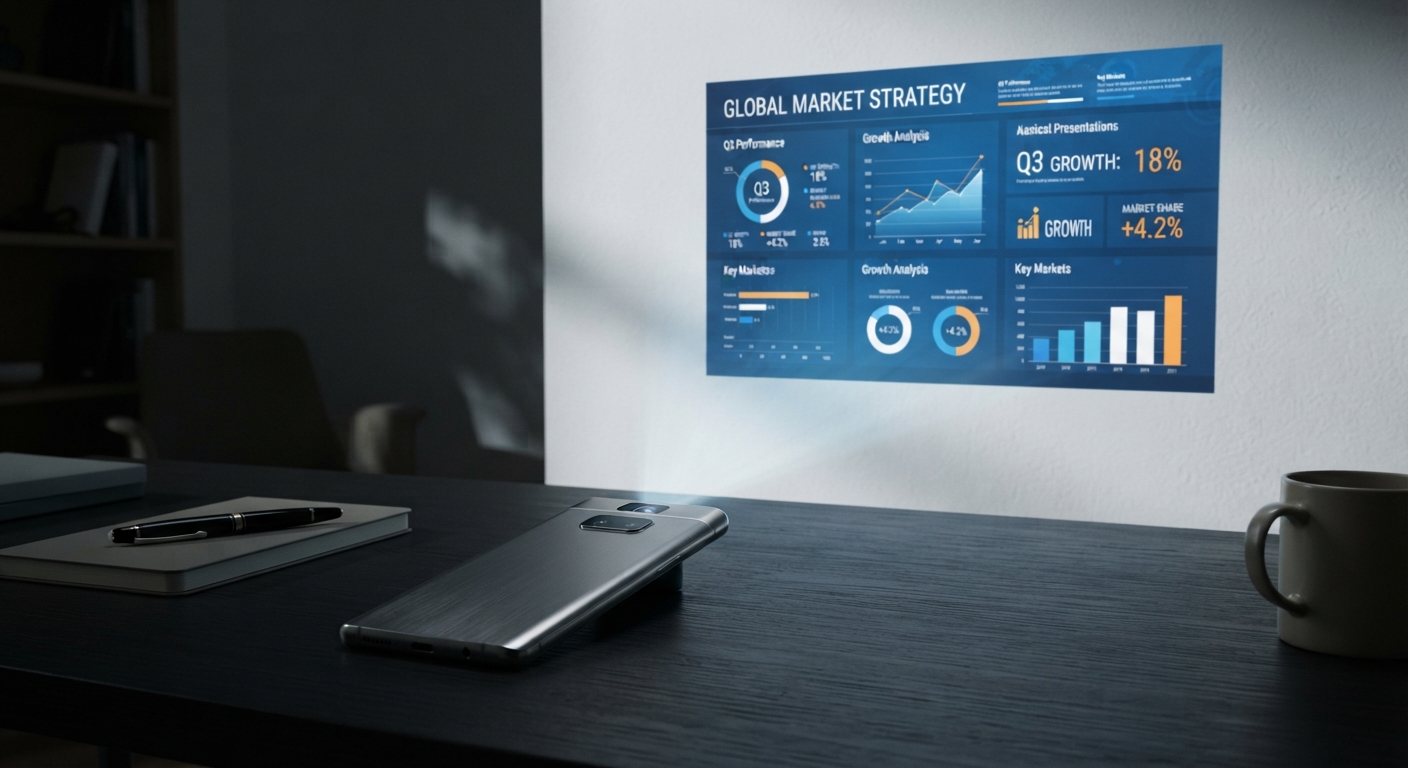
دراسة المشكلة والحل
مكتملالمشكلة
Problem PitchWe are working to solve the problem of unreliable, low-trust, and hard-to-justify portable projection for Egyptian consumers, who struggle with awkward setup, weak repeat usage, and premium price resistance, because buyers already have strong phone habits and established brands dominate trust.
Frames
Functional
Who
Consumers who travel, study, or present often
From
Phone-only viewing or carrying a separate projector
How Badly
4
Why Now
Mobile use is rising, but screen sharing still depends on extra hardware
Workaround
Phone, laptop, TV, or a standalone projector
Hidden Pain
They waste time finding a screen and dealing with cables or pairing
Opens
Portable projection use cases
Closes
General-purpose phone buyers with no projection need
Total
16
StatementPeople like Egyptian consumers struggle to present or watch content on the go because they do not have a single portable device that can both communicate and project, which causes awkward setup and limited mobility.
Emotional
Who
People who present informally or share media socially
From
Depending on other people’s screens or venues
How Badly
3
Why Now
More personal and work content is shared in casual settings
Workaround
Ask for a TV, borrow a laptop, or skip the presentation
Hidden Pain
They fear looking unprepared or low-status
Opens
Confidence-driven purchase triggers
Closes
Users who do not care about status or presentation
Total
14
StatementPeople like Egyptian consumers struggle to feel prepared and impressive in spontaneous moments because they cannot instantly turn a phone into a larger display, which causes anxiety and embarrassment.
Economic
Who
Price-sensitive consumers in Egypt
From
A premium device with a single special feature
How Badly
5
Why Now
Premium consumer electronics face strong comparison against established phones
Workaround
Buy a mainstream phone and ignore projection
Hidden Pain
They see the extra feature as a luxury, not a necessity
Opens
Niche premium segments with specific use cases
Closes
Broad mass-market adoption
Total
23
StatementPeople like Egyptian consumers struggle to justify buying a premium niche device because the benefit is occasional, which causes weak willingness to pay and high price resistance.
Behavioral
Who
Consumers who mainly use phones for messaging and video
From
A device that requires a new behavior to create value
How Badly
4
Why Now
Most users already have entrenched phone habits
Workaround
Keep using the phone as-is
Hidden Pain
They may admire the idea but rarely activate the feature
Opens
Use cases with repeated projection behavior
Closes
One-off curiosity purchases
Total
19
StatementPeople like Egyptian consumers struggle to adopt a new hardware habit because projection use is not part of their daily routine, which causes low repeat usage and weak retention.
Social/Trust
Who
Buyers of expensive consumer electronics
From
Unknown brand with unproven durability
How Badly
4
Why Now
In premium electronics, trust is a major purchase filter
Workaround
Buy Samsung, Motorola, or another known brand
Hidden Pain
They fear warranty problems, battery issues, and repair difficulty
Opens
Trust-building niches and proof-based selling
Closes
Impulse buying from general consumers
Total
20
StatementPeople like Egyptian consumers struggle to trust a new premium phone brand because hardware reliability and support are uncertain, which causes hesitation before purchase.
System/Infrastructure
Who
Users in homes, offices, classrooms, and informal spaces
From
Assuming projection works anywhere a phone goes
How Badly
4
Why Now
Real-world environments are messy and rarely projection-friendly
Workaround
Use a larger screen or avoid projection entirely
Hidden Pain
The device may work in demos but fail in everyday settings
Opens
Environment-specific use cases
Closes
Anywhere-anytime usage claims
Total
23
StatementPeople like Egyptian consumers struggle to use projection reliably because rooms, power access, lighting, and content-sharing conditions are inconsistent, which causes the feature to fail in real life.
Experience
Who
Early adopters expecting a premium feel
From
A compact device with tight hardware constraints
How Badly
5
Why Now
Users compare the experience directly with normal phones and dedicated projectors
Workaround
Accept the compromise or stop using the feature
Hidden Pain
The first bad session can kill repeat use and referrals
Opens
Experience-led differentiation around a single use case
Closes
Feature breadth without quality
Total
23
StatementPeople like Egyptian consumers struggle to get a pleasant projection experience because small devices often trade off brightness, heat, battery life, and comfort, which causes disappointment after the first use.
New Solution Space
- projection-first niche devices
- use-case-specific portable presentation tools
- trusted premium hardware for small audience segments
- environment-aware mobile display systems
الحل
Zwicky
Inverted
Do not sell the phone first; sell the projection function as a paid accessory, service, or licensed module for other devices.
Analogy
Printer industry: sell the device with a lower upfront price and make money from add-ons, servicing, and repeat usage.
Rows
| Frame | Customer | Solution | Revenue |
|---|---|---|---|
| Functional | Urban consumers who want portable media sharing | A phone with a built-in projector for quick sharing in small groups | Premium one-time sale |
| Work | Sales reps and field teams | A rugged phone projector for demos, quotes, and client pitches | Enterprise device sales |
| Education | Students and tutors | A phone projector optimized for lessons, notes, and revision videos | Subscription for lesson content and tools |
| Events | Small event hosts and creators | A phone projector bundle for pop-up screenings and presentations | Usage-based rental fee |
| Retail | Accessory shoppers in Egypt | A projector attachment that clips to existing phones instead of replacing them | Transaction fee on accessory sales |
| After-sales | Early buyers and repair users | A device with paid maintenance, battery swaps, lens cleaning, and calibration | Service and maintenance |
| Platform | Local phone shops and distributors | A white-label projector phone design sold through partners | Licensing |
| Audience | Brands targeting young consumers | A projector phone app and hardware bundle with sponsored media slots | Advertising and data |
Non Obvious
- Sell the projector as a work tool first, then let consumers buy it for entertainment.
- Start with an attachment for existing phones, then move into a full device after demand is proven.
- Bundle the hardware with paid setup and maintenance so the margin is not only in the device.
Extreme
Silly
A phone that projects onto any wall and turns every gathering into a mini cinema, even when nobody asked for one.
Serious
A compact phone projector built for one clear use case: fast sharing in small rooms without extra screens.